
Wet Clutch & Overload Safety Expalined| Guide from Cold Forging Press Supplier
Cold Forging Press Supplier Guangduan explains the two features you ask about most: the wet clutch and overload safety – what they are, why they matter, and how they protect your tools, parts, and bottom line.
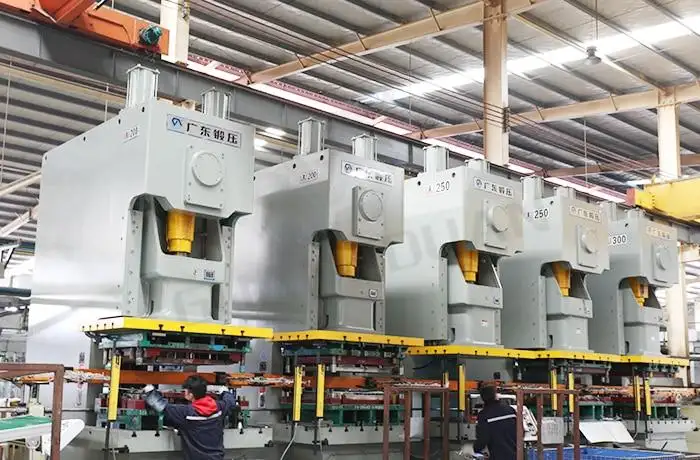
Wet Clutch Explained in Plain Terms
A wet clutch runs in an oil bath. The oil cools the friction plates, carries away debris, and keeps engagement smooth. In forging presses, that matters. Heat is the enemy of consistency. By managing heat, a wet clutch delivers steady torque transfer under long shifts and heavy loads. It also reduces wear, so the clutch lasts longer and needs less maintenance downtime.
A wet-type clutch is engineered for high duty cycles. Oil surrounds the plates, pulls heat away, and maintains consistent friction. Smoother engagement and longer life with wet operation
• Lower heat build-up: oil cooling stabilizes temperature to reduce fade and maintain repeatable strokes
• Longer service life: less friction and cleaner contacts extend maintenance intervals and decrease unplanned downtime
• Smoother Power Delivery: Engagement is more controlled, which helps when forming parts with tight dimensional requirements.
• Better bearing support: closed-type press + high-capacity eccentric crankshaft = clean torque transfer.
Guangduan pairs a wet clutch with a robust crankshaft for smooth, cool, long-running performance. This pairing brings strong bearing capacity when you push for peak production. You can expect quieter engagement, less dust, and smoother starts and stops. For beginners, think of it this way: dry clutches grab hard and get hot; wet clutches grip with control and stay cool. The result is stable cycles and longer service life of critical components.
Overload Safety: Hydraulic Protection That Saves Your Tooling
Overload safety prevents a bad hit from becoming an expensive failure. Hydraulic overload protection sits in the press load path. When the load exceeds a set threshold, the device relieves pressure instantly and stops the stroke. Your die and the press frame avoid plastic deformation. Your operators stay safe. Your line recovers fast.
Hydraulic Overload Device: Fast Recovery
• Real-Time Sensing: Hydraulic circuits react the moment pressure exceeds the limit.
• Damage Prevention: Saves slides, guides, and dies from shock loads.
• Quick Reset: Operators restore normal operation without tearing down the press.
On larger-capacity presses, we use a hydraulic overload protective device for fast response and easy reset. On mid-capacity presses, a wedge-style die unlocking mechanism helps release the load quickly in a mis-hit. Both strategies follow one goal: contain the event, protect the die, and get you back to production. This is the kind of quiet insurance a Cold Forging Press Supplier should build in by design, not bolt on later.
Structure and Guidance: How Precision Stays True
Accuracy begins with the frame. Our closed, narrow-table, single-point architecture uses a monolithic box-type body. A one-piece box resists bending and twisting. High rigidity means the tool line stays aligned, so your punch meets the die squarely, stroke after stroke. That is how dimensional accuracy holds up across long runs.
The slide block rides on a four-surface full guideway. Guidance on all four sides keeps lateral drift under control, improves guiding precision, and preserves die life. Die set height is adjusted mechanically and shown on a digital readout. You do not have to guess. You can repeat a known setup and hit target dimensions faster. For teams new to forging, this is the difference between a day of trial-and-error and an hour of measured dialing-in.
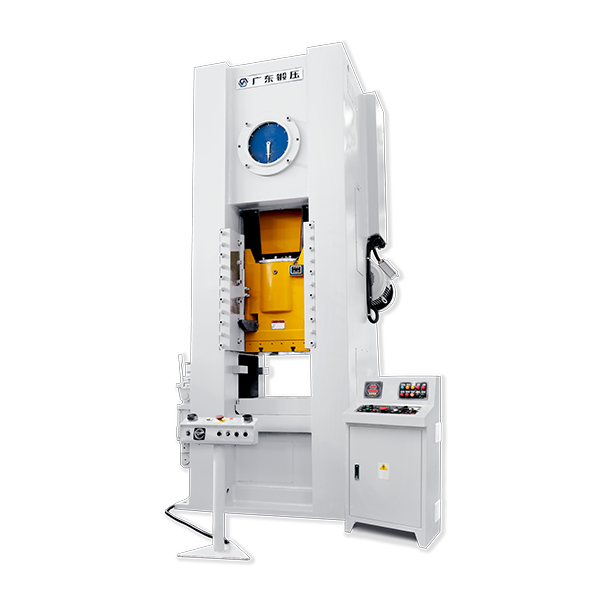
Controls, Modes, and Safety You Can Trust
Control should be simple, transparent, and safe. We integrate PLC logic with pneumatic actuation. Operators get dependable state control and clear interlocks. Three stroke modes cover most jobs: continuous for volume, single stroke for short runs and checks, and micro-motion for fine setup.
Photo-electric protection adds a light curtain to keep hands out of danger zones. To boost OEE, remove variability at the coil. Optional auto feeding and uncoiling – leveling deliver stable handling and automated flow, increasing throughput and reducing manual-handling stoppages.
• Continuous/single/micro-motion strokes fit diverse jobs
• PLC + pneumatic controls provide reliable logic with easier troubleshooting
• Photoelectric protection raises safety without slowing cycles
• Automation options: feeding and uncoiling – leveling
Cold forging is about force under control. Ask us for a line simulation, energy use estimate, and ROI model – pilot the automated setup, then scale with confidence. You shape metal without adding heat, so every micron of alignment and every spike of load shows up in your part.
A wet clutch keeps torque steady, so the slide speed stays predictable. Hydraulic overload protection shields your dies when burrs, misfeeds, or material variation push loads beyond plan. A rigid closed frame and four-surface guidance make sure the slide returns on the same path, protecting your edges and corners. Digital die height display lets you return to a known setup quickly, which lowers changeover time and scrap at start-up.
Put these together and you get practical, day-one benefits:
• Better dimensional stability across long runs
• Faster, calmer setups for new parts
• Fewer die regrinds and longer die intervals
• Lower unplanned downtime after mis-hits
From Line Integration to Real-World Applications
A press is not an island. As a Cold Forging Press Supplier, we design for the full cell. Our presses integrate with coil stock via uncoiling and leveling. Photo-electric guarding, interlocked doors, and clear HMI status give supervisors visibility. The compact, well-laid-out body leaves room for feeders, conveyors, and quality stations.
Where does this land in the real world? You will see these presses in:
• Automobiles and motorcycles: brackets, housings, fasteners
• Daily hardware: hinges, handles, small structural parts
• Instrumentation: shells and fittings that demand tight tolerances
• Gas appliances: pressure-formed components with consistent walls
The press supports both stamping and pressure setting across a range of metals. Consistency in slide guidance and overload control reduces rework and keeps parts within spec, even as tool wear accumulates.
Work With A Cold Forging Press Supplier That Builds For The Long Run
Choosing a press is choosing a partner. At Guangduan, we build the frame, the drive, and the safety systems as one coherent machine. Wet clutches extend service life and smooth your cycles. Hydraulic overload protection and wedge unlocking features protect your most costly asset – your dies. Four-surface guidance and digital die height make precision repeatable for new operators and experienced teams alike. And our PLC-driven controls, light curtains, and optional automation let you scale from manual jobs to integrated lines without changing your core platform.
Call to action: Ready to cut setup time, protect your tooling, and raise first-pass yield? Talk to Guangduan. Send us your part drawing, material, thickness, and target takt time. We will recommend a press configuration, outline the safety and automation options, and estimate throughput. Let a Cold Forging Press Supplier help you build a safer, steadier, and more productive line – today.
CONTACT US


Guangdong Metal Forming Machine Works Co., Ltd.
We are always providing our customers with reliable products and considerate services.
If you would like to keep touch with us directly, please go to contact us
-

Home
-

Tel
-

Email
-

Contact