
Stamping Press Machine: How Automation-Ready Design Improves Modern Stamping Lines
Stamping Press Machine selection is no longer about force alone. Overseas buyers now look at whether a press can support automation, hold accuracy under load, and stay reliable through long production runs. If a machine cannot work smoothly with feeders, uncoilers, and leveling systems, or if it loses precision under unbalanced conditions, the whole line becomes harder to control. That can lead to more part variation, faster die wear, slower setup changes, and lower efficiency. As stamping plants modernize, automation readiness is becoming a more important buying factor in sheet metal production.
Why Automation Readiness Now Matters More in Stamping
Stamping is no longer judged only by stroke speed or nominal capacity. Buyers increasingly expect a press to work as part of a coordinated system. In the market, major automation suppliers position coil feeder lines, uncoilers, straighteners, and feeder integration as central to efficient stamping production rather than optional extras. AIDA, for example, presents coil feeder lines as a way to optimize stamping production and describes integrated uncoiler-straightener systems as part of a high-performance line. Schuler similarly emphasizes flexible press lines, short die change times, and productivity gains from integrated automation.
This matters for overseas purchasers because the cost of poor integration is rarely limited to one machine. It can affect the whole line. A press that cannot support smooth material handling or stable slide motion often creates hidden losses in throughput, tooling life, and labor efficiency. When buyers compare equipment today, they are often asking questions like these:
• Can the press connect well with uncoiling, leveling, and feeding equipment?
• Can it keep precision when load conditions are not perfectly balanced?
• Can it protect the machine and tooling quickly during overload events?
• Can it reduce noise, wear, and maintenance pressure over long production cycles?
• Can it help the plant move toward a more automated production model?
These are not abstract concerns. They are tied directly to part quality, line uptime, and long-term operating cost.
How GUANGDUAN Aligns With This Industry Shift
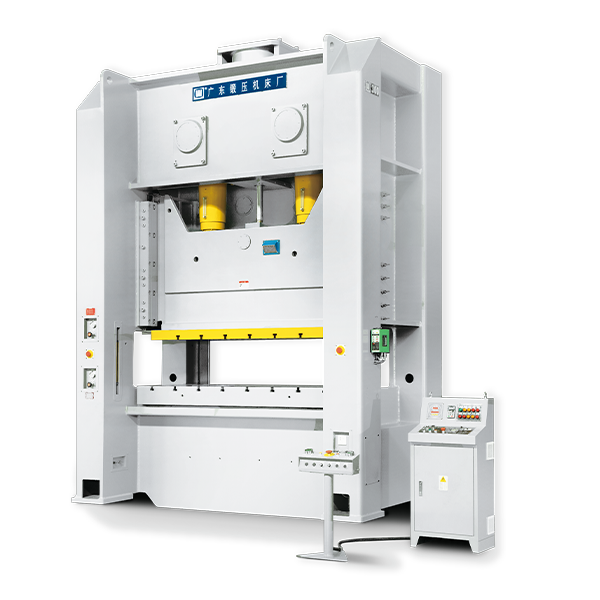
GUANGDUAN’s STPP Series Mechanical Punch Press is commercially relevant because its design addresses exactly these production concerns. The machine body is manufactured by welding steel plates, giving the structure the rigidity needed for demanding stamping work. From this perspective, having enough rigidity will contribute to solid and consistent operational performance and provide a stabilized structure for long cycle manufacturing.
The reverse double crankshaft configuration is also important. This design assists in balancing the motion of the machine and neutralizes the side force created by the linkage side block. For buyers, that means the value of the press is not limited to force output. Balanced motion can help the machine operate more smoothly, reduce uneven mechanical loading, and support better consistency in actual production.
The eight-sided full guide rail system is another strong selling point. GUANGDUAN states that this design offers stronger anti-unbalance bearing capacity, smaller lateral force, higher precision, and good precision retention. For stamping plants running tight tolerance work or large-volume orders, those are meaningful advantages. Better guidance can help reduce drift, support repeatability, and improve the working conditions of the die set over time.
The STPP Features That Support Better Line Performance
Several STPP features match what buyers now expect from an automation-ready press.
• Hydraulic Overload Protection
The hydraulic overload protective device is installed inside the slide block and is designed to respond rapidly and reliably. On the shop floor, this matters because overload protection is not just a safety feature. It is also a production protection feature. Faster response can help limit damage to tooling and reduce the risk of longer downtime after abnormal loading.
• High-Torque Wet Clutch
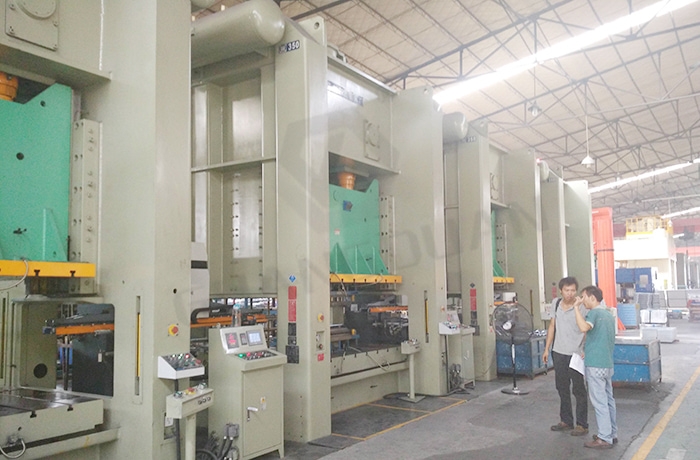
The clutch uses a high-torque wet clutch with large torque, long service life, low noise, and sensitive start-stop behavior. GUANGDUAN also positions it as less affected by wear and tear and cleaner in operation. For buyers comparing presses on lifecycle value, this supports a stronger case for stable daily use, lower maintenance burden, and a better operating environment.
• PLC Control And Automation Compatibility
The STPP Series adopts PLC control and can be paired with automatic production lines as well as uncoiling and leveling devices. This is one of the most important points in today’s market. NIST’s smart manufacturing work emphasizes technology adoption, trusted digital systems, and improved process capability, while Deloitte’s 2025 smart manufacturing survey reports that manufacturers are seeing gains in output, productivity, and unlocked capacity from these investments.
In that context, GUANGDUAN’s automation compatibility is more than a convenient feature. It helps buyers prepare for a production model that is less dependent on manual handling and better suited to scalable stamping operations.
What Overseas Buyers Can Take From This
For overseas importers, distributors, and end users, the value of a Stamping Press Machine is becoming broader than machine specification alone. Buyers increasingly want equipment that supports:
• More stable slide motion
• Better precision retention over time
• Faster reaction to overload conditions
• Lower noise and smoother clutch performance
• Easier connection with automated feeding and coil-handling systems
That is why GUANGDUAN’s STPP Series stands out. Its rigid welded body, reverse double crankshafts, eight-sided guide rails, overload protection, wet clutch design, and PLC-based control all support the same message: this is a press built not just to punch parts, but to function more effectively in a modern stamping line.
A Better Way to Evaluate a Stamping Press Machine
The market trend is clear. Manufacturers are investing in automation, connectivity, and more software-enabled operations because these improvements influence quality, productivity, and resilience. Deloitte reports that many manufacturers plan to direct a meaningful share of their improvement budgets into smart manufacturing, and NIST continues to frame automation and advanced technologies as central to industrial competitiveness.
For that reason, the strongest Stamping Press Machine is not always the one with the most force on a spec sheet. It is the one that can hold precision, protect tooling, run smoothly with supporting equipment, and help a factory move toward more automated production. From that perspective, GUANGDUAN’s STPP Series fits the direction modern stamping plants are already heading.
CONTACT US


Guangdong Metal Forming Machine Works Co., Ltd.
We are always providing our customers with reliable products and considerate services.
If you would like to keep touch with us directly, please go to contact us
-

Home
-

Tel
-

Email
-

Contact