
Industrial Cold Forging Press – Which Components Fit?
Cold forging processes materials using compressive forces and room temperature, providing end products with high strength and excellent surface finish and dimensional precision. However, some parts are not compatible with cold forging. Which components can be cold forged? How does an Industrial Cold Forging Press enhance the process? This article will identify some of the main cold forging application sectors and illustrate how GUANGDUAN’s GK Series knuckle joint press fulfills the requirements of each sector.
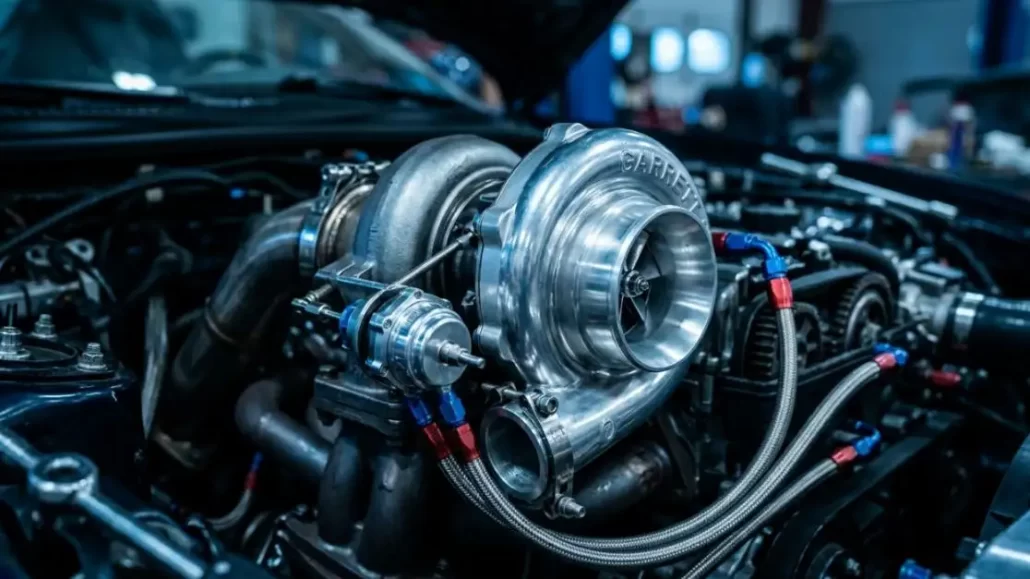
Why Cold Forging? The Core Advantages
Before discussing components, the advantages of cold forging for manufacturers should be highlighted. A reliable Industrial Cold Forging Press provides the following:
• Parts produced with higher strength relative to other manufacturing processes, attributed to work hardening.
• Impressive tolerances (to 0.01 mm, as indicated by the GK Series die height indicator).
• Surface finishes need to be smooth to eliminate the need for secondary machining.
• Shapes are generated to be near to the desired shape to lessen the loss of material that can lower expenses.
The process is effective for large quantities because production operates quickly, consistently, and repeatedly.
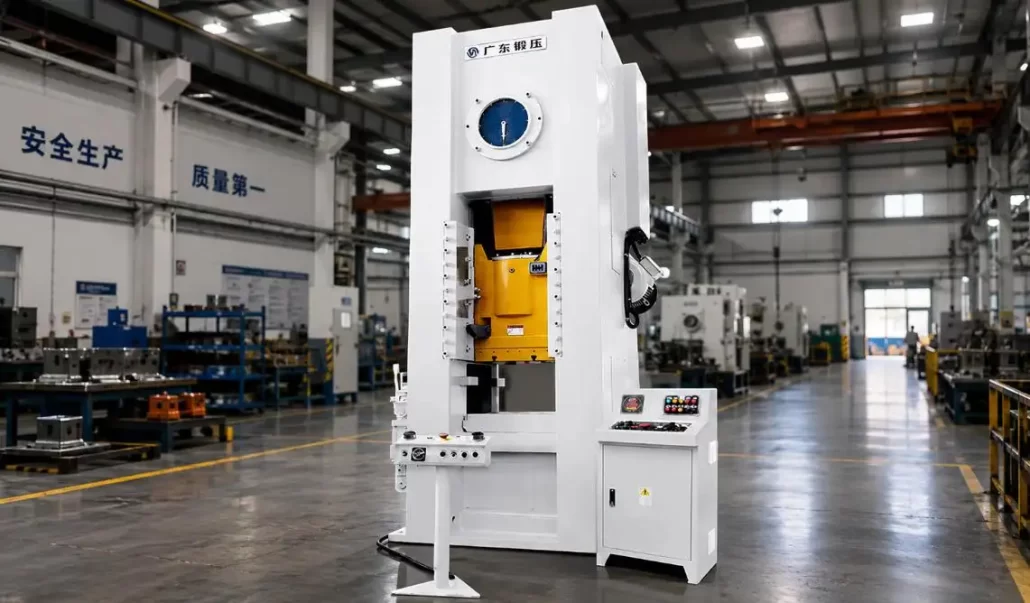
The GUANGDUAN GK Series (which has bolster sizes up to 1,200×1,200 mm and a capacity range from 6,300 to 25,000 kN) is an Industrial Cold Forging Press that can enhance all of the advantages noted above for multiple components across manufacturing sectors.
Automotive Applications – The Largest Consumer
The automotive industry is the biggest driver of cold forging, with dozens of parts per vehicle relying on this method. The GK Series Industrial Cold Forging Press is widely deployed in tier-1 stamping operations for:
Engine and Powertrain Components
• Balancer shafts and valve spring retainers – requiring high fatigue resistance.
• Bucket tappets for hydraulic valve-play compensation.
• Piston pins in various designs, as well as assembled camshafts with cold-extruded cams.
The crank-toggle mechanism of the GK Series allows the slide to dwell at bottom dead centre for ~1/18 of the cycle – a feature that lets material settle, fill corners, and equalise internal stresses. This is critical for engine parts where dimensional stability is non-negotiable.
Transmission and Drivetrain
• Gears, shafts, and shaft gears – the precision of an Industrial Cold Forging Press ensures correct meshing and long-term durability.
• Synchro rings and clutch hubs that demand consistent grain flow.
Steering, Suspension, and Electrical Systems
• Steering knuckles, suspension arms, and ball joints – complex shapes with high structural integrity.
• Alternator shafts, starter cases, and AC poles for electric power steering.
The GK Series’ PLC-controlled operation guarantees repeatability, making it a trusted Industrial Cold Forging Press for high-stakes automotive production.
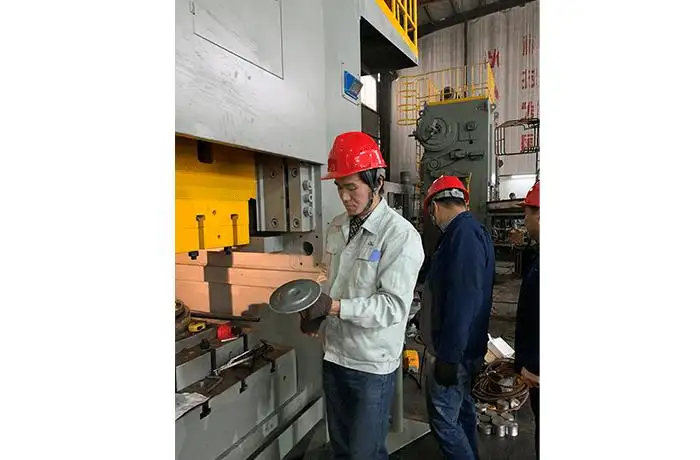
Aerospace – Precision Under Extreme Conditions
Aerospace components require the ultimate balance of light weight and extraordinary strength – attributes that cold forging naturally delivers. An Industrial Cold Forging Press used in this sector must offer uncompromising accuracy.
• Fasteners (bolts, rivets, screws) – critical for airframe assembly.
• Structural brackets and actuator fittings – often in titanium or high-strength aluminium.
• Precision rings and sleeves for engine and hydraulic systems.
For these applications, the GK Series’ die height indicator displaying 0.01 mm accuracy, combined with its robust knuckle joint dwell, ensures consistent results without extending cycle times. The split-structure design on the 12,000 kN model also simplifies maintenance, a key benefit in aerospace quality systems.
Industrial Machinery and Heavy Equipment
From agricultural harvesters to hydraulic presses, cold forging produces the backbone components of heavy machinery. A versatile Industrial Cold Forging Press is essential here.
Gears, Sprockets, and Shafts
• Milled gears do not have the strength or surface quality of forged gears.
• Axles, bearing rings, and transmission shafts – benefiting from the straightness and concentricity of the forging process.
Fasteners and Hydraulic Parts
• High-strength bolts, nuts, rivets, and pins that rely on continuous grain flow for toughness.
• Water pump housings and valve bodies for hydraulic systems – where leak-free sealing surfaces are mandatory.
The GK Series accommodates these diverse parts with capacities from 6,300 to 25,000 kN. Models from 4,000 to 16,000 kN use an integral structure for stability, while the 12,000 kN model adopts a split structure for easier transport and service – giving engineers the flexibility to choose the right Industrial Cold Forging Press for their production floor.
Bicycle and Motorcycle Components
Two-wheeled vehicles demand lightweight yet robust parts, making cold forging a natural fit. An Industrial Cold Forging Press with a knuckle joint mechanism, like the GK Series, concentrates tonnage at the critical point of the stroke and holds it long enough for complete die fill.
• Bicycle hubs, spindles, crank arms, and bottom bracket parts – all benefit from excellent fatigue resistance.
• Motorcycle transmission gears, clutch components, and suspension forks – where precision and strength are paramount.
The consistent quality enabled by the GK Series ensures that each part withstands the repetitive loading cycles of daily riding.
Hand Tools and Hardware
Even the tools in your workshop often start as cold-forged blanks. The Industrial Cold Forging Press plays a key role here by aligning grain structure along the tool’s contours, maximising impact and wear resistance.
• Hammer heads, pliers, wrenches, and spanners – requiring high toughness.
• Industrial sockets, tool bodies, and specialty implements – where complex shapes are achieved with minimal waste.
• Hardware brackets, fittings, and custom fasteners – increasingly produced through cold forging for improved strength-to-weight ratios.
The mechanical lower ejector device, standard on all GK Series models, ensures clean part removal and supports consistent downstream handling – a practical advantage for high-volume tool production.
Electronics and Consumer Goods
As devices shrink in size, the demand for micro-precision cold-forged components grows. An Industrial Cold Forging Press with ultra-fine control becomes indispensable.
• Connector shields and enclosures – from smartphone parts to larger electronic housings.
• Heat sinks and thermal management shapes – with excellent surface contact for efficient cooling.
• Precision contacts and terminals – the 0.01 mm accuracy of the GK Series makes it suitable for micro-forming where tolerances are measured in fractions of a millimetre.
For cleanroom environments, the GK-630 model’s pneumatic wet integrated friction clutch brake (with oil-bath cooling) reduces dust and lowers plate temperature – a thoughtful detail that expands the versatility of this Industrial Cold Forging Press.
Material Versatility – One Press, Multiple Alloys
A modern Industrial Cold Forging Press is not limited to steel. The GK Series handles a wide range of materials efficiently:
• Steel alloys – the most common, from mild to high-strength grades.
• Aluminium – favoured in automotive and aerospace for weight reduction.
• Brass and copper – the perfect materials for plumbing and electrical fixtures.
• Titanium alloys – used in high-performance aerospace and medical implants.
This material flexibility allows manufacturers to standardise on a single Industrial Cold Forging Press platform for multiple forging tasks, reducing capital expenditure and training overhead.
Why GUANGDUAN’s GK Series Excels Across All Applications
Several key design features make the GK Series a standout Industrial Cold Forging Press for the applications described above:
• Knuckle joint dwell – the crank-toggle mechanism provides ~1/18 cycle dwell at bottom dead centre, suppressing spring-back and delivering burr-free edges that often need no secondary grinding.
• Precision control – die height indicator accurate to 0.01 mm, coupled with PLC operation, ensures consistent quality across all runs.
• Flexible capacity – from 6,300 kN to 25,000 kN with bolster sizes up to 1,200×1,200 mm, covering small precision parts to large structural forgings.
• Tailored clutch-brake systems – the GK-630 uses a pneumatic wet integrated system for smooth, low-dust operation; GK-800 to GK-2500 models use dry split systems for durable torque transmission.
• Built-in productivity – a mechanical lower ejector is standard, plus the machines exceed JIS first-class standards and are backed by over 60 years of manufacturing expertise.
Closing Words
Cold forging serves automotive, aerospace, machinery, bicycles, tools, and electronics. Ideal parts demand high strength, tight tolerances, excellent finish, and cost-effective volume production. The GUANGDUAN GK Series Industrial Cold Forging Press delivers broad capacity, knuckle joint precision, PLC control, and reliable engineering—producing critical components for vehicles, aircraft, and consumer goods. As manufacturing strives for higher levels of accuracy and efficiency, the Industrial Cold Forging Press, particularly the advanced models like the GK Series, continues to be essential.
FAQs
Q: Define Industrial Cold Forging Press.
A: Uses a high compressive force to shape metal at room temperature. Gives strong, precise components, and has a low production waste.
Q: What is processed on a Industrial Cold Forging Press?
A: Cold forging typically uses steel alloys, aluminum, brass, titanium, and copper.
Q: What are the common industries that use cold forging?
A: Cold forging is common in the automotive, aerospace, and heavy machinery industries, as well as in bicycles, hand tools, electronics, and consumer goods.
Q: What are the best components for cold forging?
A: Components that require a lot of production and that have a need for a high strength and tight tolerance, as well as good surface finish. Examples are structural components, fasteners, gears, and shafts.
Q: Explain the knuckle joint advantage in the GK Series.
A: It has a spring back reduction, and has improved final dimensions, due to the material settling in the joint that dwells at bottom dead center (approximately 1/18 of the cycle).
CONTACT US


Guangdong Metal Forming Machine Works Co., Ltd.
We are always providing our customers with reliable products and considerate services.
If you would like to keep touch with us directly, please go to contact us
-

Home
-

Tel
-

Email
-

Contact