
The Green Advantage of a Cold Forging Press For Metal – Cutting Energy and Emissions
Manufacturers are re-evaluating the impacts of their production processes due to tightening carbon emission regulations across the globe. The metal forging industry is considering the options available for forming with special focus on cold forging. Why is cold forging “greener” than hot forging? This article focuses on GUANGDUAN’s GK series of Knuckle Joint Press. It analyzes the energy consumption, material waste, and emissions of cold forging with hot forging and machining. It further describes the environmental benefits of the GK series.
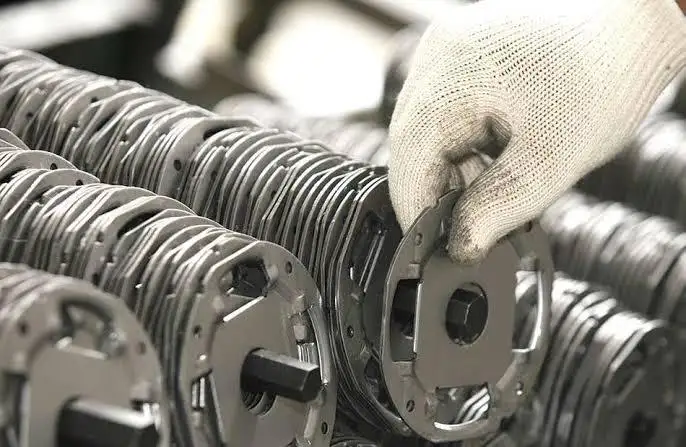
1. What is Cold Forging? – Metal Shaping at Room Temperature
Cold forging uses only mechanical force to shape metal. Given that no external heating is required, the environmental impacts of cold forging are reduced even further.
No furnace, no fuel: hot forging requires the heating of metal to over 1000 °C, thus requiring gas or electric furnaces. Cold forging has no such requirement.
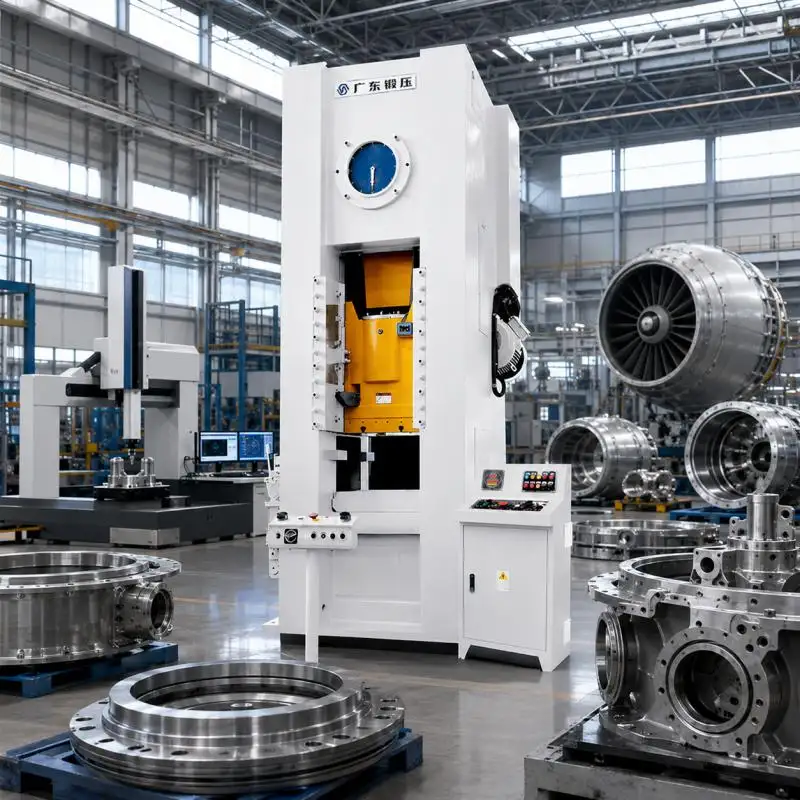
The Cold Forging Press For Metal as core equipment: This press delivers the high force needed to displace metal plastically at ambient temperature. GUANGDUAN’s GK Series Knuckle Joint Press, for example, is a dedicated Cold Forging Press For Metal with capacities from 6,300 kN to 25,000 kN and bolster sizes up to 1,200×1,200 mm, engineered for fine stamping and extrusion.
2. Energy Consumption – The Biggest Differentiator
Energy savings are the most direct environmental benefit of cold forging. Energy use is reduced substantially by cutting out the heating phase.
•Reduces energy use by 60 – 80% vs hot forging: Cold forging uses much less energy to create each finished part, as no energy is expended thermally to heat the billets.
•Rapid and continuous operation: Cold Forging Press For Metal can perform continuous cycles, allowing for consistent high stroke rates which translates to more parts produced per kilowatt hour, optimizing energy use.
•Dwell-time efficiency (GUANGDUAN’s design): The GK Series Knuckle Joint Press employs a crank-toggle design that bottom dead centers for approximately 1/18 of a cycle. This design provides the necessary time for the complete flow of the material with no additional strikes and no extra energy is used.
•Less auxiliary loads: The absence of heat-soaking combined with the lack of temperature checks and the transfer of heated billets from furnaces to presses eliminates multiple steps and reduces the energy demands of the factory.
3. Material Utilization – Near–Net Shape with Minimal Scrap
Cold forging displaces metal into a die cavity, rather than cutting it away. This inherent advantage leads to exceptional material efficiency.
•Less than 5% scrap generation: In contrast to machining (which wastes 40–70% as chips), a Cold Forging Press For Metal produces parts that are already close to final geometry.
•Lower raw material input per part: Because less metal is wasted, the upstream burdens—mining, refining, and transport—are all reduced. Every kilogram of material saved decreases carbon emissions from supply chains.
•Cold forging reduces secondary operations: Cold forged parts are produced from a die with very little clearancing, finishing, grinding or turning. This decreases the machining operations that use cutting fluids, create secondary operations, and produce waste.
•Precision with GUANGDUAN: The GK Series Knuckle Joint Press features a die height indicator with an accuracy of ±0.01 mm. This level of precision removes out-of-spec parts that would otherwise be scrapped. Cold forging press technology is essential when automated with PLC for accuracy and consistency in a metal forming press system.
4. Carbon Emissions – From Combustion to Cleaner Production
Eliminating furnace heating directly cuts CO₂ emissions, and material savings add further reductions across the lifecycle.
•70–90% lower CO₂ per part vs. hot forging: This dramatic drop comes primarily from avoiding fossil-fuel combustion, but also from the reduced embodied carbon of less raw material used.
•Scope 1 emissions eliminated: With no on-site fuel burning for heating, direct emissions from owned sources become negligible.
•Lower Scope 2 emissions: Even though the Cold Forging Press For Metal itself requires high electrical power per stroke, the total electricity consumed per part is far lower than that of hot forging (which uses both furnace electricity/gas and press power).
•Lifecycle perspective – a balanced view: Cold forging does involve lubricants and occasional annealing for certain alloys. The substantial reduction in heating energy and reduction in wasted materials makes the overall carbon neutral balance remain very positive. This process saves as much as 40–80% of energy and 30–50% of materials over processes such as hot forging or machining.
5. Equipment Design – GUANGDUAN’s Commitment to Product Sustainability
The construction of any Cold Forging Press For Metal, will have a direct bearing on how environmentally friendly the product will be. GUANGDUAN’s GK Series Knuckle Joint Press, incorporates a range of features which will enhance the product’s green manufacturing capability.
•Structural flexibility: Calls for rigidity in the structure of the press can be accommodated by either an integral or a semi-integral structure press ranging from 4,000 to 16,000 kN, with the 12,000 kN press offering a semi-integral structure. This flexibility of design will help minimize downtime and waste.
•Sophisticated clutch-brake assemblies: The GK-630 integrates a pneumatic wet assembly, while pneumatic dry split assemblies for clutch-brakes are used in models GK-800 through GK-2500. In all cases, the design addresses cycle time and thermal load, with highly efficient energy transfer with negligible loss.
•Mechanical lower ejector: A mechanical lower ejector allows rapid and clean ejection of the part. This significantly reduces cycle time. It also prevents part damage with the benefit of reduced additional manufacturing processes, conserving energy and material.
•Smart PLC control: The GK series utilizes PLC of stroke control to ensure high accuracy and reduced scrap. GUANGDUAN develops smart energy management systems to control and optimize energy expenditure in a rational way.
Conclusion – A Proven Path to Greener Manufacturing
Through cold forging, there are winning results in the efficiency of energy and material use. This technology allows savings of 60-80% in energy consumption, near-net shape of material with significant reduction of CO2 emissions. The innovative features of GUANGDUAN’s GK Series Knuckle Joint Press, combined with intelligent control of the cold forging technology of metal pressing, offer a significant competitive advantage with a proven and scalable net-zero approach.
FAQ
Q: Is there a difference in power consumption of Hot vs Cold Forging?
A: The total power consumption is lower in cold vs hot forging because there is no heating in the cold forging process despite requiring greater force.
Q: In what way is GUANGDUAN’s GK Series Knuckle Joint Press an example of sustainability?
A: Crank-toggles provide a dwell and high precision of 0.01 mm and PLC controls minimizing defects and waste of energy and material.
Q: Must the grinding and turning operations still be done after cold forging?
A: Those operations are largely no longer required due to the near-net shape and tolerances.
Q: What metals can be cold forged?
A: Metals that would be considered ductile, such as steels, aluminum, and copper, are the better choices, while some of the harder alloys will require annealing.
Q: In what way does the design of the press affect sustainability?
A: Designs like the GK Series that utilize either an integral or split design approach optimize press stiffness and simplify maintenance to reduce downtime and rework.
CONTACT US


Guangdong Metal Forming Machine Works Co., Ltd.
We are always providing our customers with reliable products and considerate services.
If you would like to keep touch with us directly, please go to contact us
-

Home
-

Tel
-

Email
-

Contact