
Open Die Forging Press: Tackling 2026’s Tough Forging Challenges Head-On
Open Die Forging Press is used in heavy manufacturing as a staple resource. By 2026, the heavy manufacturing industry will begin encountering a multitude of challenges. Costs associated with energy continues to rise. The Precision Standards become more strict with each passing day. The global buyer’s demand has evolved past manufacturing metal to a demand for an energy efficient, sustainable and low waste metal forming.
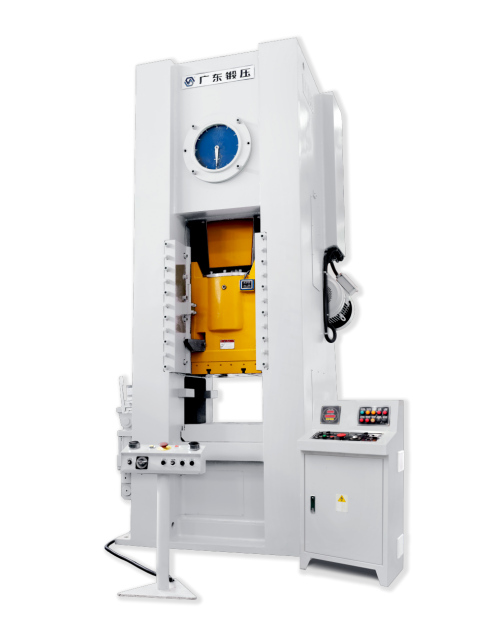
The open die forging presses market is global, with it’s projected value set at $23.58 billion by 2032 with a growth of 6.12% CAGR, as the demand expands in the automotive, aerospace, construction and heavy machinery. To achieve this growth, the forging operation must first confront the challenges in each of the operations, the challenges that GUANGDUAN’s engineering philosophy tackles.
The Demand for Advanced Technology in Open Die Forging
Open die forging is different in that metal is compressed between simpler, flat die faces, allowing the material to flow in different directions freely. This allows for the creation of large, custom components such as forgings that are aerospace grade.
With flexibility, the challenges multiply. Keeping energy to a minimum, material to a minimum, and obtaining consistent dimensional accuracy becomes the name of the game. The measure of efficiency for open die forging is the ratio of value forgings to the input, the time and energy, the labor and raw materials, and ideally a maximized ratio is what separates a competitive manufacturer from the rest.
The First Line of Defense Against Scrap is Precision
Inadequate force application in an open die forge increases scrap, rework costs and lead time. That’s where the knuckle-joint mechanism of GUANGDUAN’s GK Series makes a measurable difference.
The GK Series delivers capacity from 6,300 kN to 25,000 kN, with bolster sizes ranging from 700×700 mm to 1,200×1,200 mm—covering everything from smartphone connector shields to EV chassis brackets.
The knuckle-joint geometry naturally slows the slide as it approaches bottom dead center, then lingers for roughly 1/18 of the cycle. This dwell time allows material to flow completely, grains to realign, and spring-back to be suppressed—delivering burr-free edges that often eliminate secondary grinding.
A measurement accuracy of down to 0.01 mm allows for the first time the elimination of iterative shim adjustments by the operators of the press.
The models between 4,000 kN and 16,000 kN use an integral construction for maximum rigidity, while the 12,000 kN model is a middle ground, single-acting press, with a split construction to keep the weight and the civil-works costs down, while not compromising rigidity.
For open-die forging applications of forged titanium rings and aerospace aluminum alloys, this control is an absolute requirement.
Decreased Operating Cost Due to Energy Efficiency
Energy use for forging is a competitive differentiator now that energy use for forging is no longer just an operational cost. By 2026, the pressure is on manufacturers to reduce energy consumption while maintaining output, quality, precision, and durability. GUANGDUAN meets this challenge with two specific clutch-brake configurations:
•Wet-integrated friction clutch-brake (GK-630): Little dust, low operational noise, and operating temperatures lower than traditional systems due to oil bath cooling. This is ideal for use in medical and electronics companies that have a noise restriction.
•Pneumatic dry split friction clutch-brake (GK-800 to GK-2500): The air-actuated separation of the clutch reduces drag when the clutch is not engaged, lowering energy consumption on the cycle. Less friction and smaller motors result in energy savings that will show on the utility bill month after month.
These design attributes improve OEE and reduce the cost per piece, which is critical for high-volume open-die forging operations.

Turning Industry 4.0 Data into Actionable Intelligence
A major digital disruption is taking place in the metal forging industry. The adoption of sophisticated sensors, IoT platforms, and real-time monitoring systems, is allowing forging plants to intelligence production environments. Nearly 68% of forging industry executives have begun digital transformation initiatives.
Every GK Series press ships with a Siemens PLC, color touchscreen, and intuitive menu tree:
•Real-time tonnage curves expose off-center loading, allowing operators to correct feed alignment before a die cracks—preventing costly tool damage and unplanned downtime.
•Remote Ethernet diagnostics let GUANGDUAN’s support desk log in, read sensor trends, and guide your maintenance crew through corrective steps within hours, not days.
•An optional IoT gateway streams stroke, energy, and temperature data to cloud dashboards for predictive analytics. By turning raw signals into actionable intelligence, the GK Series transforms a legacy forging line into a smart factory node.
This matters because predictive maintenance tools have already reduced unplanned outages by nearly 18% across the metals industry, improving equipment uptime and operational reliability.
Open Die Versatility for Shafts And Rings
Open die forging remains the process of choice for large-scale components where closed die forging simply isn’t feasible. The GK Series is engineered to handle the full spectrum:
•Heavy shafts and rolls for energy sector turbines and power generation apparatus.
•Forged rings for aerospace, petrochemical, and medical implant sectors—including demanding materials like titanium alloys (Gr5 Ti-6Al-4V) that require precise grain flow control.
•Construction equipment components where strength and reliability are paramount.
•Military and defense forgings requiring exceptional tensile strength and durability.
The built-in mechanical lower ejector—standard on the GK Series—lets operators coin, extrude, and emboss in a single pass, eliminating extra presses and re-indexing time.
Why GUANGDUAN? A Legacy of Engineering Excellence
Since its inception, GUANGDUAN has been manufacturing integrated presses. GUANGDUAN started its operations with one machine and has grown to over 200 machines. GUANGDUAN has been a front-runner in 60 different national and state-level projects. GUANGDUANPRESSES has stringent quality measures including:
•Out of the box ISO 9001 quality measures. Casting, and structures are tracked using across facilities using barcodes. This ensures interchangeable parts across different plants.
•GUANGDUAN has a proprietary method of quality control. Unlike other companies, GUANGDUAN’S tool structure control is inclusive to the frame of the press.
•A 125-ton overhead ensures GUANGDUAN has the quickest delivery times in the industry. Guaranteeing alignment all the way to the dock.
The Bottom Line for 2026 Buyers
The bottom line is the current open die forging press is very promising. With the rise in energy prices and more stringent regulation, it has never been more expensive to operate a press.
The GK series is the answer to your expanding, or upgrading press needs.
If you would like to see how GUANGDUAN and the GK Series can operate for you, please contact GUANGDUAN to set up a factory acceptance test.
FAQ
Q: What cost advantages does open die forging have compared to closed die forging?
A: In open die forging, there is more capability for metal movement to be done so more shapes that are larger and custom made can be produced, like shafts, blocks, or rings. It does not require expensive closed dies, and so the tooling costs are greatly reduced. It is also more flexible for low to medium production volumes.
Q: In what ways does the GK Series enhance the dimensional accuracy in open die forging?
A: The knuckle-joint mechanism provides an accurate natural dwell at bottom dead center for approximately 1/18 of the cycle, which is such that there is sufficient time for the metal to completely fill the die. In addition to a die height setting of 0.01 mm, it provides part accuracy that is completely free from guesswork and excess material in the form of burrs.
Q: Is integration for the GK Series modern factory automation systems possible?
A: Yes. A Siemens PLC and Ethernet port is included in all GK Series presses. Optionally, IoT gateways can be added to provide cloud-based dashboards for Industry 4.0 integration with real-time stroke, energy and temperature data.
Q: In the GK Series, which bolster sizes and what capacities are available?
A: The bolster sizes are from 700 × 700 mm to 1 200 mm × 1 200 mm. The capacities available are between 6 300 kN up to 25 000 kN. It can be applied to be high level structural forging up to precision stamping.
Q: Are custom engineering services offered to handle unique open die challenges by GUANGDUAN?
A: Yes. GUANGDUAN has nearly been an industry leader for more than 6 decades. With nearly 100 engineers, GUANGDUAN customizes stroke lengths, sizes of the bed, dimension of ejection systems, and more to meet the individual requirements of each customer.
CONTACT US


Guangdong Metal Forming Machine Works Co., Ltd.
We are always providing our customers with reliable products and considerate services.
If you would like to keep touch with us directly, please go to contact us
-

Home
-

Tel
-

Email
-

Contact