
Servo Hydraulic Forging Press vs. Traditional Crank: 2026 Throughput
When production managers walk the shop floor in 2026, the question is no longer just about tonnage and stroke rate. It is about throughput—real, measurable parts per shift. The traditional crank press has been a workhorse for decades.
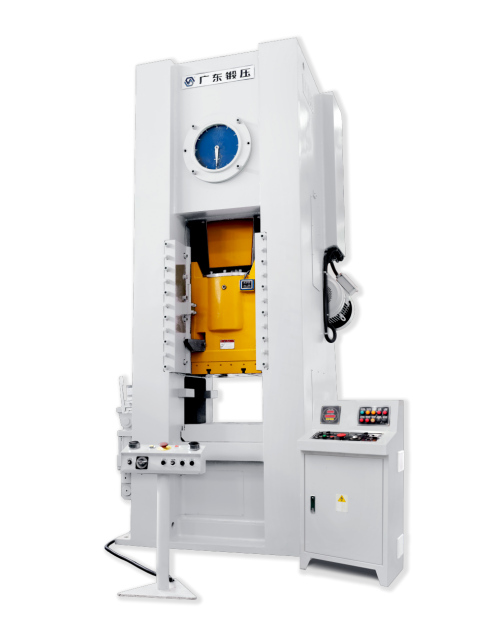
But the Servo Hydraulic Forging Press is rapidly proving that higher flexibility and lower operating costs can deliver a decisive edge in output. For manufacturers eyeing EV components, lightweight alloys, and smart factory integration, the comparison is urgent. Here is how a Servo Hydraulic Forging Press outruns the traditional crank in the 2026 throughput showdown.
Throughput Defined: More Than Just Strokes Per Minute
Traditional thinking equates throughput with speed. A crank press runs at a fixed velocity and cannot adjust mid-stroke. A Servo Hydraulic Forging Press takes a different approach.
By decoupling the motor from the hydraulic system, servo hydraulics deliver oil on demand and enable programmable velocity profiles. This means you can accelerate quickly when material is not under load, slow down precisely at the forming point, and return fast for the next cycle. The result is higher effective parts per hour, not just raw SPM.
Real throughput advantage: A Servo Hydraulic Forging Press reduces unproductive idle time. Servo-driven systems allow the motor to ramp up only when force is required, then coast at low power during non-press phases, trimming seconds off every cycle.
Energy Efficiency vs. Throughput in Crank Presses
A crank press runs its motor continuously. Even when the ram is idle, energy is wasted as heat. A Servo Hydraulic Forging Press operates only when work is being done. This fundamental difference is not just about utility bills. It is about how much energy you can allocate to actual production.
• Savings on energy: Compared to traditional presses, a Servo Hydraulic Forging Press achieves energy savings of 30% to 70%. In some advanced systems 90% savings in energy consumption are achievable.
• Reduced coolant: Servo hydraulics produce less heat, resulting in reduced coolant expenses. Additionally, companies experience less thermal drift in forming tolerances. Less heat also means hydraulic oil lasts longer, reducing change-out downtime.
• Lower carbon footprint: With global sustainability mandates tightening, a Servo Hydraulic Forging Press helps manufacturers meet emission targets without sacrificing output.
A traditional crank press cannot decouple energy use from cycle count. Every stroke—whether forming or idling—costs the same. Over a two-shift operation, that waste adds up to measurable lost production capacity.
Tool Life & Maintenance: Servo vs. Crank
Tooling costs are among the largest variable expenses in a forging operation. Frequent die changes kill throughput. A Servo Hydraulic Forging Press extends tool life dramatically because it allows operators to control stroke speed with far more precision than any mechanical crank system.
• Extended tool life: Servo-controlled presses have demonstrated tool life extensions of approximately 50% compared to conventional systems. It’s reasonable to expect fewer interruptions to production to change dies without regular wear of tools.
• Reduced components count: Up to 80% fewer components are used to reduce treats with Servo hydraulic design than traditional hydraulic presses. This means fewer spare part kits, much easier troubleshooting, and millions of maintenance-free cycles.
• Predictive maintenance: Advanced servo systems utilize sensor technology and predictive maintenance to achieve 50% less unplanned downtime.
Most crank presses (of the traditional variety), with their mechanical clutches, brakes, and flywheels, require regular lubrication and periodic belt tension adjustments. A Servo Hydraulic Forging Press eliminates many of these moveable components.
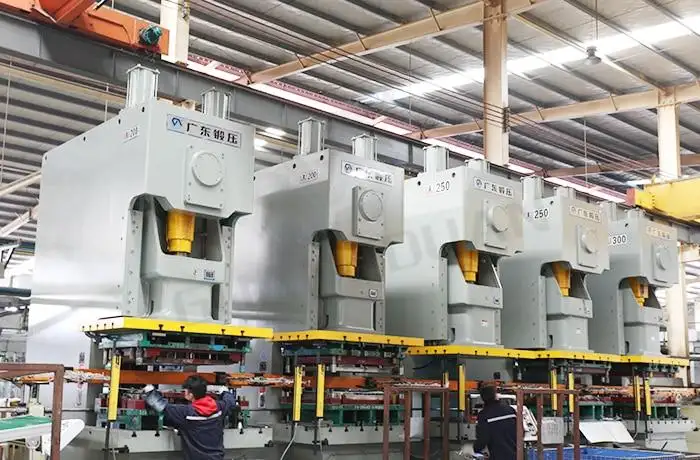
Flexibility and precision: Demanding Materials of 2026
The aerospace and automotive industries are moving towards high-strength steel and aluminum, and the composite materials. If these materials are to be formed their velocities must be consistent.
• Consistent repeatability: With servo hydraulic systems, precision repeatability of ±0.5% is achievable, guaranteeing that every part is made within specifications without variation.
• Adaptive forming: The speed variation and mid-stroke force, and the ability to vary force and speed of a Servo Hydraulic Forging Press allow the machine to handle materials of varying thicknesses that would lead to rejects on a crank press with fixed motion.
• Reduced scrap: A Servo Hydraulic Forging Press reduces the scrap generated and post processing required, reducing the cost and improving delivery reliability.
For the automotive, everyday hardware, and instrumentation industries, high volume precision stamping is the new standard with the Servo Hydraulic Forging Press.
Integrating Industry 4.0: The 2026 Industry Mandate
Starting in 2026, a press that cannot communicate with your manufacturing execution system (MES) or Enterprise Resource Planning (ERP) system, in our opinion, will be operationally obsolete. The Servo Hydraulic Forging Press is designed for Industry 4.0.
• Data logging for analytics: Servo systems provide data in real time concerning force, position, energy consumption, and cycle time.
• Remote monitoring: The press performance can be monitored by the production manager over the Internet. Issues that could lead to down time can be predicted and optimized.
• Digital twin compatibility: The 2026 forecast suggests that digital twins will be the leading technology in the design and management of presses. A Servo Hydraulic Forging Press will be fully integrated with the predictive digital twins.
In stark contrast, traditional crank presses provide limited data output. They were designed for the mechanical era and not the digital. You could retrofit traditional crank presses with sensor technology, but the cost and still be incomplete.
Total Cost of Ownership: Why the Change is Worth It
A Servo Hydraulic Forging Press will certainly be more expensive than a traditional crank press, but the long-term cost of ownership tells a different story.
• Reduction in the operating cost: A press system with a servo motor will have an annual operating cost that is 35% less than what you would have incurred with a traditional press.
• The pay back period: Depending on the energy rates and applications, the Servo Hydraulic Forging Press system will have the pay back period of 12 to 24 months. Some of the press systems have a pay back period of 8 to 12 months.
• Greater resale value: Compared to models that use a legacy crank design, the used Servo Hydraulic Forging Presses will hold value better for buyers of 2026 who will value energy efficiency and smart capabilities.
In a 5 to 10 year period, the Servo Hydraulic Forging Press offers the best return on investment than any other option when you take into account energy savings, reduced maintenance, extended tool life, reduced scrap, and greater overall tool life.
2026 and Beyond Market Trends
The figures support the case. The global servo-hydraulic press market size was projected to be USD 618 million in 2025, with a forecast of USD 660 million by 2026, reflecting a CAGR of 6.66% during the period of 2025 to 2032. The digital servo press market is projected to grow faster as well, from USD 3.1 billion in 2025 to USD 3.46 billion in 2026, a growth of 11.4% during the same period.
• Components for Electric Vehicles: Servo Hydraulic Forging Presses are the go-to solution to manufacture crank pressed components with precision.
• Growing Adoption: India is the fastest growing servo press market, with extended forecast periods predicting a robust growth of 6.1% during 2023 to 2035.
• 2026 Trends: Data provided by servo systems is expected to support ML optimization. AI is anticipated to transform operations to be smarter.
There is no doubt about the direction of the market. Those who delay purchases will be left with outdated legacy equipment that will be unable to meet the efficiency and tolerances of the future.
The Verdict: Servo Hydraulic Forging Press Wins Throughput
The traditional crank press is not obsolete. For simple, high-speed blanking of soft materials at low precision requirements, it still has a place. But for the vast majority of 2026 manufacturing challenges—complex geometries, hard-to-form alloys, energy cost pressure, and smart factory integration—the Servo Hydraulic Forging Press is the clear winner.
Bottom line: A Servo Hydraulic Forging Press delivers higher real-world throughput through faster effective cycle times, dramatically lower energy costs, extended tool life, reduced maintenance downtime, and Industry 4.0 readiness.
Manufacturers investing in a Servo Hydraulic Forging Press today are not just upgrading a machine. They are future-proofing their entire production line for the demands of 2026 and beyond.
FAQ
Q: Are Servo Hydraulic Forging Presses always faster than traditional crank presses when measured in strokes per minute?
A: Not in the most raw SPM metric, but it results in better throughput in the real world because the press has a much more efficient design that reduces idle time, scrap, and delays due to setup.
Q: Can I retrofit some crank presses with servo technology?
A: Yes, but the results will be less than full efficiency and precision versus a purpose-designed Servo Hydraulic Forging Press.
Q: What payback period can I expect when making the switch to a Servo Hydraulic Forging Press in 2026?
A: Most people can expect to see full payback in 12 to 24 months and the primary drivers of payback will be attributed to energy savings, tool life improvements, and less maintenance.
Q: Will a Servo Hydraulic Forging Press process high-strength steel and aluminum better than a crank press?
A: Yes. It’s less likely to crack, and there will be less springback when a press can process materials due to programmable control of stroke and velocity, and to precisely form at contact.
Q: What is the expected energy savings when using a Servo Hydraulic Forging Press versus a traditional crank press?
A: Customers can save between 30% – 70% in energy savings, with some achieving nearly a 90% reduction.
CONTACT US


Guangdong Metal Forming Machine Works Co., Ltd.
We are always providing our customers with reliable products and considerate services.
If you would like to keep touch with us directly, please go to contact us
-

Home
-

Tel
-

Email
-

Contact