
Automatic Metal Forming Machine: From Press to Production Cell
An automatic press might reach the desired production speed in a demonstration session and then not perform as well in actual production. Even if the forming machine itself is functioning properly, it is possible to impact the output rate due to misfed material, double blanks, unstable transfer timing or a difficult fault recovery.
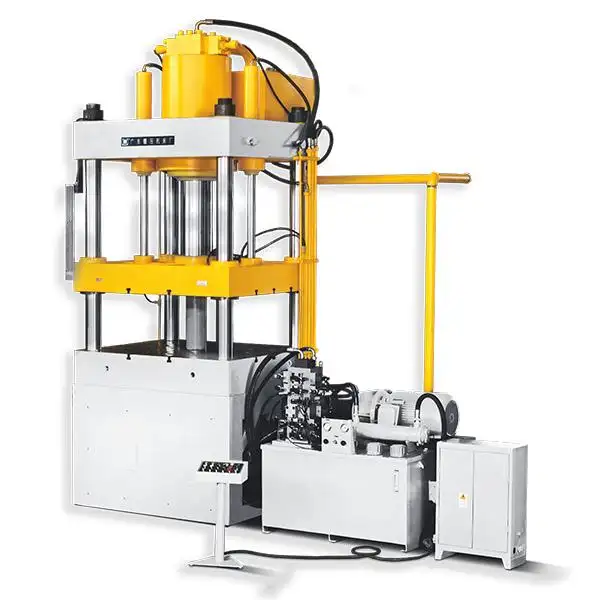
An automatic metal forming machine should, therefore, be considered a production cell and not just a metal press.
GUANGDUAN offers mechanical, hydraulic and forging press equipment which can be customized with feeding and automation solutions. Starting with forming process, material format and the required production volume, the correct line architecture should be determined.
The first step to automation is a stable forming process.
If a sequence is repeated, this is called automation. It cannot correct an unstable die and the material or poorly controlled forming window.
Manufacturers should verify:
- Part specifications and material specifications.
- Forming-force requirements
- A sequence of operations or die.
- Acceptable material variation
- Lubrication requirements
- Part-ejection method
- Scrap-removal route
- Critical inspection points
Before starting up the production line in a hurry, all the manual operations which often involve repositioning of material and adjusting lubrication must be translated into measurable automatic operations.
Click on the Press Before Selecting the Robot button.
The type of line that is required, a mechanical press, hydraulic press or servo-controlled press is dependent on the forming process.
Mechanical presses are ideal for repetitive blanking, piercing and progressive die operations which need high rates of strokes. Hydraulic presses offer variable force, speed, stroke and pressure retention for drawing and calibration as well as flexible forming. Programmable motion profiles are possible with the servo-controlled systems, for example, for materials or parts with controlled slide movement.
The robot and the feeder and transfer system should be compatible:
- It is important to remember to press stroke and cycle time
- The opening and access to the die.
- The shape and proportion of a part.The size and form of a part.
- Material-feed direction
- Required transfer distance
- Available factory space
GUANGDUAN industrial press machine solutions: Custom forming machine & automatic press-line engineering.
Select the appropriate material-feeding arrangement
Much of the automation design is dependent on the input material.
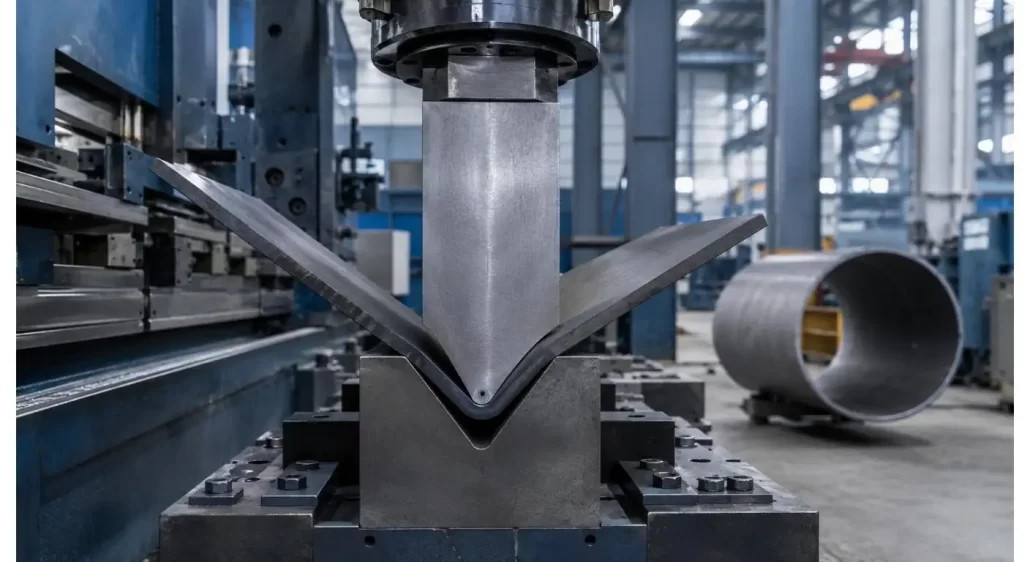
Coil fed lines will generally contain an uncoiler, straightener and servo feeder. They’re ideal for progressive stamping and for smaller components that can be reproduced. Magnetic or air separation, centering stations and robots can be used for blank fed lines, as can destacking equipment. With billet-fed forging lines, the heating, temperature verification and transfer of heat must be heat-resistant.
The feeding system should automatically regulate:
- Feed length
- Material alignment
- Double-sheet detection
- What is the availability of the last coil or blank?What is the end of coil or blank availability?
- Surface protection
- Feed completion prior to press stroke
GUANGDUAN’s closed-type press JH31 is equipped with automatic feeding, automatic uncoiling and leveling devices which can realize automated production.
| Material Format | Typical Automation | Essential Control |
| Coil stock | Uncoiler, straightener and servo feeder | Feed pitch and end-of-coil detection |
| Cut blanks | Destacker, separator and centering station | Double-blank and orientation detection |
| Large panels | Robot or transfer system | Position and sag control |
| Heated billets | Furnace and heat-resistant robot | Temperature and transfer time |
| Small discrete parts | Bowl or linear feeder | Part orientation and count |
| Heavy preforms | Robot with gripping fixture | Load security and die positioning |
Line Output Is Set by the Slowest Operation
The press might be capable of 40 strokes per minute but if the feeder, robot or inspection station takes more than 40 seconds, then this isn’t a 40 strokes per minute press.If the feeder or the robot or inspection station takes more than 40 seconds, then it is not a 40 strokes per minute press.
The following items should be considered when calculating cycles:
- Material feeding
- Part positioning
- Press approach and forming
- Slide return
- Separate parts from the compound, causing it to break apart.
- Transfer
- Inspection
- Scrap handling
The line should also allow for some downtime for periodic material replenishment, die lubrication and quality control. Using a single machine to their theoretical maximum speed is not as useful as sustainable output.
Buffers can be used to separate operations with different cycle time, but are space consuming and need part-tracking logic.
The protection of both parts and dies is necessary for sensors.
Some of the direct observation by the operator is removed by an automatic line. This means that for each stroke, sensors need to ensure that all necessary conditions are met.
Typical checks include:
- Material-present detection
- Correct feed position
- Double-blank detection
- Part-out confirmation
- Die-area clearance
- Scrap-chute status
- Lubrication pressure
- Overload condition
- The status of the guard and doors.
If a part is missing or in the wrong place it should prevent the press closing the cycle. GUANGDUAN’s mechanical press STPP is a heavy duty machine with PLC control, hydraulic overload protection and automatic lines and uncoiling-leveling interfaces.
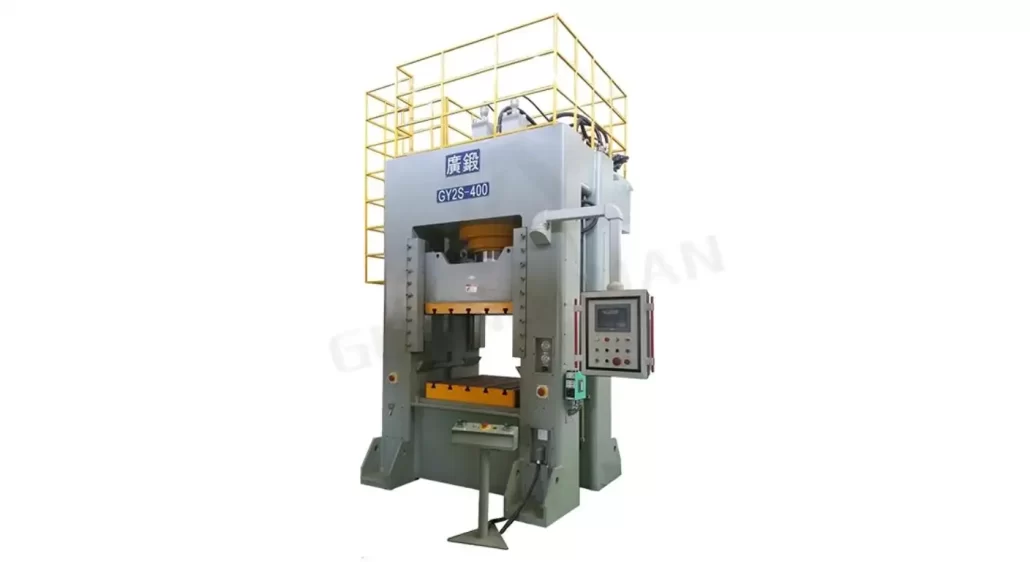
Faults should be included in the line design to support fault recovery.
The most costly automation issue is rarely the initial issue, rather the time spent in securing a safe start of production.
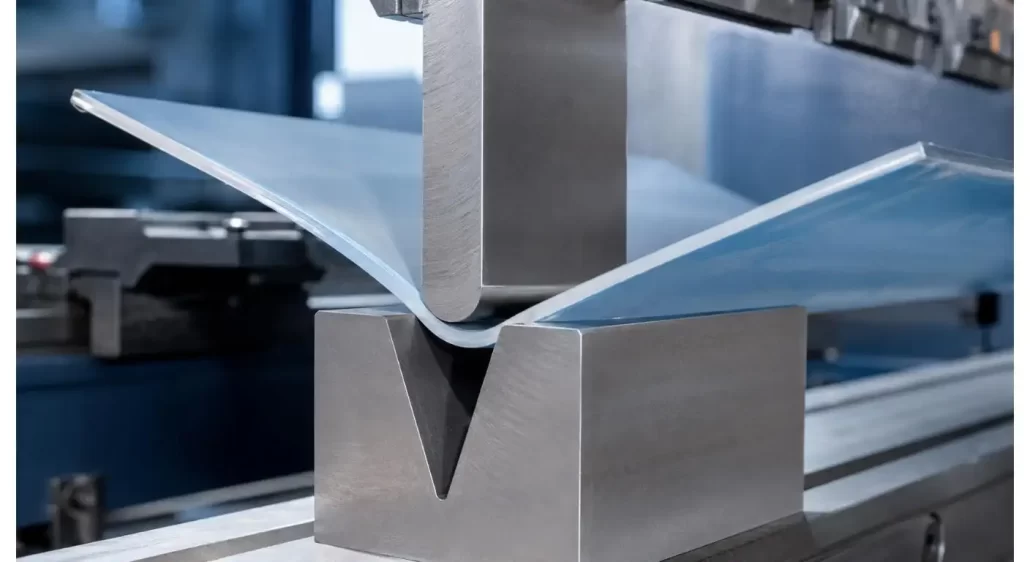
The control system should inform the operators:
- Which station stopped
- What happened to stop the stop?What condition did the stop stop because of?
- At what part it is left in
- Determine if there is material in the die
- Which takes up to which point/amount can be moved safely?
- Whether the part is rejected at this time.
- When the automatic mode is resumed, how does the line get back to automatic mode?
The permissions for manual, setup and recovery modes need to be distinctly defined. Restart should not result in a double feed, double stroke or untracked part.
A factory acceptance test (FACT) is a test with intentionally induced common faults to validate alarms and recovery logic.
| Simulated Fault | Expected System Response | Recovery Evidence |
| Missing material | Stop before press stroke | Clear alarm and safe restart |
| Double blank | Block feeding and forming | Affected blank removed |
| Part not ejected | Prevent the next load | Die status confirmed |
| Scrap chute blocked | Pause the automatic cycle | Chute cleared safely |
| Guard opened | Stop hazardous movement | Controlled reset required |
| Communication loss | Move equipment to safe state | No untracked part produced |
Recipe Management Minimizes Changeovers and Errors.
A Flexible, automatic metal forming machine can process multiple parts of different die, part length, slide setting, inspection limit, etc.
A production recipe is capable of coordinating:
- Die identification
- The length/pitch of the feed.
- Speed and stroke mode.
- Pressure or position settings (relies on the second level of the scale).
- Lubrication cycle
- Robot path
- Inspection limits
- Part counter/batch number
Access to recipes should be restricted to allow the operators to choose an approved recipe without accidentally modifying protected parameters.
The automatic forging press and Industry 4.0 are discussed in GUANGDUAN regarding the PLC control, automatic feeding, monitoring and connectivity of the production data.
Production Data – Must Lead to Action
A press/MES connection does not necessarily lead to better production. The system should gather data which is useful for traceability and maintenance/quality decisions.
Some records that can be useful are:
- Identification of machines and dies.
- The batch and material information are provided.Batch and material information is given.
- Stroke count
- Cycle time
- The force or pressure needed to create a shape or pattern.
- Alarm history
- Reject reason
- Maintenance status
Part segregation should be done at abnormal load or position data for critical processes. The line must keep the correlation between data on the machines and the production batch.
Whatever is necessary to keep the machine safe, must be covered in all operating modes.
The hazards from the press, feeder, robot, transfer equipment and the hydraulic or pneumatic stored energy introduce hazards into an automatic cell.
The risk assessment should include:
- Automatic production
- Material loading
- Die change
- Setup and inching
- Jam removal
- Maintenance
- Fault recovery
Measures that are required include guards, light curtains, interlocked doors, emergency stops, safe-speed modes and mechanical slide locking. Safety functions must be validated for the whole cell and not just the press.
Ensure that the Line with Representative Production is correct.
Dry cycling is used to verify the communication, but not to verify the production performance. Representative material, tooling, part handling and inspection should be utilized for acceptance testing purposes.
Verify:
- Complete automatic cycle
- Sustainable output
- Assess repeatability of feed and positioning.
- Part quality – over a continuous run
- The sensor and die-protection response was tested.
- Planned fault recovery
- Recipe changeover
- Track and monitor data with rejects.
- Safety-system operation
Successful production time and recovery time should be recorded in the test.
Make the RFQ Based on Interfaces
A thorough “RFQ” should contain the following:
- Part drawings and die drawings.
- Form and specification of the material(s)
- Required press process
- Target output
- The method used to load and unload.
- Inspection requirements
- Bringing upstream and down stream equipment.
- Communication protocol
- Required production records
- The organization and safety in the factory.
This enables the integration of the following: press, feeder, robot, controls and guarding as one system.
Final Engineering Check
An automatic metal forming machine that is reliable does not simply go through cycles without an operator. It senses wrong conditions, prevents damage to the die, logs valuable production information and corrects for anticipated faults and abnormalities without adding risk.
GUANGDUAN is able to analyze the forming process, material flow and target output to provide a customized press solution to automate the production process according to the actual production demand.
FAQ
Q1. What is automatic metal forming machine?
Press or forming machine with combining feeding, transferring, control and safety systems. Inspection and production-data functions are added to more advanced cells.
Q2. What type of press is suitable for Automation?
All mechanical, hydraulic and servo presses can be automated. The right choice is dependent on the forming process, material and needed cycle time.
Q3. Is automation necessarily fast?
No. Output is determined by slowest operation and frequency of stoppages. The feeding, transfer and inspection and recovery must all be geared toward the aimed cycle.
Q4. Which Sensors does a Press line need to be automated?
Commonly used sensors are used for material detection, feed position, part removal, die clearance, lubrication and guarding. The exact system is dependent on the process risk.
Q5. Is an automatic forming machine able to connect to MES?
Yes, if communication protocols and the necessary production records are set. The data gathered should be used for traceability, maintenance or quality decisions.
CONTACT US


Guangdong Metal Forming Machine Works Co., Ltd.
We are always providing our customers with reliable products and considerate services.
If you would like to keep touch with us directly, please go to contact us
-

Home
-

Tel
-

Email
-

Contact