
Choosing the Right Sheet Metal Press Machine for Automotive Parts
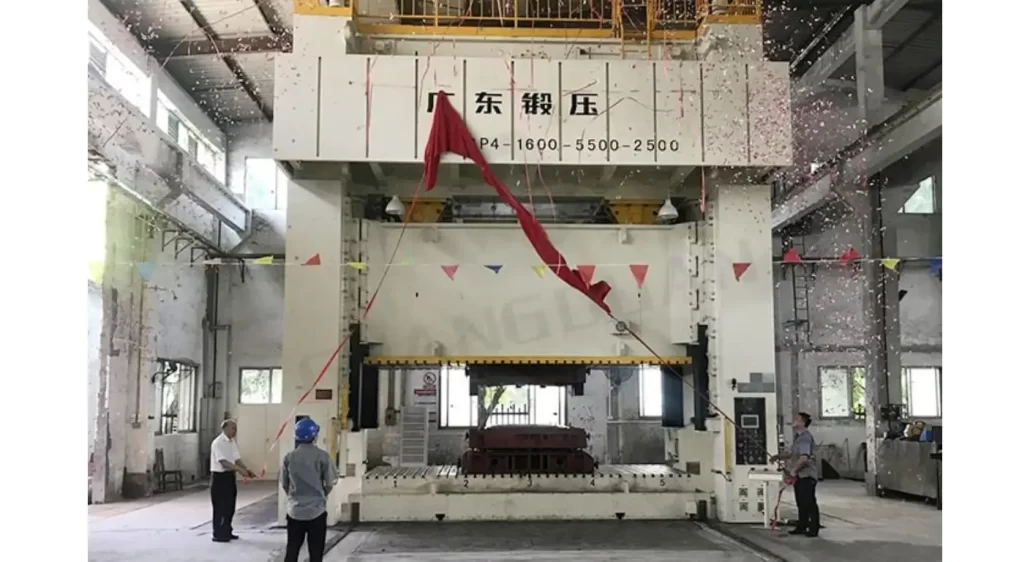
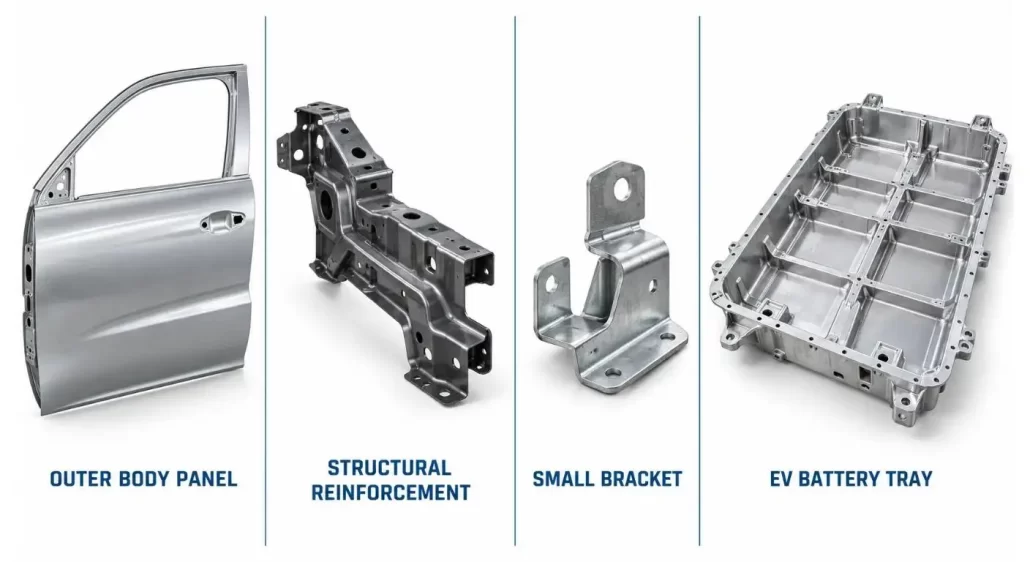
Not tonnage alone should be considered in selecting an automotive sheet metal press machine. A press capable of a small bracket may not have the capacity to accommodate a bed area, stroke or eccentric-load capacity for a door panel, chassis reinforcement or EV battery tray.
Machine width, forming depth, die construction and transfer can kill an otherwise good machine. The choice of stand alone press, progressive die system, transfer press or multi-press line will also depend on the volume of production required.
A good way to begin is to cluster the parts that are included in the planned product into part families and specify the requirements generated by each part family.
Divide Parts Based on Forming Demands
Sheet metal parts in the automotive industry vary widely in size, shape and tolerances. The surface control of outer body panels is important as small marks or waviness will still show after painting.
Structural parts are more concerned with strength and dimensional stability/safe load paths. Brackets and reinforcements can be smaller but can be made of thicker or higher strength materials. EV battery trays feature large size, multiple flanges, openings and joining surfaces.
Considering each of these components as a separate family avoids unsupported compromise equipment specification.
Define Material and Blank Conditions
Give the grade of material, the range of thickness, the size of coils/blank and the annual production volume. Different loads, springback and forming-speed requirements are achieved by the use of mild steel, high-strength steel, stainless steel and aluminum.
The ability of the advanced high-strength steel to form might lead to higher forming forces and tool wear. Aluminium parts are lighter but must be handled carefully on their surface and material flows must be controlled.
The purchasing specification should also determine if the line is used for coil stock or cut blanks/stacks of preformed material. This defines the feeder, destacker and transfer equipment to be used.
Calculate the forces within the forming sequence.
The combined load from drawing, blank holding and trimming, piercing and restriking should be the bases for press capacity. Buyers should determine at what time the peak load occurs and its distribution on the die.
A nominal rating will not indicate if enough force is available at the point above BDC. Mechanical presses will have a force curve associated with the position of the crank while hydraulic presses will be able to deliver a controlled force over a longer stroke.
Add an operating margin and make sure it is justified, but do not select an excessive tonnage without reference to the remaining machine. Extra power will not make up for lack of bed area, lack of stroke or frame stiffness.
Click on Frame and Drive Configuration
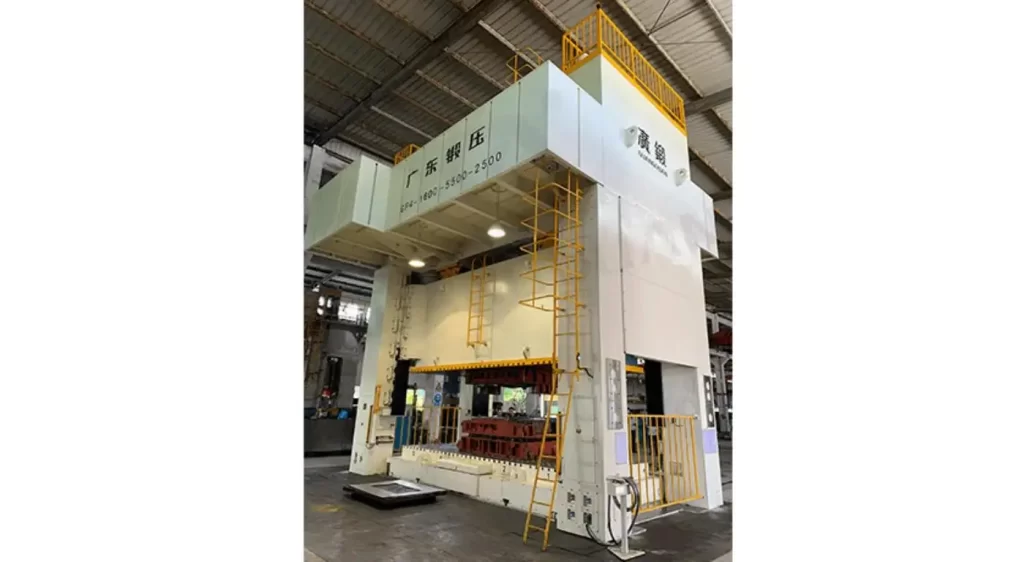
- frame presses offer more open access and can be used for smaller automotive parts. For higher loads and large sized dies, a straight-side structure may be necessary for greater rigidity and load distribution.
Compact die sizes may allow the use of single-point presses. Two- or four-point drives are frequently used on long automotive tools to spread the force of the tool over a larger portion of the slide.
Guangduan’s mechanical press series includes open back, straight side, four point and double point mechanical presses to suit the various stamping requirements.
| Automotive Part Family | Main Press Requirement | Critical Risk |
| Outer body panels | Large bed and controlled drawing | Surface marks or waviness |
| Chassis reinforcements | High rigidity and force capacity | Springback |
| Small brackets | Fast cycle and efficient feeding | Material waste |
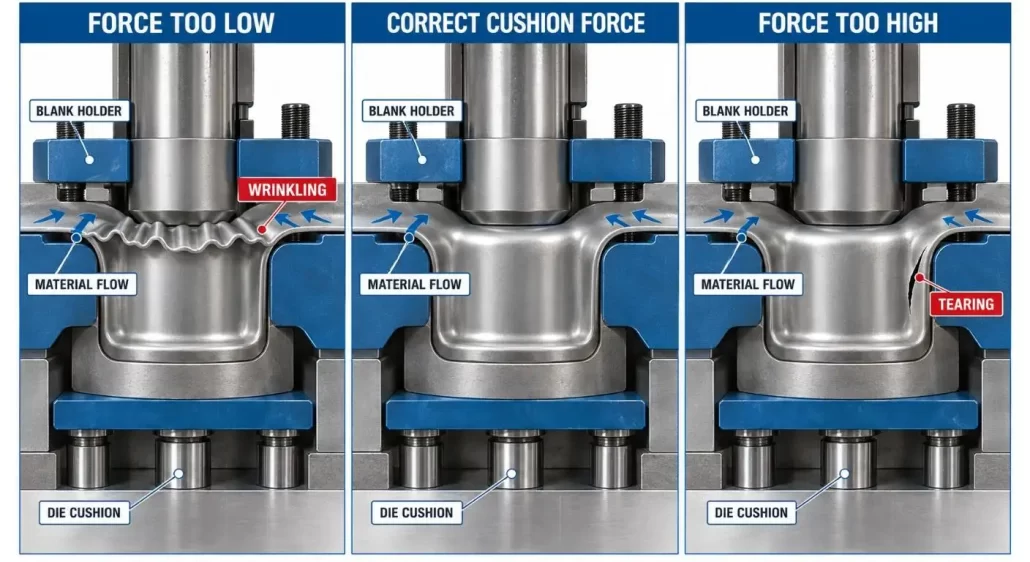
| Deep housings | Long stroke and cushion control | Tearing or wrinkling |
| EV battery trays | Wide working area and multi-point drive | Angular deflection |
| Aluminum panels | Controlled handling and lubrication | Surface damage |
Match Bed Area, Stroke and Die Height
Bed and slide dimensions need to be verified against the entire tool complete with clamping areas and connections. For a large automotive panel, more working room than that of the final size may be needed.
The range of motion of stroke movements should be sufficient to create the part and to clear it during transfer. Die height should allow for planned tools to be covered and still be able to slide and safely install the die.
Confirm die weight, moving-bolster capacity, maximum weight of upper tool and path to introduce die into the press area. All of these are directly related to changeover planning.
Deflection and Off-Center Loading Control:
Not all dies used in the automotive industry load the slide evenly. Eccentric forces can be produced by asymmetrical components, multi-operation tools or changing contact areas.
Request manufacturer’s off-centre loading and deflection of the frame, slides and bolsters at the intended working load. Too much angular deflection can result in part depth irregularity, excessive die wear and clearance irregularity.
Slide guidance over the entire stroke should also be tested for large-panel applications. It is important to note that for long drawing operations, precision is not adequate if it is limited to the bottom dead center only.
Plan Drawing and Cushion Requirements are available.
In deep drawing processes of automotive parts, the blank-holder force must be controlled to ensure that the material flows into the die without wrinkles or tears. The cushion force, stroke, pad size and control zones should be determined through the tooling process.
A programmable cushion can vary the force through the stroke or manage individual areas of a large die. Independent zones can be useful if there is a disparity in material flow.
Hydraulic presses can be used if a long stroke or varying speed of forming and length of pressure control is desired. Guangduan’s hydraulic press types are double action hydraulic press and servo controlled hydraulic press.
Choose Progressive, Transfer or Tandem Production
Progressive dies are used to accomplish a number of different operations as the coil material passes through the tool. They are good for relatively small parts that have stable high volume demand.
Transfer systems will transport individual blanks or partially formed parts from one operation to another. They are able to support bigger, or deeper parts that are impractical to attach to a carrier strip.
Tandem lines comprise a number of presses for successive operations and are useful for large panels. The layout will vary according to the size of the part, forming stages, output and tooling approach.
The automotive metal forming solutions produced by Guangduan show how a press can be integrated with servo feeding, transfer equipment and production monitoring.
Create a plan with Changeovers around the Part Mix
Slow processing speeds or inconsistencies at the die change cause loss of productivity on a high output press line. Note anticipated changeover frequency, die weight and time between production runs.
Changeovers can be shortened by moving bolsters, die carts, automatic clamps and stored press recipes. Changes in feeder width and transfer tooling and cushion parameters also need to be made after changing the die.
Identify the proper die, material and production recipe are loaded before the first cycle.
Know how to monitor quality during production
Monitoring parameters can be: Press Force, Slide Position, Cushion Pressure, Feeder Pitch/Transfer Status. These values can be used to determine if the material is incorrect, if the material is being fed twice, if there is any tool wear or if the lubrication is unstable.
Monitoring limits should be based on proven production data. The system can halt the line or flag an area for review when a value falls outside of the approved range.
In the case of automotive traceability, the production record can be expanded to include coil number, die number, recipe revision, shift and accepted-part quantity.
Use Representative Tooling to validate the Press.
The press should be tested under a meaningful load during factory acceptance tests. If the cycle is not loaded, it will not show frame deflection or cushion behaviour and forming stability.
If possible, use production tooling and the material to be used. Part dimensional, crack, wrinkle, springback and surface quality inspection over repeated cycles.
Guangduan’s GP4-1600 four point press project has a large bolster, long stroke and vehicle sunroof tooling test which can be used as a reference for large automotive press evaluation.
| Acceptance Item | Verification Method | Acceptance Focus |
| Rated load | Calibrated load test | Force accuracy |
| Slide parallelism | Measurement under load | Uniform die closure |
| Cushion performance | Force and stroke test | Stable blank holding |
| Transfer timing | Repeated production cycles | No collision or misfeed |
| Part geometry | Fixture or CMM inspection | Dimensions within tolerance |
| Surface quality | Visual inspection | No dents or tool marks |
Conclusion
The automotive sheet metal press machine used should be suitable for the whole sheet metal parts family, instead of a single tonnage value. The right structure and drive are determined by the part size, material, tool length, the depth of the forming and the production method.
Part-family analysis and verified load distribution and representative tooling trial minimize equipment risk. They also offer a more solid foundation for future programs of vehicles and material alterations.
FAQs
Q1. What kind of press is appropriate for automotive body panels?
Large outer panels will normally need a rigid straight-side press and a wide bed and controlled drawing if required. The specific configuration will vary based on the size of the panels, the type of materials and manufacturing process used.
Q2. How can two-point or four-point presses be advantageous?
There are multiple drive points that spread the force over a long slide. This assists to control alignment and deflection while using large automotive dies.
Q3. What’s the difference between progressive stamping and transfer stamping?
Progressive stamping is stamping of connected strip material through one die. Transfer stamping is a method of transferring separately stamped blanks or stamped formed parts between stamping stations.
Q4. Tonnage is the most important press specification?
But Bed area, stroke, die height, cushion capacity, and frame rigidity and off-center loading may all be equally important.
Q5. When testing products in the factory, should automotive tooling be used?
Yes, when practical. Representative tooling and production material offer a more valid indication of forming stability than does an unloaded machine test.
CONTACT US


Guangdong Metal Forming Machine Works Co., Ltd.
We are always providing our customers with reliable products and considerate services.
If you would like to keep touch with us directly, please go to contact us
-

Home
-

Tel
-

Email
-

Contact