
Cold Forging for Automotive Parts: Connect Component Design with Production Readiness
Forming an automotive part may be a low-cost process but finishing may be expensive. Too much stock may be left on a stepped shaft, or a hollow piece may have to be finished inside, which can be challenging. The evaluation of the cold forging can only be performed at the press, so the production costs and quality requirements are not evaluated.
When designing automotive parts, forming and downstream operations are considered, cold forging is most effective. Not only can metal be used to fill a die. Whether or not the entire route can provide the requested component on a consistent basis at a desired quantity.
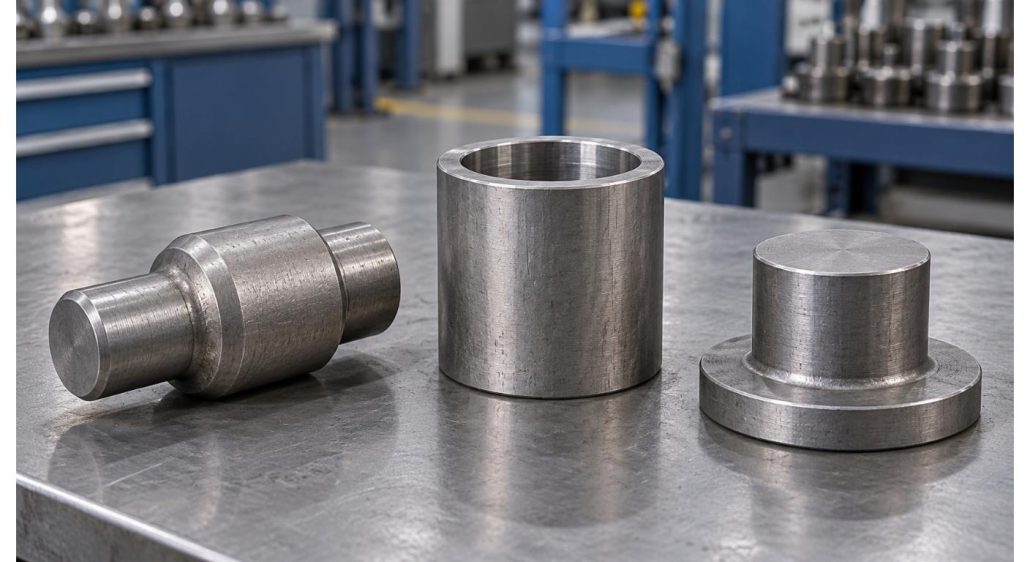
Start with the Features that Perform a Function
Read drawing by understanding the component’s function in the assembly. Locate bearing seats, locating diameters, sealing surfaces and load/torque carrying surfaces or features. These needs dictate the need to control the finishing of surfaces and the possibility to leave them as formed.
Differentiate between functional geometry and geometry that is carried over from previous manufacturing process. A radius or shoulder can move without affecting performance but the proposed move must be approved by the responsible product engineer.
For the reviewing of cold-forming applications, equipment options can be provided from GUANGDUAN’s forge press range. Start that conversation with the functional requirements, material and proposed route of the component, before choosing a press before the part is evaluated.
Recognize opportunities for the use of cold forming.
Cold forging is a group of processes for plastically deforming a metal at a temperature below the recrystallisation temperature, typically in the vicinity of room temperature. Can yield useful near-net geometry, but the detail and accuracy that can be achieved will depend on the material, tooling and sequence of deformation.
It is beneficial to investigate geometries that can be stepped cylindrical blanks or adapted hollow preforms where the material is redistributed instead of being cut away completely in the process of machining. These are examples of processes and do not necessarily indicate that all hollow automotive parts are suitable.
Look at the proposed route, and compare it feature-by-feature with the existing. Identify the location of a forming operation to decrease removal of material, shorten a machining operation, or produce a beneficial preform. Don’t state a material saving percentage that you assume is universal, if there is no volume calculation for the actual part.
Calculate both Forging and Machining Allowances as a group.
Near-net shape is not necessarily ready-to-assemble. It may still be necessary to perform turning, grinding or other finishing operations for tight fits, critical surface finishes or features that are hard to form.
Make a conscious decision on how to allocate machining stock. The amount of allowance is very important because either too much or too little will lessen the economic advantage. When specifying that stock include the effects of datum selection and workholding.
Take into account the location of the forging when it is being cut. Stable locating feature can have more value than bringing all surface close to final size. Read the drawing as a continuous manufacturing plan – responsibilities for formed dimensions and finished dimensions.
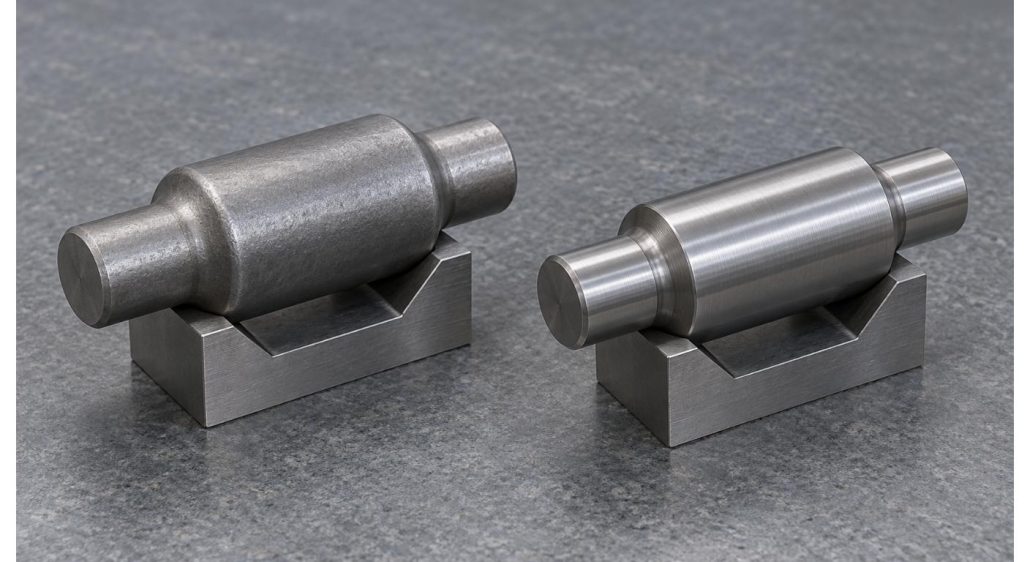
Choose Material Condition at the whole Route by clicking it.
The material grade does not determine cold forming behaviour. The amount of deformation that can be achieved without unacceptable damage is affected by delivery condition, hardness, previous processing and surface preparation.
Look at the path for all of the stages. Some components may need intermediate treatment before further forming is carried out and work hardening may affect a subsequent forming operation. The cleaning/lubrication requirements should be determined in conjunction with the material specification.
Also, there is a need to separately consider final properties. If heat treatment is required, evaluate dimensions and mechanical requirements after heat treatment. A higher hardness, obtained after cold working, does not necessarily indicate that a particular component meets fatigue, toughness and other application requirements. Such characteristics will need to be validated by engineering.
Match the steps in the forming stages with the Press
A viable forming sequence has yet to be developed for a viable component concept. Where necessary, divide up the deformation in preforming, extrusion or calibration, calculate the required load and working travel for each stage.
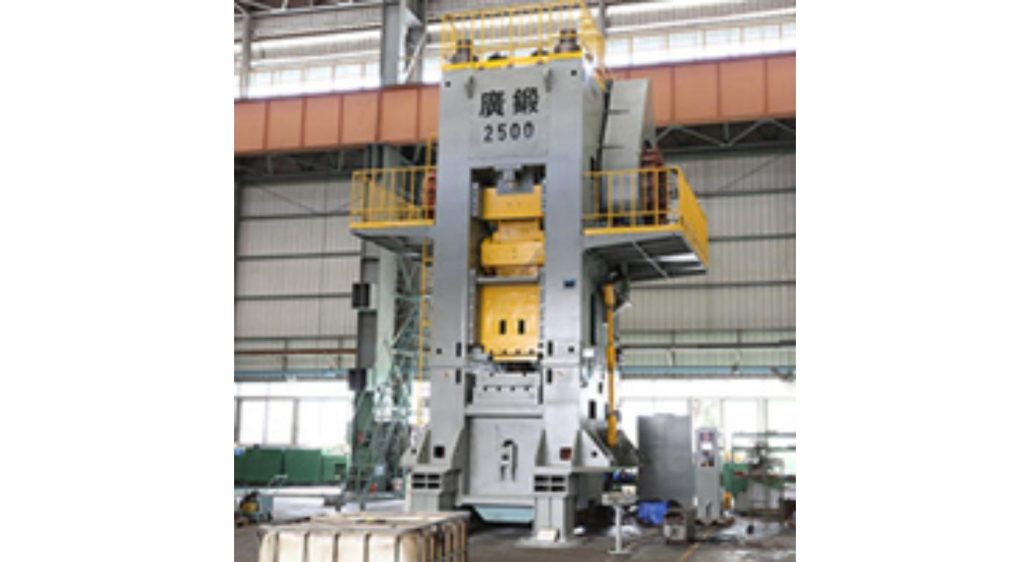
GK knuckle joint press is a crank-toggle press and can be used for extrusion, according to GUANGDUAN. It publishes the following specification: rating position, die height and lower-ejector requirements, which can be used to make a model-specific assessment.
Have the supplier correlate the requested sequence with the allowable force, available energy and tool installation conditions. Also make sure to confirm part release and part transfer. However, not all cold forging processes can be easily adapted to a near bottom working characteristic, and a route cannot be proved by nominal capacity.
But rather just the Final Component!
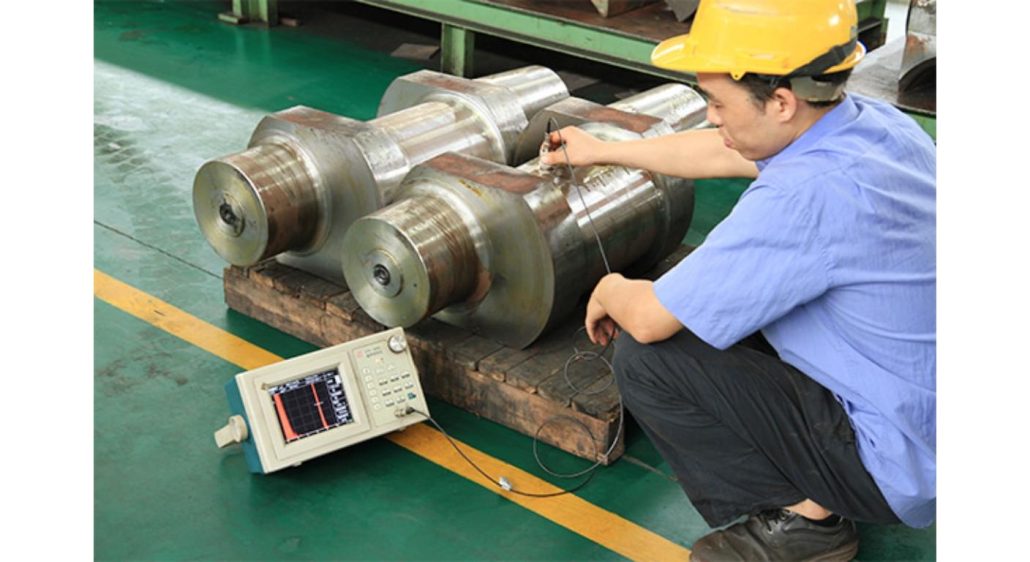
Only a complete profile and clean surface lay a foundation for the quality picture. Inspection should include the drawing as well as the risks of the material/making process.
Determine dimensional checks following pertinent finishing/treatment operations. When required, define procedures to be used for the inspection of internal integrity, material structure or mechanical performance. Each examination method has the ability to detect a different condition, and no single examination method can give a complete indication of the component quality.
GUANGDUAN’s manufacturing and inspection resources can provide discussion for equipment verification. Don’t let those machine-manufacturing capabilities get confused with the automotive supplier’s component qualification plan. There are milestones (Press Acceptance and Finished Part Approval) which have different evidence requirements.
Compute Cost per Accepted Finished Part
Economics of cold-forging is not only dependent on the forming cycle. Consider stock preparation, tooling, lubrication, intermediate operations, machining, treatment and inspection in comparing routes.
Development and tooling costs are shared over the number of products produced. The maintenance and replacement of tools also is important, especially when wear affects the downstream machining or part acceptance. Short tool life and over finishing can have a negative impact on a low forming cost.
Use accepted Finished Parts to evaluate the process. Do not report every press stroke as a saleable part, remember to factor in for normal handling, changeovers and losses at later stages. Make realistic volume and quality assumptions, so that the business case is based on the actual production circumstances, and not an ideal trial.
Before production the Controlled Route needs to be approved.
Keep representative samples and documentation of material preparation to final inspection. Connect the outcome of the components to the materials batch, tooling changes and approved settings to later changes to be compared against a known reference.
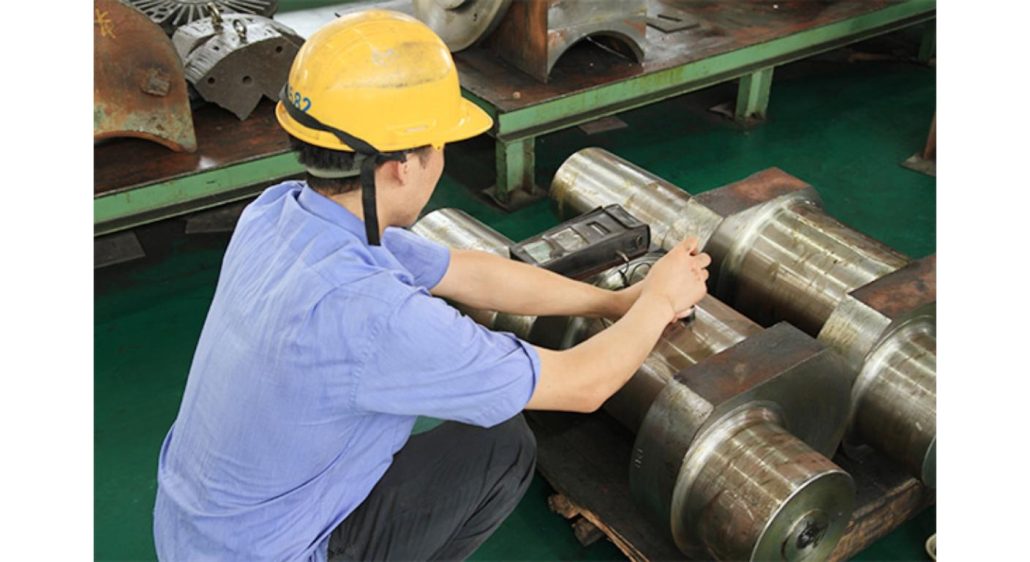
Specify necessary re-evaluation changes. Outcomes other than the operation in which the change is made may be affected by a different stock condition, a revised preform or an altered heat-treatment route. Update documents related to the process in concert.
Send part drawing and proposed forming route to GUANGDUAN for discussion of equipment suitability. Put downstream requirements and production target so that the press proposal can be helpful for the complete manufacturing plan.
| Approval record | Responsible function | Handover point |
| Approved component drawing | Product engineering | Before tooling design |
| Forming trial record | Process engineering | Before production settings are released |
| Finishing inspection report | Machining quality team | Before final component approval |
| Released manufacturing route | Project quality team | Before production scaling |
Conclusion
When manufacturing automotive parts by cold forging, the quality of the products should be evaluated from the finished part. Choose forming features and provide an allowance for the machining process; verify the final properties. A documented route and realistic cost model are useful to assess if there is a practical benefit of applying cold forging for certain automotive application.
FAQs
Q1. Can every automotive metal part be cold forged?
No – there are restrictions on suitability due to geometry, material condition and deformations. There are other processes required, or a combination route, for some parts.
Q2. Is cold forging the solution to the elimination of machining?
Not necessarily. Critical fits and surface finishes may require finishing. Set allowances for the entire manufacturing process.
Q3. Does work hardening ensure that the component will perform better?
No, it is dependent on the material and end-use. Perform validity testing of the required properties in the application.
Q4. Will test for GK press capacity verify suitability to a specific part?
No, loading energy, tooling, energy and ejection also need to be considered. Approval should be pertinent to the actual process.
Q5. Which of the following is the most appropriate way in which manufacturers should compare production costs?
Make comparisons of accepted finished parts throughout the entire process. Add tooled, finished, treated, inspection and production losses.
CONTACT US


Guangdong Metal Forming Machine Works Co., Ltd.
We are always providing our customers with reliable products and considerate services.
If you would like to keep touch with us directly, please go to contact us
-

Home
-

Tel
-

Email
-

Contact