
Crankshaft Forging Machine: How Forgers Cut Variation And Build More Traceable Output
Crankshaft Forging Machine selection is no longer only about rated force. For overseas buyers, distributors, and automotive-component producers, the real question is whether a press can hold stability under load, reduce die-related losses, support safer operation, and fit the direction of modern manufacturing: automation, traceability, and higher process discipline.
Recent manufacturing guidance from NIST highlights automation, digital integration, and resilient production as central competitive themes, while metal forming coverage in 2025 has pointed to inline inspection, workflow tracking, and exception reporting as growing priorities on the shop floor.
Why Traditional Forging Lines Still Lose Money in Daily Production
Many forging plants do not struggle because they lack tonnage. They struggle because output becomes harder to control once production runs get longer, dies wear, and operator pressure rises. In crankshaft-related forging, small deviations can become expensive fast. A machine with weak guiding performance, limited overload protection, or poor stroke control can lead to more rework, less predictable die life, and unstable forming consistency.
Typical pain points include:
•Inconsistent slide motion during high-load production
•More die stress and faster tooling wear
•Longer setup time when changing part programs
•Lower confidence in batch-to-batch repeatability
•More difficulty connecting manual forging output to digital quality records
This matters even more now because manufacturers are under pressure to modernize. NIST says U.S. manufacturing competitiveness is being shaped by AI, automation, and stronger supply-chain resilience, and metal forming industry reporting has emphasized digital job instructions, inline inspection, and workflow visibility as practical directions for improvement.
What Overseas Buyers Now Expect From a Crankshaft Forging Machine
For procurement teams and distributors, machine evaluation has become more practical. Buyers want to know how the equipment will ensure the upkeep of throughput and the gradual mitigation of process risk, not just how it looks on paper.
These questions impact real buying engagements more:
•Will The Machine Sustain Guidance Accuracy With Recurrent Loading?
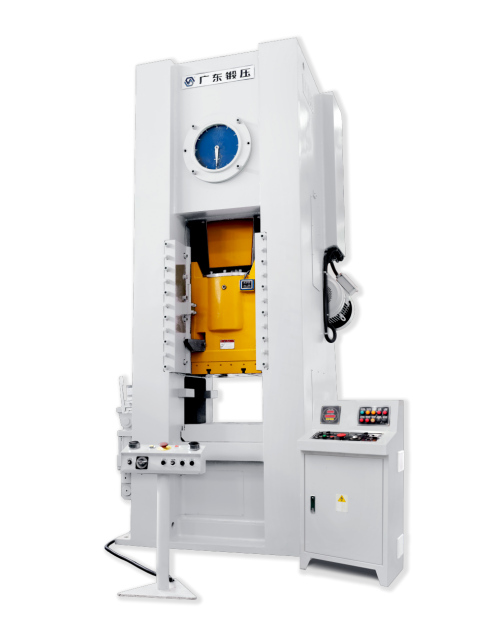
The rigidity of the frame, guiding the slides, and the load-bearing elements are all critical enough to determine the crankshaft forging process. With high rigidity, the JH31 Series of GUANGDUAN employs a closed-type single-point structure, while the guiding block is designed with a four-surface full guiding structure. The importance of this design lies in the fact that more rigid structural control is constructed to reduce the drift of the moving parts and provide more stable control over the forming process.
•Can It Protect The Press And Dies When Loads Change Unexpectedly?
Unexpected overload is one of the most costly issues in forging and stamping environments. GUANGDUAN addresses this with a hydraulic overload protection device on JH31-400/630/800 models, while JH31-200 to JH31-300 use a wedge-shaped iron die unlocking device. In practical terms, this helps reduce the chance that abnormal loading turns into expensive downtime, die damage, or longer recovery work.
•Can Operators Adjust The Machine Quickly Without Slowing The Line?
Setup discipline is now closely tied to productivity. The JH31 Series uses mechanical die set height adjustment with digital display, making die calibration easier and faster. That is valuable for plants that need more predictable changeovers, especially when production schedules are tight and operators are handling multiple part types.
How GUANGDUAN Aligns With the Shift Toward Automation
Automation is no longer a future talking point. It is already part of how manufacturers defend margins and manage labor pressure. NIST’s 2025 manufacturing outlook points directly to automation and technology adoption as competitive necessities, and recent metal fabrication reporting has highlighted the value of automated job instructions, inline quality checks, and better workflow tracking.
This is where GUANGDUAN becomes more relevant than a conventional press supplier. The JH31 Series is designed not only as a forming machine, but as a platform that can fit more disciplined production systems.
Its practical automation-related strengths include:
•PLC and pneumatic combined control, which supports more reliable machine logic
•Three stroke modes: continuous stroke, single stroke, and micro-motion, giving plants more flexibility for different process demands
•Optional photo-electric protection, improving shop-floor safety and operational reliability
•Optional automatic feeding device and uncoiling leveling device, helping plants move toward automated production instead of relying fully on manual part handling
For overseas buyers, this matters because labor cost, training variability, and safety expectations continue to reshape equipment decisions. Automation is valuable not only because it can reduce manual intervention, but also because it can improve consistency and make production data easier to standardize.
Why Rigidity, Bearing Capacity, and Guide Precision Matter in Crankshaft Work
Crankshaft-related parts demand more than raw pressing force. They require stable load transmission and repeatable motion across long production runs. GUANGDUAN’s JH31 Series uses a monolithic box-type structure in some models and a crankshaft-type eccentric shaft with strong bearing capacity. The wet-type clutch is also designed for long service life.
These details matter because they affect what buyers actually care about:
•Better resistance to deformation under demanding loads
•More stable motion transmission during repeated cycles
•Lower risk of performance decline in extended production
•Better support for consistent part quality over time
This matches a broader market reality. The automotive industry continues to value efficient, reliable component manufacturing, while lightweighting and efficiency trends still shape vehicle design priorities. The U.S. Department of Energy notes that reducing vehicle weight by 10% can improve fuel economy by 6% to 8%, which helps explain why high-quality forged components remain important in many vehicle applications. Meanwhile, the IEA’s Global EV Outlook 2025 shows that vehicle manufacturing is still evolving rapidly, increasing pressure on suppliers to improve manufacturing capability and responsiveness.
A Better Buying Standard for 2026 and Beyond
A Crankshaft Forging Machine should now be judged by how well it supports stable output, die protection, operator safety, setup efficiency, and future automation readiness. That is the buying standard many serious plants are moving toward.
For that reason, GUANGDUAN’s JH31 Series stands out in a practical way. Its rigid closed-type structure, four-surface guideway design, digital die-height adjustment, overload protection strategy, PLC-based control, and automation-ready options answer real shop-floor problems rather than just marketing claims. For buyers serving automotive, motorcycle, hardware, instrumentation, and gas appliance industries, that is a stronger value proposition than tonnage alone.
In other words, the best press is no longer the one that simply hits harder. It is the one that helps the plant run cleaner, safer, and more predictably as industry expectations continue to rise.
CONTACT US


Guangdong Metal Forming Machine Works Co., Ltd.
We are always providing our customers with reliable products and considerate services.
If you would like to keep touch with us directly, please go to contact us
-

Home
-

Tel
-

Email
-

Contact