
Crankshaft Press for Forging: Choose a Machine That Fits Your Process
Even if a forging press has an adequate nominal capacity it may still have a problem with a specific part. The load occurring in the forming could be too early in the stroke, excessive energy is being used in the operation compared with what is available from the drive, or the tooling may not provide sufficient space for work to be handled safely.
Choosing the crankshaft press for forging is to look at the entire working cycle for forging engineers and equipment buyers. Begin with the part and the sequence of its formation; then determine if the machine will have the necessary force, energy and access in actual production conditions.
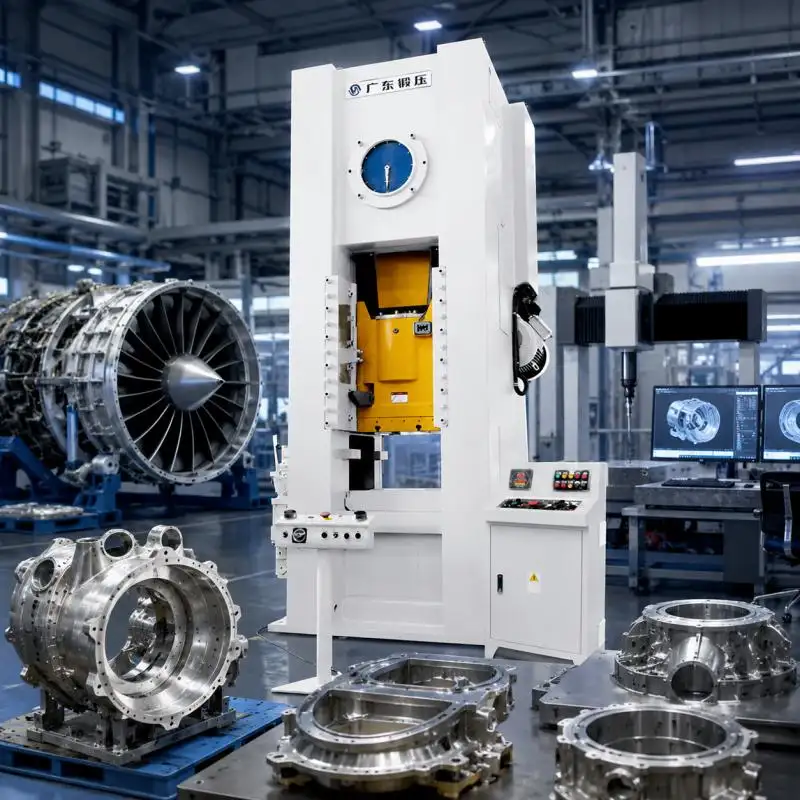
Firstly, use the Forging Operation
Identify what the press needs to do before comparing models! Know the grade of material, billet size, forming temperature, desired final shape and quantity of desired final shape. Even if the estimated peak loads in a short finishing operation and a large upsetting operation are the same they might require quite different characteristics of the machine.
Break up each step of the proposed process. The preforming, blocking, finishing and trimming should be well defined, either on separate machines, or in an integrated set-up. Excessive deformation, in a single stroke, can lead to an increase in loading and to a more difficult control of the material flow.
First of all, let’s start with equipment which GUANGDUAN has forge press range. The next step is useful to do is a process review using drawings and material conditions; not to select a machine from its capacity designation only.
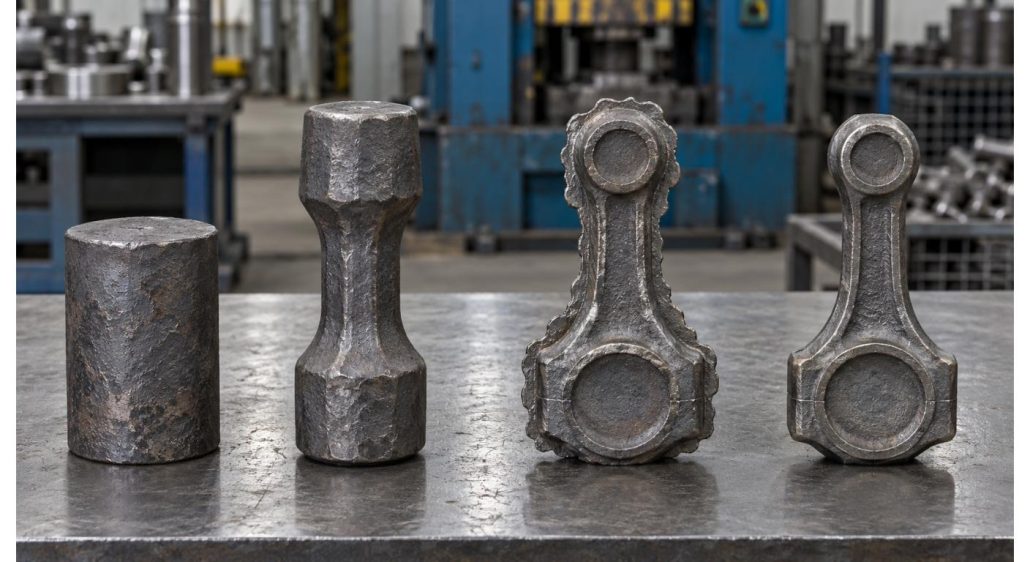
Verify location of forming load(s)
A slide mechanism is used to transform rotary movement into slide movement with the help of a conventional crank mechanism. Its mechanical advantage varies during the stroke, therefore the nominal force rating is valid at a certain position above bottom dead centre. It is not to be considered as available the whole working travel.
Review the estimated forming load vs the allowable force curve of the machine. A press of apparent adequate “nominal capacity” might not be appropriate if significant deformation occurs well above the rating point. The review should take into account the load during the whole contact with the workpiece.
For example, the JH31 closed type single point forge press rates out points based on the model, and also shows nominal capacities. The supplier should be able to tell you how these compare with your intended use and what are the acceptable loading conditions for the model that you select.
Do not consider Energy as a requirement while considering other requirements.
Peak force is just one aspect of the work. The energy required for the forming process is related to the force and the distance of displacement required during forming process. The maximum forces can be the same for two forgings, but the energy expended can be different, depending on the working stroke.
For a traditional flywheel-driven press, look for the energy available per stroke and recovery at the desired operating speed. A machine can take an occasional test stroke with no trouble to get the same results, but can have trouble keeping the same result when it is in continuous production.
Order an energy audit of the planned forming sequence and the production rate. Consider realistic billet size, temp and lubrication changes. Resistance to deformation conditions and assessment of whether there is sufficient margin in the proposed operating window.
Install the handling path and the Dies.
Any ejection equipment and clamping arrangements, plus holders and backing plates must be able to fit into a suitable machine. Verify the die height against the manufacturer’s die height measurement convention, die height adjustment range and opening.
Bolster dimensions are not the only criterion that determines compatibility. Supporting area, mounting pattern and load position also are factors. Even if the tooling is physically acceptable, it can still be an unacceptable eccentric loading if the forming force is applied off centre of loading.
Check billet in and forging leaves. Space is required for tongs, grippers and transfer equipment to clear the entire movement. Verify the ejector force, travel and timing with the actual part release requirement, especially if the part has a tendency to cling in the die after the forming operation.
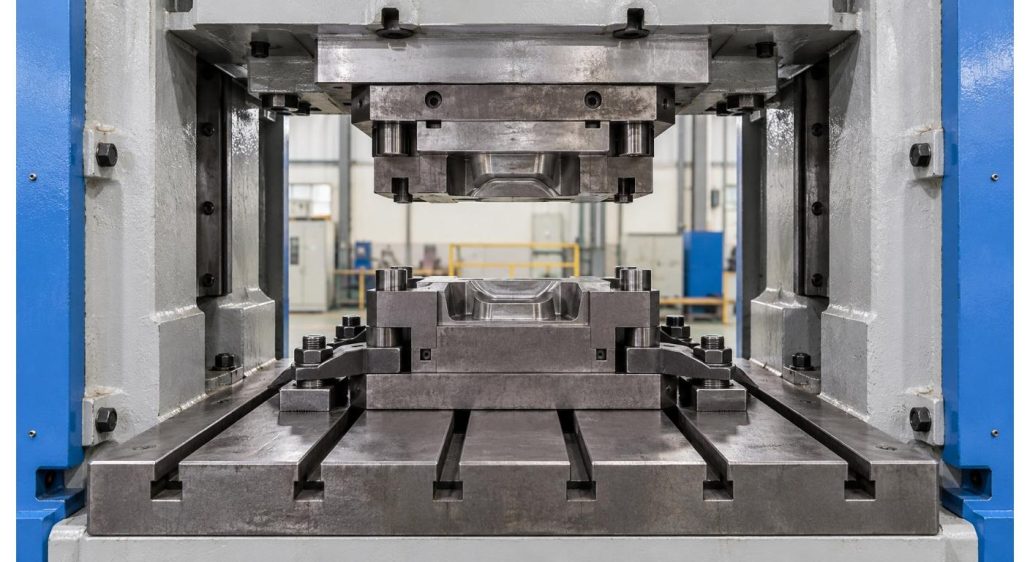
During the Tooling Warms, be sure to protect Alignment.
The accuracy of forgings is dependent on the performance of the machine and the tooling when they are under load. When cavity filling causes an unequal resistance, frame stiffness, slide guidance and die support can have an impact on alignment.
There is an additional variable, which is thermal conditions. As production progresses, dies and associated components can expand and scale and lubricant can affect seating surfaces. If satisfactory first samples are obtained, a change in the setup may be necessary before stable operating conditions are achieved.
Inquire about the checking of alignment, die height and lubrication during the trial. The mechanical press equipment developed by GUANGDUAN has various structural combinations, depending on the loading pattern and tooling requirements of the application, an appropriate combination should be determined.
Construct the Cycle AROPA (Accepted Parts)
Strokes per minute (SPM) published refer to movement of the machine, not guaranteed output. All these heating, descaling, positioning, lubrication, ejection and removal operations play their part in the production cycle. Transfer delay can also alter temperature of billet prior to subsequent forming process.
Write the cycle including the whole cell. Verify the press will feed and/or handle in single strokes or in an automated sequence, and determine how feeding and handling equipment will communicate with the controls on the press.
Assess production using acceptable parts per hour. Evaluate production economics, including routine die cleaning, die inspection and planned adjustments. The slow (but steady) operation may be more beneficial than a rapid cycle that brings the forge to a halt or creates erratic forgings.
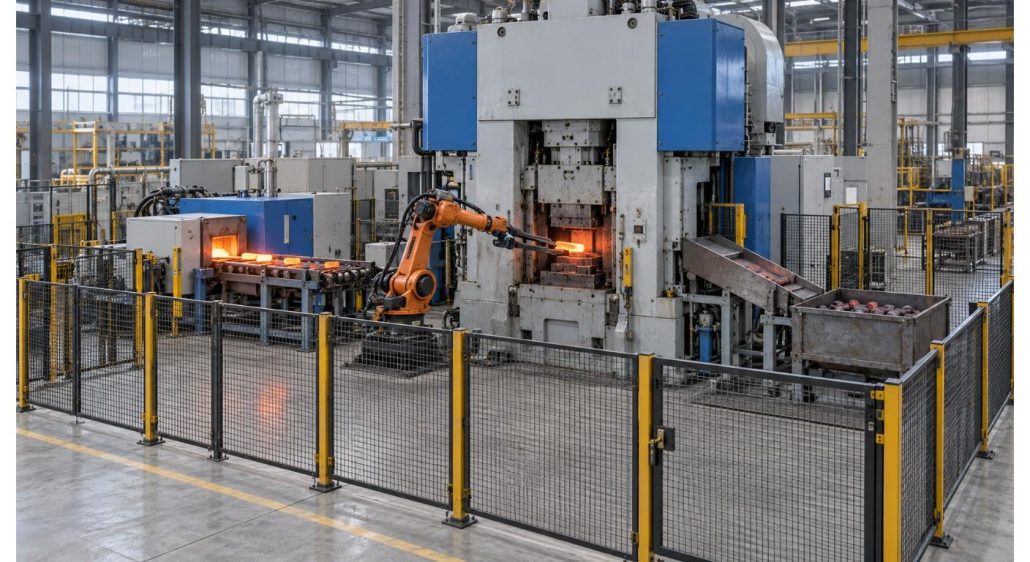
Set the Production Trial to be the Approval Point.
Always have any trial conditions agreed prior to placing the order. Apply representative material, production-intent tooling and set up. Where applicable, temperature of billet, lubrication practice, cycle timing and the method of inspection should be recorded to ensure that the results are consistent.
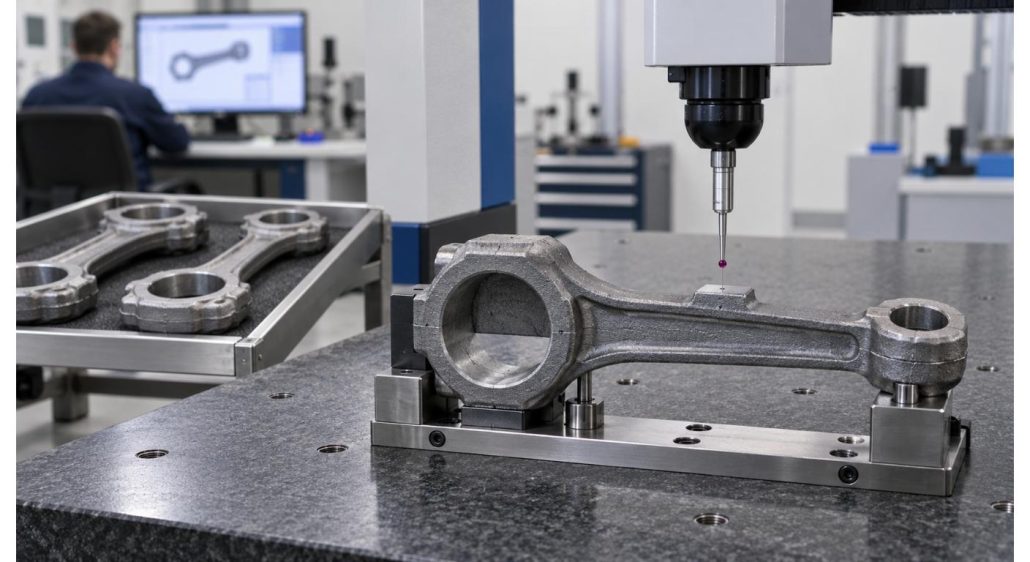
After the operating conditions have become stable the trial should show repeated satisfactory parts. Evaluate cavity filling, mismatch, surface and specified dimensions. If internal integrity or grain flow is important, agree upon suitable examination separately; appearance alone is not enough to judge internal integrity or grain flow.
Monitor loading/operating behaviour and compare to supplier approved operating limits. Record the setup that was accepted and any changes and restrictions made. Submit drawings and detailed information about the process to GUANGDUAN engineering enquiry channel to set up a reviewable proposal before the final machine selection.
| Trial finding | Possible contributor | Follow-up check |
| Incomplete cavity filling | Billet variation or restricted material flow | Verify billet condition and preform geometry |
| Excessive flash | Excess stock or die closure variation | Check billet mass and die setting |
| Part sticks during removal | Release condition or ejector mismatch | Inspect draft, lubrication and ejection |
| Dimensions drift during the run | Thermal growth or setup movement | Compare cold and stabilised measurements |
Conclusion
The press that is used to forge a crankshaft is the right one for the whole operation. Verify the force at working position and the adequate forming energy, practical die installation and reliable handling. Approve the equipment based on repeatable production trial, agreed part quality and operating conditions.
FAQs
Q1. If crankshaft press is a machine that is used to forge crankshafts, is it possible for it to be used to forge crankshafts for engines?
No. In this case it is referring to the press drive mechanism. A part, tooling and forming sequence must be separately assessed for suitability for an engine crankshaft.
Q2. Is the capacity of the press the only requirement for choosing the right press?
No. Force at working position, compatibility of forming energy and tooling etc. These requirements need to be met in conjunction.
Q3. Is it possible to use the same crankshaft press for hot and cold forging?
Possibly, if the design and configuration is appropriate for both operations. The need for loading, thermal exposure, lubrication and handling must be confirmed separately.
Q4. Will production speed be as advertised, strokes per minute?
Not necessarily. Actual output is impacted by loading, heating, transfer and inspection. Reach an agreement on the accepted P/P h under specified production conditions.
Q5. What needs to be included in an equipment enquiry?
Provide part drawings, material grade, billet size, forming conditions and target output. Include tooling information and available load calculations to help with a more accurate assessment.
CONTACT US


Guangdong Metal Forming Machine Works Co., Ltd.
We are always providing our customers with reliable products and considerate services.
If you would like to keep touch with us directly, please go to contact us
-

Home
-

Tel
-

Email
-

Contact