
Custom Hydraulic Press: Translate Your Forming Process into the Right Design
When a deeper housing is desired, or perhaps a larger panel or perhaps a challenging stainless-steel piece, the constraints of an existing press can be quickly uncovered. But asking for more capacity isn’t the only solution to the issue. Blank-holding, working speed, tool clearance or sequence control of the forming processes may be restricted.
The first step to a custom hydraulic press project is to discover that restriction. The effective customisation for sheet-metal manufacturers involves describing the required interaction between the machine and the sheet and die, and ensuring there is a proof that the proposed design is able to operate in that environment.
Explain the Forming Problem prior to the Machine
Begin from the component drawing and discuss what needs to be accomplished during production. Determine the grade, thickness range, blank dimensions, forming depth and critical surfaces of material. Add the necessary Output and Inspection criteria that will determine acceptability of a part.
If the process is already existing and has trouble, then specify the symptoms very precisely. Cracking at a corner and uneven depth and challenging part removal indicate other investigations. Do not ask the supplier to diagnose the problem from the drawing; provide rejected samples and/or trial records, if available.
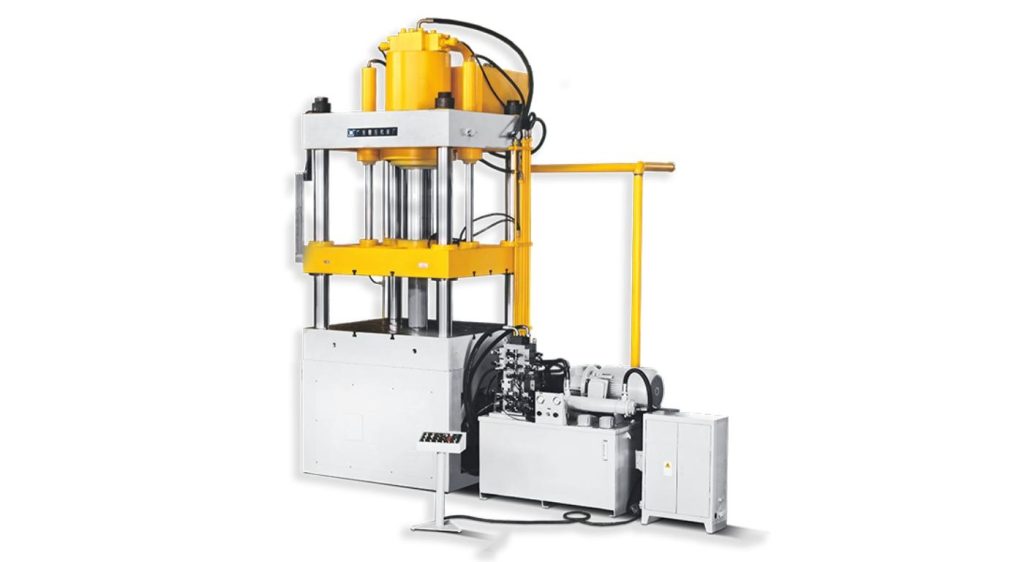
GUANGDUAN’s hydraulic press products include 4 column double acting and gantry servo hydraulic press. These serve as appropriate bases for a technical review. Before asking for structural changes, make sure an existing configuration is able to meet the requirement.
Measure the Blank Holding Force and Separate it from the Forming Force
For deep drawing, it is important to have control of the entry of the sheet into the die. The two forming action and blank-holding action have different functions and can’t be used a single headline to describe the whole forming process requirement.
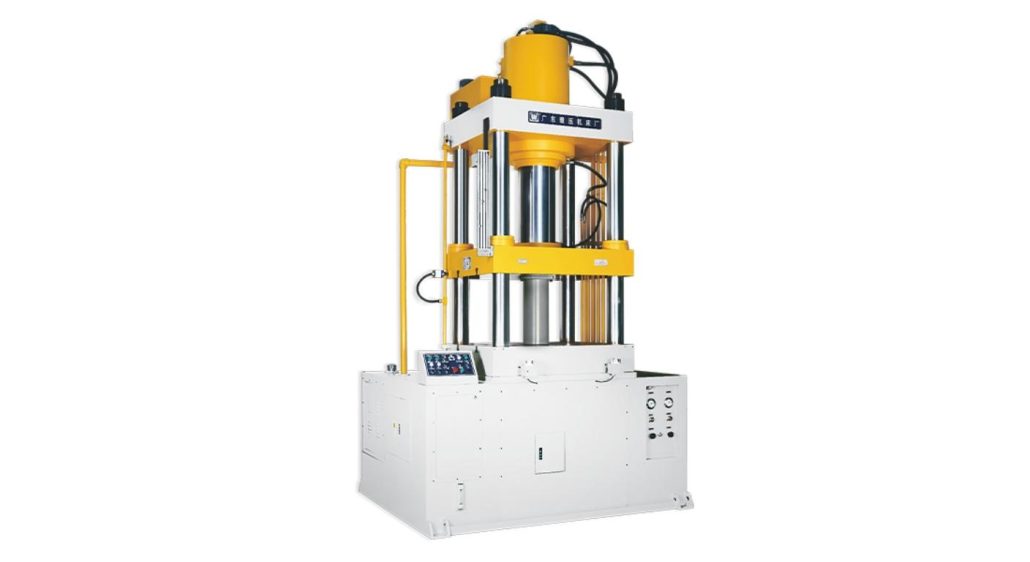
The four-column double-function hydraulic press (YA28) from GUANGDUAN provides the capacity of the main cylinder and lower cylinder separately. It is said to be for thin plate deep drawing, forming, aligning, bending and folding.
Inquire from the supplier about how the suggested lower cylinder design relates to the blank-holding or cushion action of the tooling. Verify the forces, travel and sequence of operations for each action. The nominal capacity of the cylinder published does not mean this is the capacity the main forming cylinder has; see the capacity breakdown for the model selected.
The Working Cycle is written as a Sequence.
Maximum force and stroke are not enough to fully specify a hydraulic press. Approach, contact with the work, forming travel, any necessary hold of the pressure, release of the pressure and return. Know what to look for in terms of transition from stage to stage based on position or pressure.
Y28 double action hydraulic press is provided with selectable fixed position or fixed pressure function, pressure holding and delay function. The stroke and the operating pressure can be set within the operating range of the machine.
Translate those functions to process requirements. Specify forming end point and any required dwell time for the tooling. A fast idle approach is not the same as forming speed under load and a longer pressure hold should have a given function and should not be an arbitrary setting.
Make the Workspace Around the Complete Tool larger or smaller.
The size of the workpiece is not used to determine the machine opening. Upper and lower tooling, die holders and backing plates as well as cushion connections and clearance for free release of formed part.
Verify die footprint loaded with the supporting surfaces and column or frame openings. A tool may fit on the table, but be hard to install, clamp or remove. Discuss load centre and any forces on a single side of the machine with the machine supplier.
Think about the biggest tool that’s been approved and the worst handling situation instead of just adding space any place and everywhere. Additional opening and table space may alter the size of the machine and the project cost. State the clearance that is required for a specific operation and keep drawings for the mounting of tooling.
Use customise controls to change production.
Control requirements should be based on the sources of process variation. If multiple parts are to be formed with different settings, recipe storage can minimize errors in setting up the machine. If it is necessary to monitor pressure and displacement during the forming, specify what should be monitored and how information will be used.
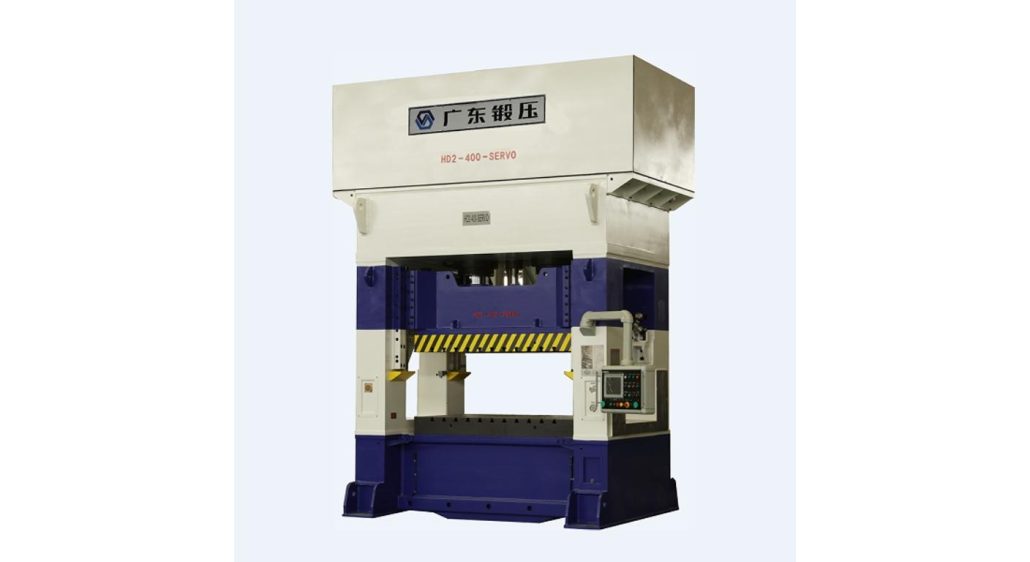
GUANGDUAN’s GY2S servo hydraulic press is the closed loop control based on the servo drive, pressure sensor, displacement sensor, PLC. There is also storage for twenty sets of mould parameters, listed on the page.
Identify those settings that the Operator can modify and how approved recipes are safeguarded. Identify a specified value from a measured value. When it comes to data export, further monitoring, or outside communication, ask for confirmation, don’t presume these functions exist with the touch screen.
Make sure to add Changeovers and Handling to the Design.
Work with the forming stroke has to fit into a custom machine. Set up blank entry, blank exit and operator/transfer equipment access. Make sure the full handling path is confirmed prior to finalizing the layout.
Review at an early stage the proposed loading method for heavy dies. The movable-bolster options are listed on the GY2S page, where you can select movement arrangements. The specific configuration will need to be checked for availability, load and interfaces.
Consider maintenance access and location of hydraulic equipment and safeguarding arrangement in the layout review. If routine inspection, die changes and component servicing are not feasible during operation then a compact installation is not useful. Give responsibility for equipment surrounding the press, and design the press and production cell as one.
Design Through Measurable Outcomes will be approved
Commit to what will be considered success, before manufacturing starts. Identify machine checks apart from part-quality requirements. It is important to note that a pressure display at the set pressure is not in itself an indication of acceptable wall thickness, surface condition or final geometry.
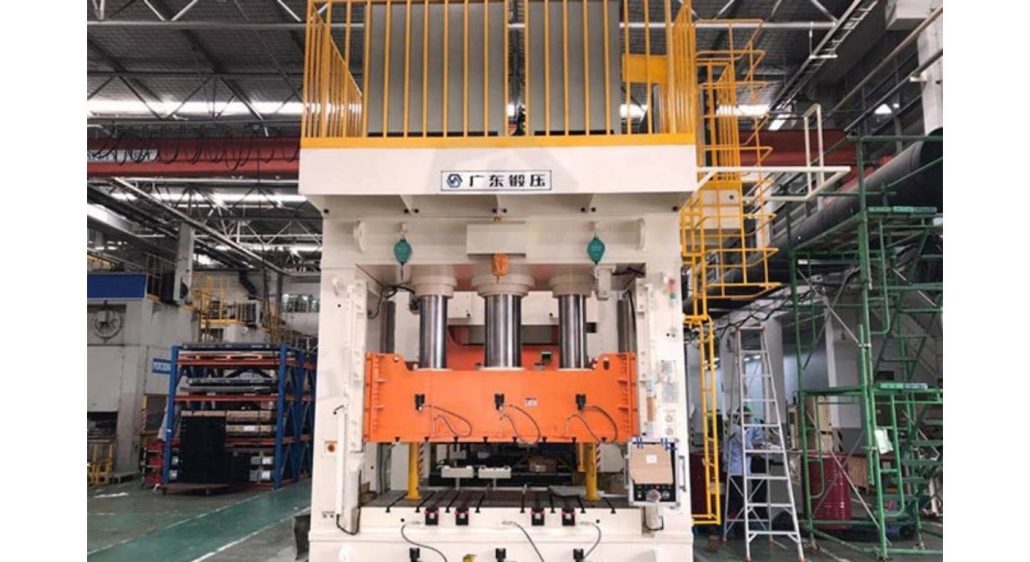
Try to use production-intent tooling and material for trials. Cycle and inspect results and record approved settings for repeated parts. If there is no tooling, document outstanding checks and how these checks are going to be achieved.
Determine operating conditions for any energy and/or output comparison, auxiliaries and handling. Provide drawings, tooling information and the proposed acceptance requirements via the inquiry of GUANGDUAN’s project. Having a clear technical brief will be helpful in quoting the scope, reviewing and approving the scope.
| Change after initial approval | Documents to update | Review focus |
| Different tool or part family | Tooling envelope and process brief | Compatibility with approved design |
| Revised working sequence | Control description and trial plan | Transition conditions and timing |
| Added handling equipment | Cell layout and interface schedule | Access and equipment coordination |
| Changed production target | Cycle assessment and acceptance criteria | Performance under revised conditions |
Conclusion
A helpful custom hydraulic press specification relates each desired feature to a forming/production requirement. Specify the different forces, sequence of operation, tool envelope and tool control requirements prior to design approval. Agreed machine checks and repeated part trials to confirm the result.
FAQs
Q1. Is a new hydraulic press design needed?
Not always. An existing platform may be used for the task, with some configuration modifications. Agree the discrepancies between the approved proposal.
Q2. Are nominal capacity and main-cylinder force the same?
Not necessarily. Duplex models might have individual cylinder sizes. See how the manufacturer has defined the rating given.
Q3. Will increased pressure help to eliminate deep-drawing defects?
Not reliably. Forming can also be affected by the geometry of the tool, the material, lubrication and blank holding. Do some research first, don’t adjust settings.
Q4. Do all hydraulic presses have movable bolsters?
No. – verify that the configuration is available, verify direction of movement and permitted load for the selected configuration. Add agreed layout to layout.
Q5. What information is useful to a supplier to produce a useful proposal?
Part drawings and part specification, including materials and tooling, and target output. Include process challenges and process acceptance criteria.
CONTACT US


Guangdong Metal Forming Machine Works Co., Ltd.
We are always providing our customers with reliable products and considerate services.
If you would like to keep touch with us directly, please go to contact us
-

Home
-

Tel
-

Email
-

Contact