
Integral vs Split-Frame Heavy Forging Press Machine: Structural Comparison
An integral-frame Heavy Forging Press Machine generally provides a continuous load path, high structural rigidity, and relatively simple alignment. A split-frame design, however, can simplify the manufacturing, transportation, installation, and maintenance of larger presses.
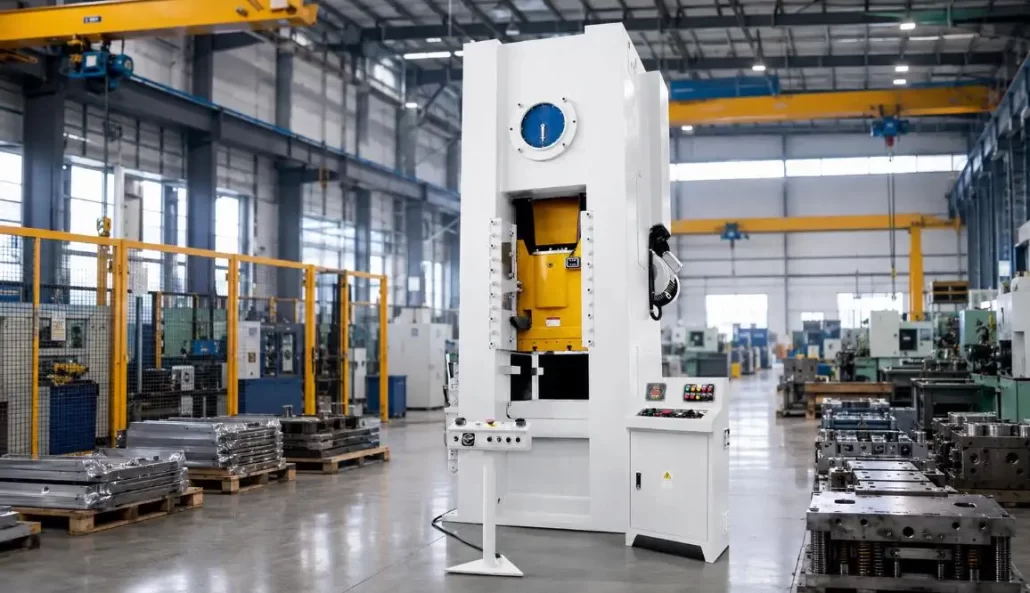
Neither structure is automatically better. The correct choice depends on forming capacity, frame dimensions, allowable deflection, die size, transportation restrictions, installation conditions, and long-term maintenance requirements.
The GUANGDUAN GK Series include models with capacities in the range of 6,300 to 25,000 kN, and with bolster sizes of approximately 700 × 700 mm to 1,200 × 1,200 mm. Smaller and medium models typically have an integral construction; larger models may have a split-frame construction.
Why Frame Structure Matters?
The frame carries and transfers the forming force between the slide, tooling, and bolster. Its design affects:
• Slide-to-bolster parallelism
• Frame rigidity and elastic deflection
• Resistance to off-center loading
• Die clearance stability
• Part dimensional consistency
• Transportation and installation requirements
Two presses with the same rated capacity may perform differently because of variations in frame material, cross-section design, rib arrangement, machining accuracy, and assembly quality.
What Is an Integral-Frame Heavy Forging Press Machine?
An integral-frame Heavy Forging Press Machine uses a main load-bearing structure manufactured as one complete frame or as a permanently welded and machined assembly. There are no large detachable joints in the principal load path.
Its main characteristics include:
• Continuous force transmission
• Fewer connection surfaces and fasteners
• Relatively straightforward assembly
• Easier initial alignment of the slide, guides, and bolster
• Lower risk of movement between structural joints
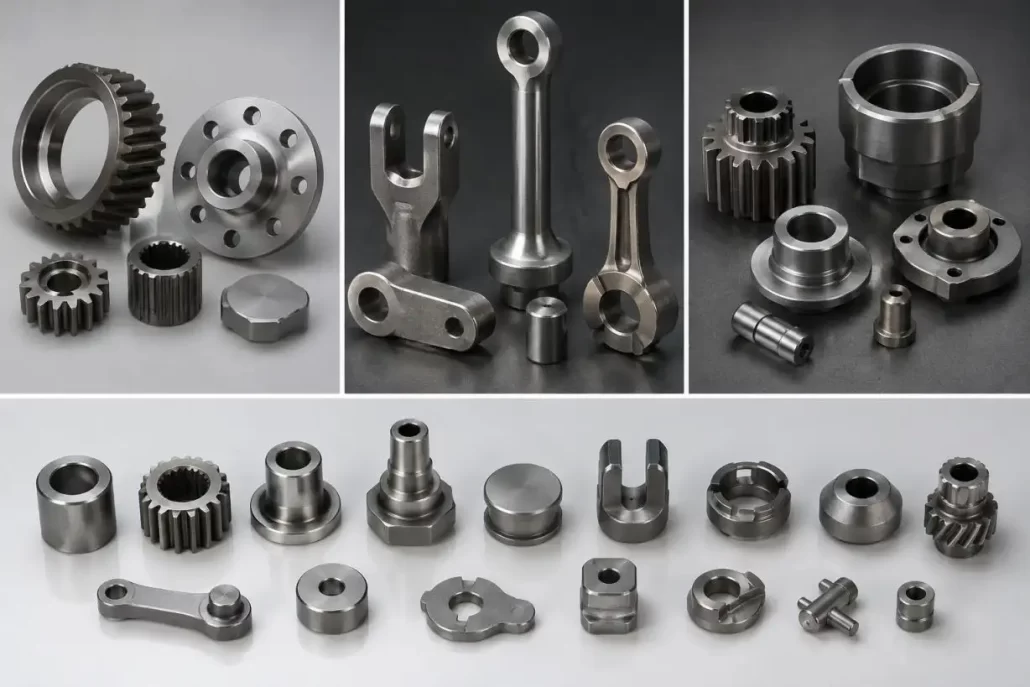
This design is often suitable for fine blanking, coining, sizing, and cold extrusion processes that require stable die closure and repeatable slide movement.
However, as press dimensions increase, an integral frame becomes more difficult to manufacture, machine, transport, and lift. Road limits, factory entrances, crane capacity, and foundation access may restrict its practical size.
What Is a Split-Frame Heavy Forging Press Machine?
A split-frame press is manufactured from several large structural sections and assembled using high-strength bolts, tie rods, locating components, or preloaded connections.
Common arrangements include separate crowns, columns, bases, side frames, or bolster sections.
The primary advantages are:
• Lower weight for each transported section
• Easier manufacturing of large structural components
• Improved access through restricted factory entrances
• Greater suitability for large-capacity and wide-bolster presses
• Potentially easier replacement of individual structural sections
A split-frame design does not necessarily have lower rigidity. Its performance depends on joint-surface accuracy, connection position, bolt or tie-rod size, preload, locating design, foundation quality, and final commissioning.
Integral vs. Split-Frame Comparison
| Evaluation Factor | Integral Frame | Split Frame |
| Load path | A path that is continuous with fewer joints | Passes through sections that have been assembled |
| Rigidity control | Generally easier to control | Depends on design of joints and pre-load |
| Manufacturing | Requires considerable machining capacity | Components can be manufactured independently |
| Transportation | Limited by overall dimensions and weight | More suitable for large presses |
| Installation | Relatively simple | Requires skilled assembly |
| Alignment | Generally controlled in the factory | Critical on site |
| Maintenance | Simplifies frame inspection | Connections require additional inspection |
| Typical use | Medium-size or portable presses | Large capacity or press limited by transport |
Accuracy of the Heavy Forging Press Machine is influenced by factors other than the frame configuration, such as the quality of the material, slide guidance, machining, the stability of the foundation, the preload of the connections, and the quality of commissioning.
How Does Frame Design Affect Deflection?
Nearly all press frames experience elastic deflection. Typical deflections are crown bending, extension of columns, deflection of bolsters, inclination of slides, and changes in die closure.
To achieve precision forming, an integral frame design lends itself to control of small displacements due to its direct load path and fewer joints.
For a split-frame Heavy Forging Press Machine, rigidity depends on:
• Joint contact area
• Surface flatness
• Bolt or tie-rod preload
• Connection location
• Locating accuracy
• Structural section design
• Installation quality
A properly calculated and preloaded split frame can support demanding precision forging and extrusion applications.
Why Is Bottom Dead Center Performance Important?
The GK Series uses a crank-toggle mechanism that allows the slide to dwell near bottom dead center for approximately 1/18 of the operating cycle.
The use of dwell offers the following benefits:
• Increase the time available for effective forming.
• Allow more effective filling of die cavities.
• Assist in coining and sizing.
• Help maintain cold-extruded dimensions.
• Reduce springback.
Dwell time cannot assure accuracy. Insufficient rigidity of the frame may still result in variation of die clearance, uneven thickness, localized underforming, and early die wear.
Capacity, Bolster Size, and Frame Selection
Rated capacity is only one selection factor.
| Project Factor | Structural Impact |
| Rated capacity | Higher force generally requires larger frame sections |
| Bolster size | Larger dies require wider load distribution |
| Off-center loading | Increases lateral rigidity requirements |
| Transport limits | May make a split frame necessary |
| Factory crane capacity | Limits maximum assembly weight |
| Foundation condition | Affects alignment and long-term stability |
The 6,300–25,000 kN range and 700 × 700 mm to 1,200 × 1,200 mm bolster sizes support different fine-stamping and extrusion requirements. The frame type should still be confirmed according to the actual machine dimensions and project conditions.
Other Systems Affecting Press Accuracy
The frame is only one part of a precision Heavy Forging Press Machine. Other important systems include:
• Crank-toggle transmission
• Slide guidance
• Die-height adjustment
• 0.01 mm die-height indication
• Mechanical lower ejector
• PLC control
• Lubrication and safety protection
• Clutch and brake configuration
The GK-630 uses a pneumatic wet integrated friction clutch brake, while GK-800 to GK-2500 models use a pneumatic dry split friction clutch brake. These systems influence starting, stopping, single-stroke control, heat management, and continuous-production stability.
Common Misunderstandings
❌ An integral frame is always more accurate.
Actual accuracy also depends on machining, guidance, foundation, tooling, and load distribution.
❌ A split frame is used only to reduce cost.
Its main value is often easier manufacturing, transportation, installation, and servicing.
❌ Higher capacity always requires a split frame.
Overall dimensions, transport routes, factory access, and lifting conditions are equally important.
Final Selection
An integral-frame Heavy Forging Press Machine is generally suitable where transportation conditions allow a complete structure and simplified installation is preferred. A split-frame machine is often more practical for large capacities, wide bolsters, restricted access, or modular installation.
Manufacturing accuracy, structural calculation, joint design, installation quality, and deflection control are usually more important than the frame label alone.
When choosing an integral or split-frame Heavy Forging Press Machine, nominal capacity is just one starting point. Supply GUANGDUAN with your material, part dimensions, and forming loads, die dimensions, production rates, and applicable constraints for transport and installation. Our engineers will analyze your forming process and will address the frame structure, press capacity, bolster, ejector, and control system.
FAQs
Q1. What is the capacity range for the GUANGDUAN GK Series?
The GUANGDUAN GK Series has capacity ranges of 6,300 kN to 25,000 kN and is used for fine stamping, coining, sizing, and metal extrusion applications.
Q2. Will I find integral and split-frame press structures in the GUANGDUAN lineup?
Yes, smaller and midrange GK configurations use an integral frame, while the larger sizes have a split-frame structure for convenience in manufacturing, shipping and installation.
Q3. What are the bolster size options for GUANGDUAN GK presses?
For the GUANGDUAN GK presses, bolster sizes are in the range of 700 × 700 mm to 1,200 × 1,200 mm for different models. The die footprint and load distribution should be considered in the selection.
Q4. What are the forming capabilities of the GUANGDUAN Heavy Forging Press Machine?
The GK Series can perform fine blanking, coining, cold extrusion, and other various metal forming processes that require a high level of precision and pressure at the lower dead center.
Q5. Why is there a crank-toggle mechanism in the GK Series?
The crank-toggle mechanism has the capability of forming with a large level of force at the lower dead center. The slide can also dwell for about 1/18 of the cycle, allowing for the control of the final size of the material.
CONTACT US


Guangdong Metal Forming Machine Works Co., Ltd.
We are always providing our customers with reliable products and considerate services.
If you would like to keep touch with us directly, please go to contact us
-

Home
-

Tel
-

Email
-

Contact