
Hydraulic Press Machine Manufacturer for Large-Tonnage Press Projects
A qualified Hydraulic Press Machine Manufacturer should be evaluated by more than the nominal tonnage listed on a specification sheet. Frame rigidity, machining capacity, slider guidance, pressure and displacement control, safety systems, installation capability, and long-term technical support all influence the success of a large-tonnage press project.
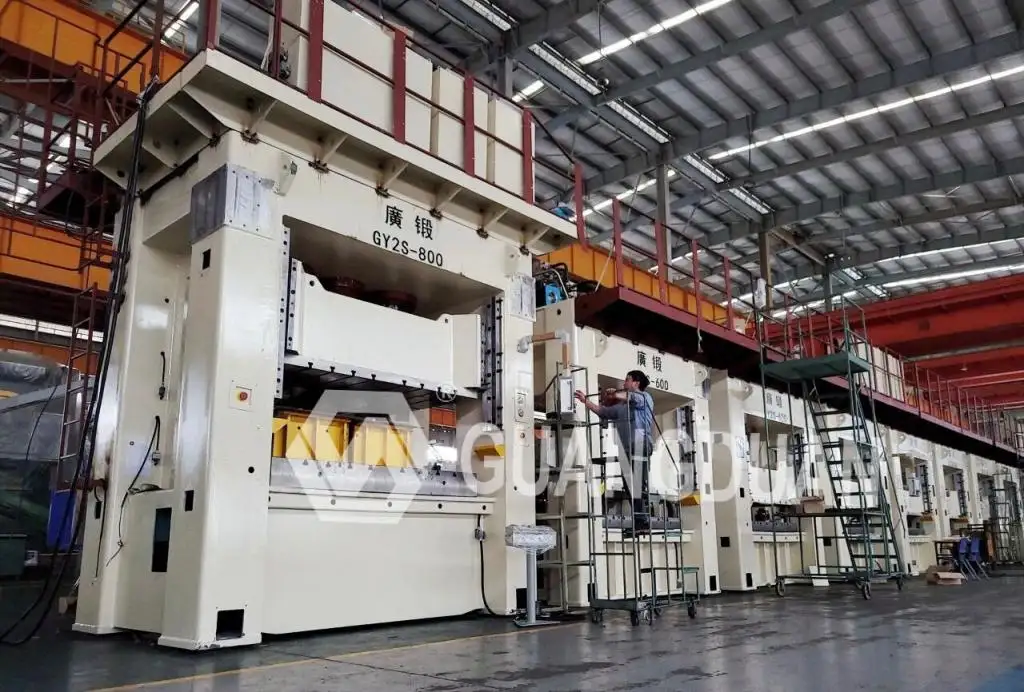
Large presses have more complexity in their structure and handle large production cycles that lead to uneven die loading. Because large presses have to manage all of these situations, they leave less room for errors in parallelism, guidance, or process control. Small errors in any of these areas will lead to long production delays, inconsistent parts, and high die wear. Choosing a Hydraulic Press Machine Manufacturer therefore begins with the production process rather than tonnage alone.
What Is Considered a Large-Tonnage Hydraulic Press Project?
A large-tonnage press project is defined not only by force capacity, but also by die size, working area, stroke, structural load, forming process, automation requirements, and production continuity.
| Evaluation Area | What Buyers Should Confirm |
| Nominal force | Maximum forming force and continuous working pressure |
| Worktable size | Maximum dimensions of the die and workpiece |
| Daylight | Required opening between the slider and worktable |
| Stroke | Effective travel required by the forming process |
| Off-center loading | Possibility of uneven or eccentric loading |
| Production rate | Cycle time, hourly output, and daily volume |
| Process type | Drawing, pressing, correction, molding, or forming |
| Automation | Loading, unloading, die changing, and line integration |
These factors help a Hydraulic Press Machine Manufacturer determine whether a standard configuration is sufficient or a customized structure is required.
Which Applications Require a Large-Tonnage Hydraulic Press?
Large hydraulic presses are commonly evaluated for:
•Automotive body panels and structural components
•Large sheet-metal drawing
•Aerospace component forming
•Composite hot pressing and compression molding
•Large-part straightening and assembly
•Forging calibration and precision forming
•Railway, appliance, and construction-machinery components
Different processes require different press characteristics. Deep drawing depends heavily on pressure curves and slider motion. Composite molding may require controlled pressure-holding time. Applications for straightening require specific table dimensions and must also resist off-center loading. For straightening carried out as a continuous operation, the demands on lubrication, cooling, cleanliness of the oil and maintenance are greatly intensified.
How to Define the Technical Requirements
Nominal Force and Operating Force
The rated force need not be identical to the force used in daily operation. When determining the operating force, the strength of the material, the area to be formed, friction, die design and the method of forming should all be considered as well as a reasonable allowance for the process.
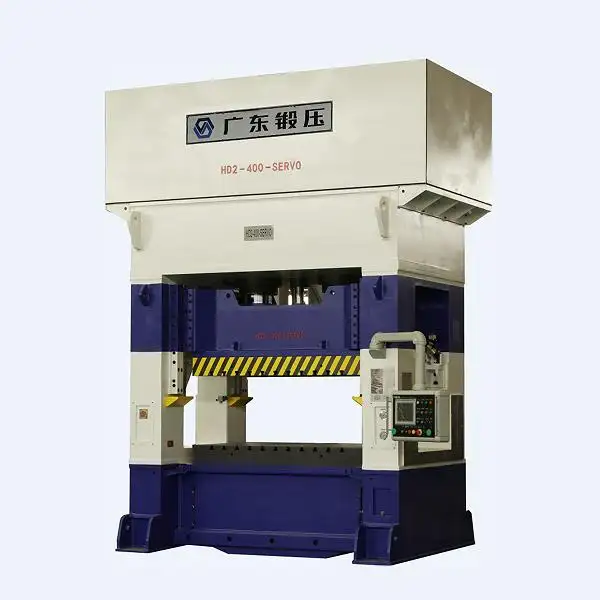
Stroke, Daylight, and Table Dimensions
Stroke, daylight, and table dimensions should be in accordance with die length and workpiece dimensions as well as the method of loading and the allowance for maintenance. Table dimensions should be kept to the smallest practical size. Oversized equipment will result in a higher cost; undersized equipment may limit die and automated facilities.
Speed and Production Cycle
A production cycle is defined by approach and return speeds, working time, the time to hold the pressure, and the loading time. In the case of a continuous production operation, the stability of the hydraulic system and the oil temperature are also of importance.
Accuracy and Repeatability
Important indicators include:
•Slider-to-table parallelism
•Repeat positioning accuracy
•Pressure repeatability
•Displacement-control accuracy
•Accuracy retention after repeated cycles
Why Frame Rigidity Matters
Frame rigidity affects structural deformation, die closure, part thickness, slider parallelism, die wear, and long-term accuracy.
| Frame Structure | Main Characteristic | Typical Consideration |
| Four-column | Open access and convenient maintenance | Guidance and eccentric-load resistance |
| Straight-side | High structural rigidity | Large dies and heavy forming loads |
| Welded box | Strong integrated structure | Welding, stress relief, and machining accuracy |
| Multi-piece assembled | Easier transportation | On-site alignment and preloading |
As one technical example, the GUANGDUAN GY2S Series uses a welded box structure made from quality steel plate. This design considers structural rigidity along with aesthetics and requirements of transportation.
Slider Guidance and Precision Retention
The slider-guidance system affects vertical stability, die alignment, forming accuracy, eccentric-load control, and long-term clearance.
The GY2S Series utilizes a welded box slider with eight-sided, full, guide rail, steel plate construction. The design serves to enhance the stability of slider movement and precision of guidance under the severe demands of the forming process.
Pressure and Displacement Control
For stable and standardized control in hydraulic systems, the user must account for fluctuations in pressure, changes in oil temperature and speed, as well as energy consumption.
In a closed-loop control system, the following elements are used:
•Servo motor and driver
•Pressure transducer
•Displacement transducer
•PLC
•Feedback for correction in real-time
In the context of a closed-loop control system, the output of the drive is continuously adjusted based on the difference between the pressure or position set point and the feedback from the sensors. This leads to improved process control and the capability of accurately controlling pressure and displacement while ensuring optimal energy consumption, especially in operating conditions that are not demanding.
The GY2S control system supports pressure and position feedback, process-based parameter adjustment, lower operating noise and vibration, and more consistent production cycles.
Intelligent Controls and Recipe Management
The press interface should do more than start and stop the machine. It may manage pressure, position, speed, alarms, permissions, process records, and fault diagnostics.
The GY2S Series combines PLC servo control, a touchscreen, and grating-scale position feedback. Operators can adjust parameters digitally and store up to 20 sets of die or process settings.
| Control Function | Practical Value |
| Recipe storage | Reduces repeated setup after die changes |
| Real-time adjustment | Supports process corrections |
| Position feedback | Improves slider-position consistency |
| Alarm diagnostics | Shortens troubleshooting time |
| Parameter protection | Reduces incorrect-setting risks |
Lubrication, Cooling, and Reliability
Long-term reliability also depends on guide lubrication, oil filtration, temperature control, sealing condition, piping cleanliness, contamination monitoring, and maintenance access.
The GY2S Series uses a thin-oil continuous circulation lubrication system to lubricate guide and moving components, reduce localized dry friction, and support routine guide-rail maintenance.
What Safety Systems Should a Large Press Include?
Safety should combine mechanical, hydraulic, electrical, and operational protection. Common systems include emergency stops, two-hand controls, slider locks, upper and lower limits, light curtains, overload protection, safety doors, parameter permissions, and anti-repeat controls.
The GY2S Series includes a slider-locking device, lower-limit protection, two-hand anti-repeat control, touchscreen parameter safeguards, and multi-level safety logic.
Why In-House Manufacturing Capacity Matters
In-house machining and inspection help reduce outsourcing uncertainty, maintain common machining references, verify large structures before assembly, and support non-standard modifications.
GUANGDUAN has more than 60 years of forging-equipment experience, a processing workshop exceeding 30,000 square meters, crane capacity up to 125 tons, more than 100 engineering technicians, over 200 major production machines, and more than 1,000 measurement and testing devices. Its capabilities include large coordinate-measuring equipment, laser tracking instruments, precision CNC machinery, and an ISO 9001 quality-management system.
These resources help support design verification, machining, assembly, measurement, factory testing, and project traceability.
Project Execution From Design to Commissioning
A large press project normally progresses through requirement review, concept design, structural verification, manufacturing, factory testing, delivery planning, installation, commissioning, and acceptance.
Factory Acceptance Testing (FAT) inspects the parameters of pressure and speed control, measurement, and safety prior to shipping. Site Acceptance Testing (SAT) checks the alignment, connectivity, and functionality of supporting systems after installation and during the trial production run.
When Is a Servo Hydraulic Press the Right Choice?
Servo-controlled systems are advantageous in applications that demand control of multi-step processes that require different pressure and speed combinations, as well as in applications that require the repeatable application of pressure or position, frequent process recipe changes, production cycles that vary in length, the use of onboard digital monitoring tools, or reduced energy consumption in the lower load operational range.
In applications that involve simple control with fixed speeds and low operational frequencies, conventional systems may still be employed. The decision to implement a Servo system should be based on the cost of ownership and application requirements rather than the degree of control capability.
Consulting GUANGDUAN for Large-Tonnage Presses
When selecting presses for large tonnage applications, the design of the forming process itself should be the first consideration, rather than tonnage only. To assist GUANGDUAN in the large tonnage press design, clients may provide part drawings, material and process specifications, design of the forming tools, and required parameters for force, stroke, cycle time, accuracy, safety, and degree of automation.
FAQs
Q1. What types of hydraulic presses can I find at GUANGDUAN?
GUANGDUAN’s line of hydraulic presses and forging machines includes equipment for metal forming, deep drawing, compression molding, and various other applications like industrial straightening and precision forming. The flexibility in equipment design allows for customization for pressing force, stroke length, worktable dimensions, control precision, and the degree of automation.
Q2. What is the GUANGDUAN GY2S Series Hydraulic Press?
The GY2S Series is a hydraulic press that employs advanced servo control for applications that benefit from a high degree of structural rigidity and precision, as well as programmable pressure and displacement control, process digital control, and a variety of integrated safety features.
Q3. What is the frame design for the GY2S Hydraulic Press?
The frame design focuses on the use of a welded steel plate box structure in order to provide the necessary rigidity for large forming loads within the considerations of aesthetic and functional requirements, as well as the requirements for fabrication, transportation, and assembly of the machine.
Q4. How does the GY2S Series control slider alignment?
In order to achieve stable alignment and long-term precision, the GY2S Series employs a welded steel plate box structure slider design with eight-sided guides to provide resistance to uneven load as well as vertical movement.
Q5. Are servo-controlled hydraulic presses available from GUANGDUAN?
Yes, the GY2S Series features a servo-controlled system that predominately employs closed loop control for pressure and displacement control with real-time feedback interfacing through a programmable logic controller.
CONTACT US


Guangdong Metal Forming Machine Works Co., Ltd.
We are always providing our customers with reliable products and considerate services.
If you would like to keep touch with us directly, please go to contact us
-

Home
-

Tel
-

Email
-

Contact