
China Industrial Press Machine Supplier for Custom Forging and Forming Projects
By 2026, industrial supply chain support for press projects that require large-scale, advanced, automated machining will be fully integrated into the infrastructure of China. In 2025, the Gross Value Added of the Chinese manufacturing sector increased by 6.1% YoY to RMB 34.7 trillion. Value added in the Chinese equipment manufacturing sector increased by 9.2% in the same period. The top three companies in the equipment manufacturing sector achieved total revenues of RMB 33.2 trillion.
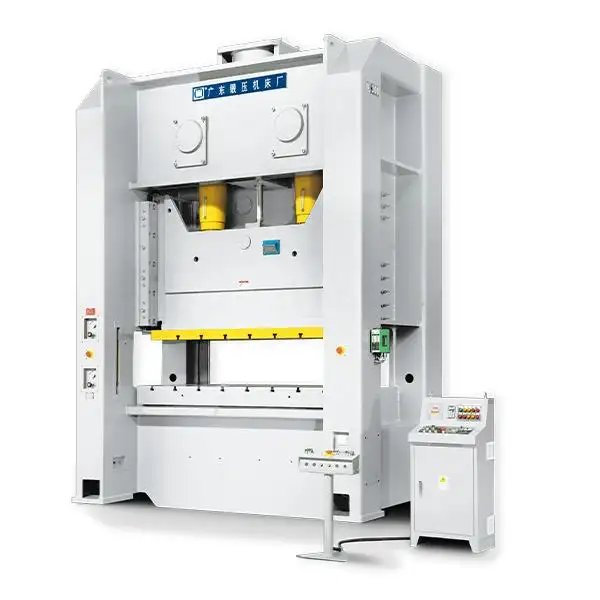
When selecting an Industrial Press Machine Supplier, nominal tonnage is not the only consideration. Rigidity of the frame, drive type, slide guidance, control systems, automation and eccentric load resistance, and the ability to provide sustained technical support are also extremely important. All of these elements have to be considered to the type of workpiece, die and process, to the workpiece and die, and of course to the production requirements.
What Does a China Industrial Press Machine Supplier Offer?
A competent Industrial Press Machine Supplier may provide support for the entire project and not just provide a press for a specific task.
Commonly offered engineering services include:
•Workpiece material and thickness
•Forming-force and capacity calculations
•Selection of press type and configuration
•Determining slide stroke and shut height
•Planning die interface and scrap removal
•Integration of feeders, transfers, and robots
•PLC, HMI, and line control connection
•Design of safety enclosures and interlocks
•Installation, commissioning, and training
•Technical support and spare parts
An Industrial Press Machine Supplier makes recommendations for system integration of press systems based on the required force, workpiece size, die configuration, rate of production, eccentric loads, level of automation, and safety requirements.
Matching the Press to the Forming Process
Different metal-forming processes create different demands on the machine.
| Forming Process | Typical Products | Key Press Requirements |
| Blanking and Piercing | Sheet blanks, holes, brackets | High speed, accurate feeding, stable clutch |
| Bending and Forming | Panels, housings, structural parts | Stable slide motion and die alignment |
| Deep Drawing | Containers, appliance housings | Long stroke and controlled forming force |
| Cold Forging | Fasteners, shafts, precision parts | High rigidity and impact resistance |
| Hot Forging | Automotive and machinery forgings | High energy and heavy-duty construction |
| Progressive Stamping | Connectors and automotive parts | Repeatability and automated feeding |
| Transfer Forming | Large multi-stage parts | Synchronized transfer and wide work area |
Mechanical presses are commonly used for repetitive sheet-metal operations. Applications requiring long pressure-holding periods, adjustable force, or slow controlled movement may be better suited to hydraulic equipment.
Industrial Press Technology Comparison
A qualified Industrial Press Machine Supplier should compare several press technologies before recommending a solution.
| Press Type | Main Advantage | Speed | Typical Application |
| Mechanical Punch Press | Stable production cycle | High | Blanking, piercing, progressive stamping |
| Hydraulic Press | Flexible pressure and stroke control | Low–medium | Deep drawing, compression, assembly |
| Servo Press | Programmable slide movement | Medium–high | Precision and complex forming |
| Screw Press | Concentrated forming energy | Low–medium | Hot forging and closed-die forging |
| High-Speed Press | Very high stroke rate | Very high | Motor laminations and electronic parts |
| Transfer Press | Multi-stage forming capability | Medium–high | Automotive and large stamped components |
The correct choice depends on process requirements:
•Choose a mechanical press for high-volume, repetitive stamping.
•Choose a hydraulic press for long strokes and pressure holding.
•Consider a servo press when the slide-motion curve must be controlled.
•Use transfer equipment for multi-stage forming of larger components.
•Evaluate screw presses for energy-based forging operations.
Mechanical Punch Press Configuration Comparison
After selecting the press technology, the next step for buyers is to select the preferred configuration level within the category.
| Configuration | Basic Mechanical Press | Industrial Grade Press | Customized Automated Press |
| Frame | Standard welded or cast frame | High-rigidity welded body | Designed for specific loads and dies |
| Drive | Single crankshaft | Double crankshaft drive | Multi-point or special transmission |
| Slide Guidance | Conventional guidance | Six or eight sided guidance | Extended anti-eccentric-load design |
| Clutch | Standard dry clutch | High torque wet clutch | Line-interlocked clutch control |
| Overload Protection | Basic mechanical protection | Hydraulic protection | Monitoring, alarms, and records |
| Control | Push-button control | PLC control | PLC, HMI, and line communication |
| Automation | Manual feeding | Feeder compatible | Decoiling, leveling, and servo feeding |
Some of the most critical points of comparison are:
•Crankshaft layout: Affects the slide force distribution.
•Guide design: Impacts lateral movement and resistance to eccentric loads.
•Clutch Type: Influences braking response, operational noise, component wear, maintenance frequency.
•Overload Protection: Prevents damage to both the press and die from excessive loads.
•Control Architecture: Affects the degree of automation and the depth of data integration.
The Importance of Double Crankshaft and Full Guide Structures
Generally, the Double crankshaft transmission is combined with wide slides and bolster tables. A rough arrangement of reverse crankshafts helps to balance the motion of the mechanism and reduce side thrust of connecting links while also evenly distributing the forming loads.
The slide of a press is supported in all directions by full guide rails of an octagonal cross section. Some possible advantages are as follows:
•More effective resistance against uneven loads
•Less lateral displacement of slide
•Better alignment of dies
•More stable wide-format stamping.
•Better retention of accuracy over time
The number of guiding surfaces cannot be evaluated in isolation. The length of the guides, precision of machining, quality of lubrication and assembly and rigidity of the frame are also important when evaluating an Industrial Press Machine Supplier.
Specifications to Confirm Before Customization
| Specification | Procurement Relevance |
| Nominal Capacity | Determines fundamental load capacity |
| Capacity Point | Indicates location of maximum force |
| Slide Stroke | Defines distance for feeding and removal |
| Strokes per Minute | Determines maximum production speed |
| Shut Height | Verifies compatibility of dies |
| Slide Adjustment | Permits variation for die heights |
| Bolster Size | Indicates maximum footprint for dies |
| Eccentric-Load Capacity | Determines capacity for uneven forming |
| Clutch Type | Relates to starting, braking, and service |
| Control Interface | Facilitates integrated feeders and lines |
Nominal tonnage should be considered together with the capacity curve of the press. Maximum capacity may only be available within a defined distance above bottom dead center.
How Automation Affects Press Selection
For automated production, an Industrial Press Machine Supplier should confirm compatibility with:
•Decoilers and leveling machines
•Air or servo feeders
•Robotic loading systems
•Progressive and transfer dies
•Safety light curtains and interlocks
•Die-protection sensors
•Automatic lubrication
•Production counters and fault alarms
•PLC communication and factory data systems
Automation planning should begin before the press structure and controls are finalized.
GUANGDUAN STPP Series
The GUANGDUAN Mechanical Punch Press STPP Series demonstrates a configuration intended for medium- and large-format stamping.
Its main structural and control features include:
•A welded steel-plate body designed for rigidity
•Reverse double crankshafts for balanced transmission
•Eight-sided full guide rails for slide stability
•Hydraulic overload protection installed inside the slide
•A high-torque wet clutch for responsive starting and braking
•PLC control for automated production-line integration
The STPP Series is applicable to automotive stamping, appliance panel fabrication, large scale blanking, use with wide dies, and operations on progressive lines. It is also applicable to stamping associated with decoiling, leveling, and feeding lines.
Projects which require prolonged pressure holding, ultra-deep drawing applications, extreme stroke rates, and programmable Curtis slides will require investment in other technologies such as High Speed, Hydraulics, or Servo presses.
Conclusion
When selecting an Industrial Press Machine Supplier, the selection will ultimately depend on the workpiece material, the die configuration and the desired forming process, production rate and level of automation. Equally, when selecting a supplier the purchaser should consider the production capability, machining precision, inspection process, commissioning service and availability of spare parts.
When considering the GUANGDUAN STPP Series for your project, please provide part dimensions, die size, required force, production targets, and your desired level of automation. GUANGDUAN’s engineering team will analyze the most appropriate press configuration for your needs. The STPP Series is equipped with Double Crank, Full Slide Guidance, Hydraulic Overload Protection, Wet Clutch, and PLC for large stamping.
FAQs
Q1. What type of clutch is in the STPP mechanical press?
STPP Series presses incorporate a high-torque wet clutch. This type of clutch provides quick starts and stops, low operational noise, long life, and consistent performance after many production cycles.
Q2. What are the application capabilities of the GUANGDUAN STPP Series?
The STPP Series is suitable for press work such as automotive stampings, appliance panels, metal enclosures, wide-format blanking, progressive-die work, and other medium- and large-format sheet-metal forming operations.
Q3. Why are reverse double crankshafts used in the STPP Series?
Reverse double crankshafts balance the motion of the machine, help distribute forming loads across a wider slide, and help minimize side forces that are caused by the connecting mechanism.
Q4. What advantage is provided by eight-sided full slide guidance?
Eight-sided guidance allows for support in every direction, and therefore increased resistance to eccentric loads, reduced lateral movement, and die alignment due to the guidance when continuous stamping is employed.
Q5. Is overload protection provided in the STPP Series?
The STPP Series provides overload protection through a hydraulic overload protection device which is located in the slide and protects both the machine and die from the effects of abnormal forming loads by acting in a quick responsive manner.
CONTACT US


Guangdong Metal Forming Machine Works Co., Ltd.
We are always providing our customers with reliable products and considerate services.
If you would like to keep touch with us directly, please go to contact us
-

Home
-

Tel
-

Email
-

Contact