
Industrial Press Machines in Morocco: Match Factory Expansion to the Right Press
When a factory is looking for expansion it will first request a bigger or faster press. But the actual limitation may be a die change, a manual transfer or a forming operation which requires a different machine characteristic. Investments may be spent at a wrong point that will lead to increase in capacity, but not in delivery.
A good starting point in considering industrial press machines for purchase in Morocco is the production mix. Organise parts and compare parts with constraint and equipment with the whole manufacturing process. The goal is not to put one more machine in the building, it’s one more accepted output.
Organise components into their manufacturing route.
Use representative drawings and actual production requirements. Differentiate between different sheet metal and bulk deformation processes. In each group look for operations, material condition, tooling size and frequent quality problems.
Comparing one undifferentiated equipment should not include a pierced bracket, a drawn housing or an extruded solid-metal preform. They can have identical outside dimensions and yet different working motions, support/material flow control.
Differentiate between stable repeat orders and products that have an uncertain demand too. A predictable component family could benefit from a dedicated arrangement and varied batches could be more important for changeovers and tooling flexibility. This classification provides the supplier with a convenient guideline on which to recommend equipment.
Utilize Mechanical Presses for Appropriate Stamping Sequences.
For stamping defined sheet metal parts, mechanical presses offer a repeatable slide cycle which can be synchronised with the right tooling and feeding. Assess blanking, piercing and forming as a sequence, considering the movement of the strip/blank between operations.
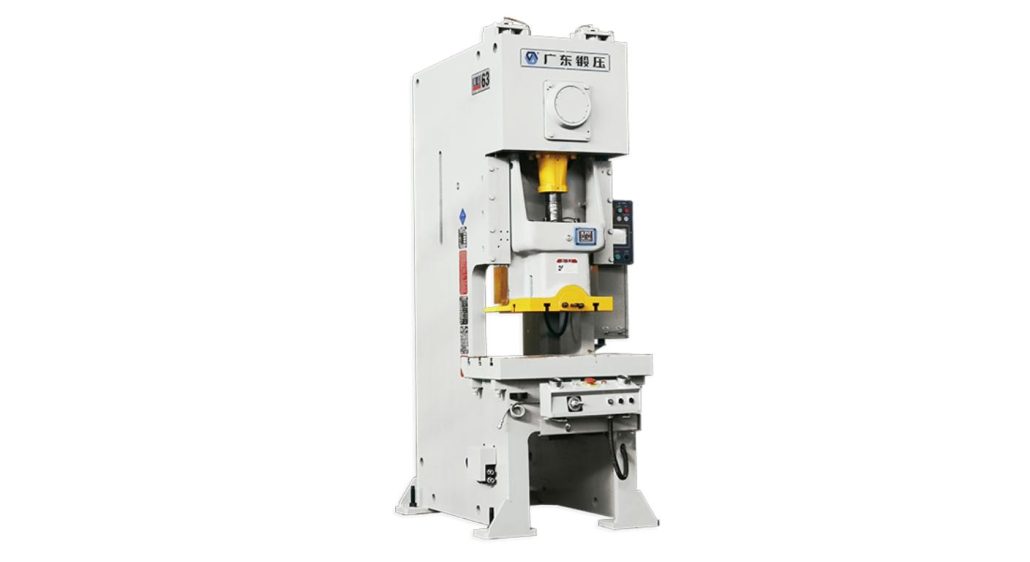
The JH21 mechanical power press of GUANGDUAN adopts the crankshaft transmission and can be equipped with automatic feeding devices. Helps to evaluate appropriate stamping work, subject to individual model loading and tooling review.
Don’t use only strokes per minute as a comparison for machines. Check the force at working position, energy available, stroke and tool installation. Verify that the feeders and scrap removal and part collection can be done reliably during production at the proposed operating rate.
Consider Hydraulic Forming When Conditions Of The Working Sequence Demands It
Certain sheet-metal work demands specific considerations in regards to forming travel, working speed or pressure holding. Effective control of material flow is also necessary in deep drawing processes, which means that the deep drawing process needs to employ the appropriate tooling and blank holding set up.
The YA28 double action hydraulic press listed for thin plate deep drawing, forming, aligning, bending and folding. The tooling actions should be considered separately in the main and lower actions.
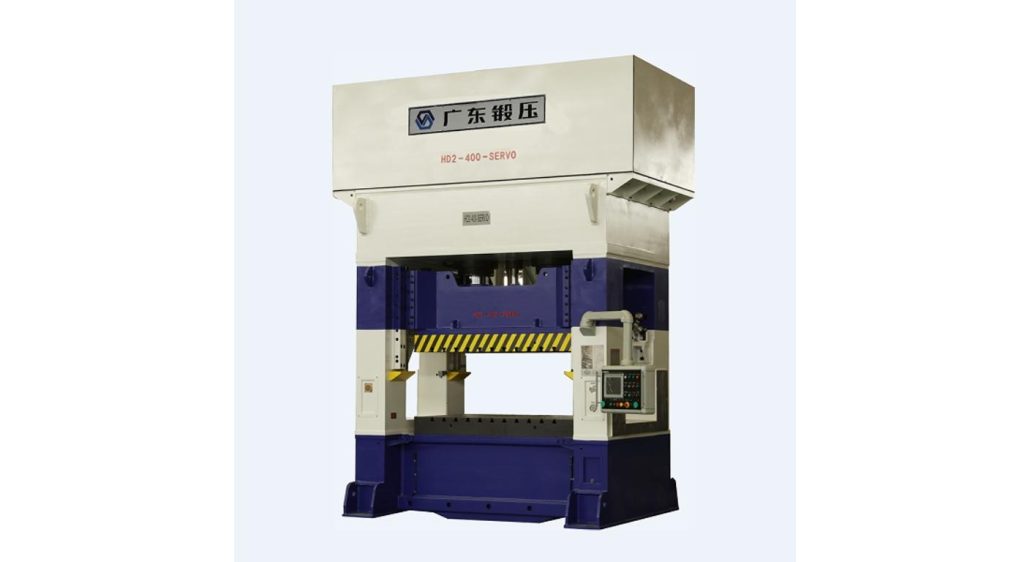
The GUANGDUAN GY2S servo hydraulic press is another platform, and has pressure and displacement feedback. First specify the cycle needed, then, determine if the part family are addressed in the control functions and configuration. A selection should have a process specific reason for using hydraulic technology.
Maintain a separation of Bulk Forming and Sheet-Metal Stamping.
An overall scan of industrial presses can put stamping and forging equipment in the same area. They do have application boundaries. Creating a solid billet requires various material flow and tooling requirements than cutting or drawing sheet.
GUANGDUAN’s GK knuckle joint press applies to extrusion process, and adopts the structure of crank toggle mechanism. If it is a suitable bulk forming project, ask about the condition of the material, the sequence of deformation, working travel and part release.
Don’t rely on nominal capacity of a press for a bulk-forming job, just because it has already done sheet work. The assessment of the machine, tool assembly and complete load profile are required to be assessed together. Treat forging as Process Review.
Prior to the addition of machine speed, determine the constraint by using the following method.
Measure the amount of accepted components that are generated by the current route. Document cycle time, wait, changeovers, loss of inspection time at each major step. Determine whether the press itself is a constraint to production.
A more rapid initial operation could end up generating additional work for a slower downstream operation. Similarly, if finished products are not reliably removed or dies take too long in set up, then more machine capacity won’t help.
Evaluate growth strategies in relation to the constraint that they address. These may include an alternate press, different handling and/or better tooling arrangements. Determine the anticipated impact on finished production and ensure that the other operations will be able to meet a corresponding increase.
| Observation | Evidence to retain | Decision it supports |
| Work waiting between operations | Time-stamped production records | Location of the actual constraint |
| Frequent tool changes | Changeover duration by part family | Flexibility requirements |
| Repeated production interruptions | Stop log with recorded causes | Priority for supporting improvements |
| Variable accepted output | Output and rejection records | Realistic capacity target |
Determine the Desired Level of Automation for the Family of Parts
As the process and demand becomes defined, it becomes easier to assess automation. Revisit material presentation, localisation, transfer and material ejection and fault response as interrelated functions.
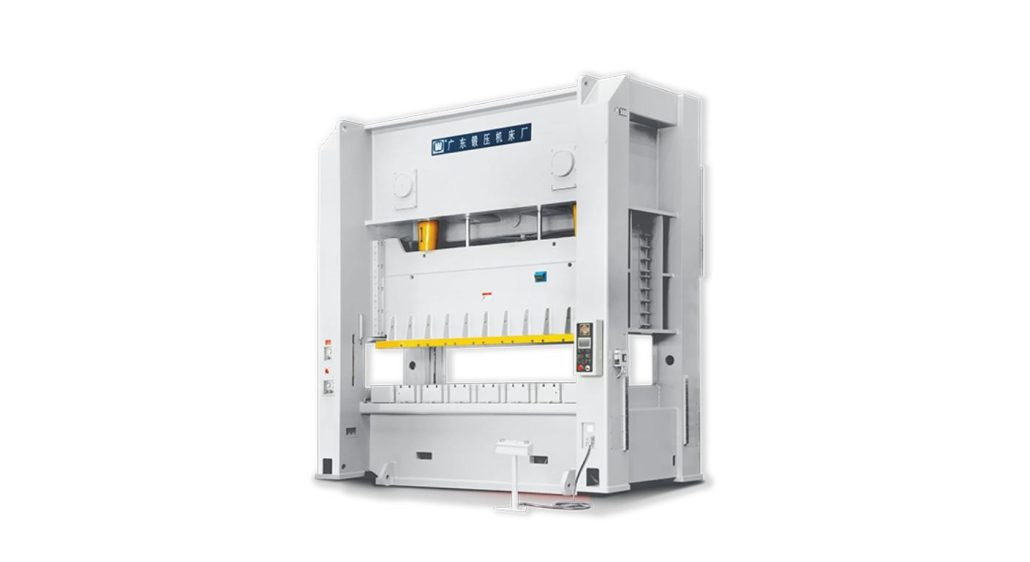
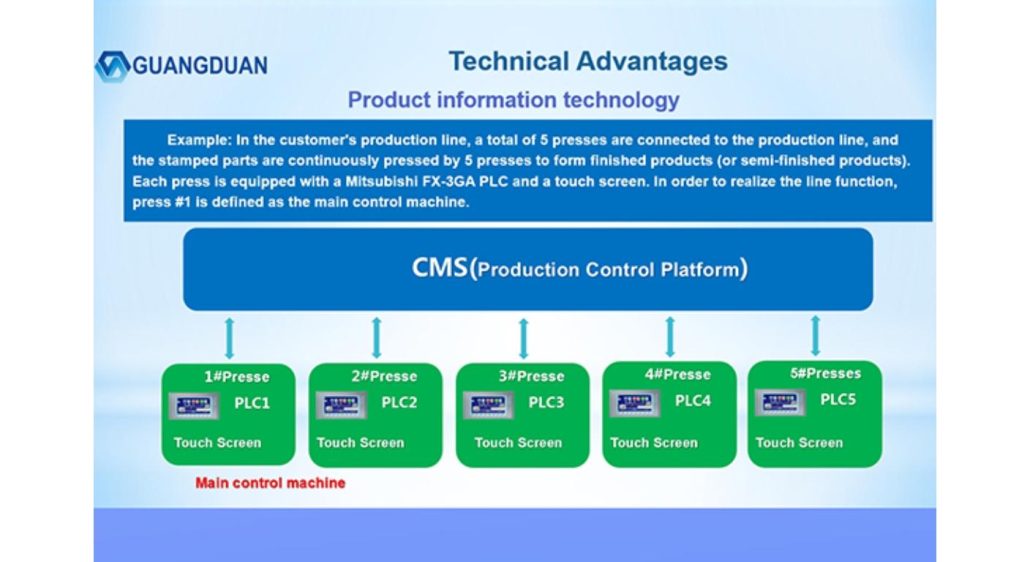
The GD2 straight-side double point platform and interfaces are documented by GUANGDUAN for the integration into servo production lines in progressive or multi-station sheet metal work. These provisions provide a foundation to discuss engineering, but do not necessarily imply full automation.
Let’s take a scenario of a staged investment, where future needs are not known. Maintain interfaces and layout space if there is a clear purpose, and precisely define initial operating arrangement. Don’t assume each subsystem is being provided or will be integrated until it is confirmed as a complete production line.
Evaluate the possibility of transferring existing tooling.
Physical fit of the table does not make it compatible (some development work might be saved by reusing the dies). Check height, clamping, supporting area, load centre and any cushion/ejection connections that have been installed.
Review the Work Sequence as well. If a die is developed for one press it could be specific to certain motion or handling conditions. If the stroke, opening or transfer timing changes, then the tooling might need to be changed.
Determine which tools are in place and need to be evaluated and what other people approve/disapprove of any changes. When supplying to a Moroccan expansion project, supply the layout and utility details of receiving factory, in addition to the tooling details. Do not make the proposal dependent on some general regional setup; rather, on the actual plant situation.
Selects and approves an enlargement when comparing to a production outcome.
Establish success with a representative component family and an agreed upon functioning system. Specify the following items in the acceptance plan: stock, tooling, handling and inspection conditions.
If possible, evaluate repeated acceptable parts and a representative changeover. Make a clear distinction between demonstrated performance and estimates based on equipment which is not yet onsite. Document remarkable integration efforts and establish who will be responsible for accomplishing them.
Submit the part mix and expansion needs for GUANGDUAN to get a coordinated assessment. A helpful proposal should provide an explanation as to what the selected press will solve in terms of the production problem and what supporting work will have to be done to meet the target.
Conclusion
When choosing between industrial press machines in Morocco, it’s best to evaluate them based on the task they will be tackling and the problem they will be addressing. Distinguish between stamping and hydraulic forming and bulk-forming. Select appropriate tooling and automation for the part family; approve the investment based on the acceptable production.
FAQs
Q1. If all factories increase, should it be with an increased cap press?
Not at all, determine the production constraint first. Limitation on output may be due to handling or changeovers rather than capacity.
Q2. Are mechanical and hydraulic presses able to do the same work?
Some applications overlap and characteristics of operations differ. Carefully read through the entire forming sequence before making a selection.
Q3. Is the automation equipment a part of a production-line interface?
Not necessarily. Include a breakdown of the hardware, controls and integration responsibilities in the quote.
Q4. Can old dies be simply transferred to a new press?
After the compatibility is checked (only). The size of tools, the sequence in which they are loaded and operated are all important.
Q5. Which information is needed to support an expansion proposal?
Drawings, tooling data, output requirement to be provided – representative. Add any existing limitation(s) and site detail and operating plans.
CONTACT US


Guangdong Metal Forming Machine Works Co., Ltd.
We are always providing our customers with reliable products and considerate services.
If you would like to keep touch with us directly, please go to contact us
-

Home
-

Tel
-

Email
-

Contact