
Choosing a Programmable Metal Forming Machine for Flexible Production
Finally, a programmable metal forming machine should have the ability to hold more than just a stroke length or manufacturing speed. What it really is, is the ability to take an existing forming process and make it a repeatable recipe.
This is an important functionality for factories producing a number of part families, changing material grades or reducing reliance on manual machine adjustment. Programmable control can also reduce changeover time, eliminate wrong settings and give production data for trouble shooting.
But all programmable machines do not have the same level of control. The buyer should check and compare the parameters that can be programmed, the accuracy with which the machine follows the programmed parameters and how recipes are protected during production.
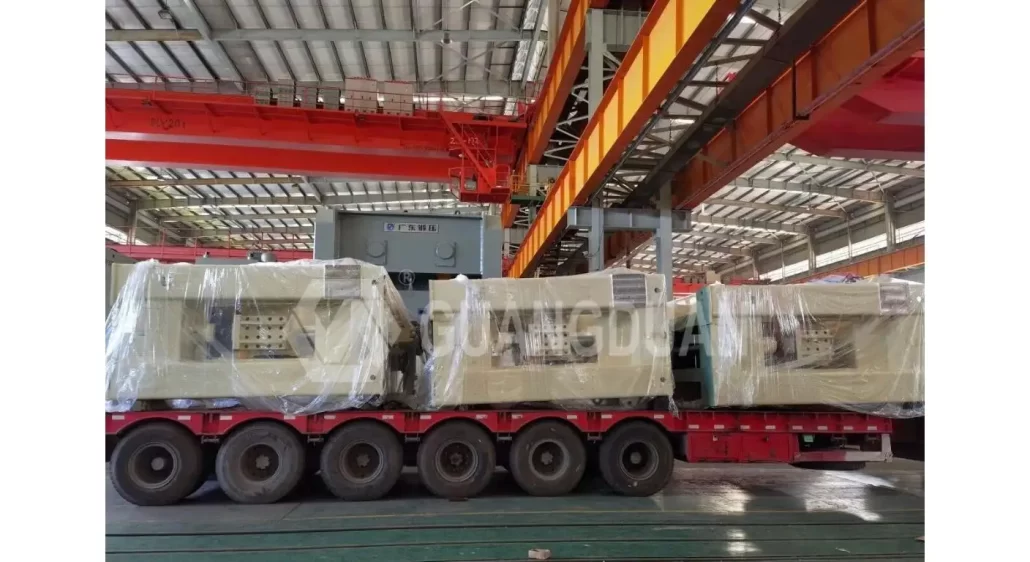
Why is a Metal Forming Machine Programmable?
A programmable forming machine is a single machine, which consists of a press drive, sensors, PLC or motion controller and human-machine interface. These components work together to regulate certain parts of the forming cycle.
Programmable parameters for each machine include approach speed, forming speed, slide position, pressure, dwell time, return speed, die-cushion force and transfer timing. More sophisticated systems adjust these parameters at certain time periods during the stroke.
Programming doesn’t substitute for appropriate machine mechanics. Still, frame rigidity, slide guidance, bolster strength and tooling alignment dictate whether the commanded process can be physically held under load.
Determine which parameters need to be controlled
The required functions should be based on the forming process. For a simple blanking operation, stroke and speed may be all that is needed and in deep drawing, multiple motion stages and blank-holder pressure control may be required.
For instance, the slide can move rapidly, slow down before hitting the material, move at a controlled speed to create the form, dwell under pressure and then move fast to get away. Cycle time and material flow and part quality are affected by each stage.
A buyer should distinguish between parameters that have to be adjustable and those that have to be actively monitored. A setting that is displayed on the HMI does not guarantee that the machine performs the commanded setting during production.
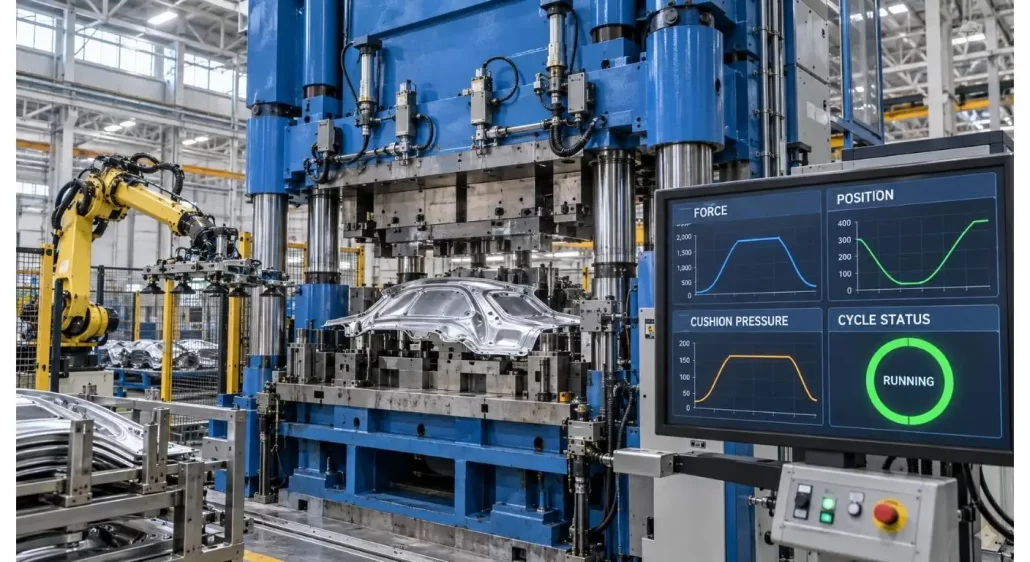
Ensure the Drive System is the same as the Program.
Servo-hydraulic presses allow to control the force, speed and position over a relatively large working stroke. They are appropriate for processes that necessities variable pressure, slow or dwell forming motion. Guangduan’s hydraulic presses come in a variety of models and different configurations with servo control for various forming requirements.
Mechanical presses are fast and repeatable, however the drive geometry is a major factor in determining the traditional crank movement. Programmable features can include stroke rate, shut height, feeder timings and auxiliary functions. A mechanical press range of available configurations exists.
Slide motion can be more freely controlled with a servo-mechanical system. It should be evaluated in relation to production volume, desired motion profile, energy consumption and total investments.
| Process Function | Programmable Parameter | Feedback Required |
| Fast approach | Slide speed and transition point | Position encoder |
| Material forming | Force and forming speed | Load or pressure sensor |
| Pressure holding | Dwell time and target force | Pressure feedback |
| Deep drawing | Die-cushion force and stroke | Cushion position sensor |
| Part return | Return speed and stop position | Position feedback |
| Material transfer | Feeder or robot timing | Presence sensor |
Create Recipes for the entire process.
A good recipe should have everything that is required to repeat an approved production cycle. This can be such things as press motion, cushion pressure, feeder pitch, transfer timing, lubrication frequency, and part discharge conditions.
The names of recipes should be associated with a part number, a tool number and a revision. Operators should not have to recall the correct settings that should be used with a specific die.
It should also be able to detect if the tool and material installed in the system is the one used in the recipe. The risk of operating a machine with wrong parameters can be lowered with die identification or integration of production orders via the barcode.
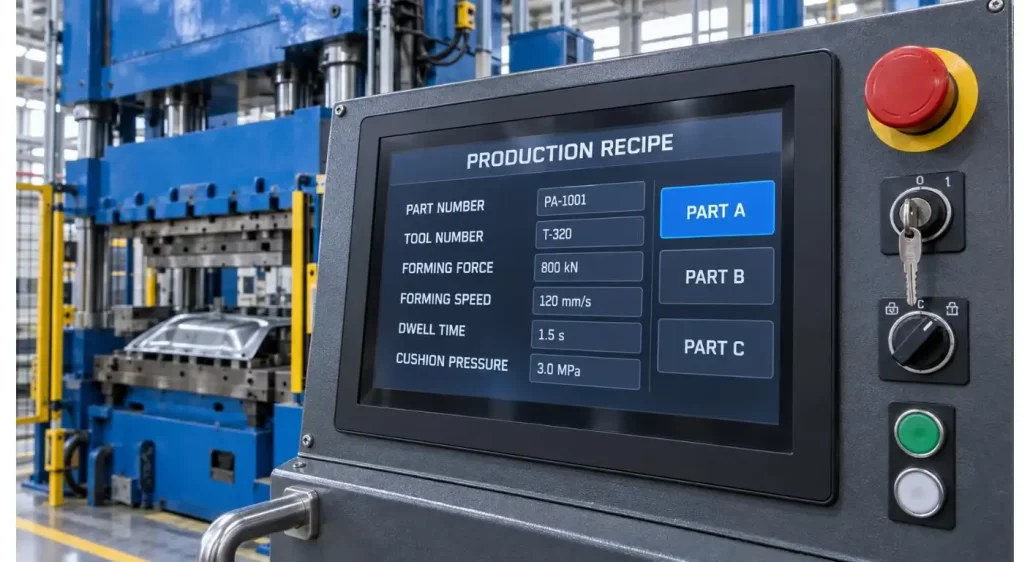
Manage who can access the system and change recipes
Too much editing can take away the good things of programmable production. Different access permissions should be granted to its operators, supervisors, maintenance persons and engineers.
An operator can load an approved recipe without changing protected limits. Engineers can make parameter changes during trials and administrators can control the users and versions of recipes.
Records of all changes (including user, time, and value change) should be recorded, if they are substantial enough. Recipes that are approved must be backed up in case they are accidentally deleted or the control system is replaced.
Check out Sensor Feedback to Check Performance
Commands are converted to measurable process information by sensors. Slide position encoders detect the movement of the slide and pressure sensors/load cells show the actual force with which the forming is being applied. Other parameters can be monitored such as temperature, motor load and die-cushion pressure.
Closed-loop control compares the measured value against the programmed value, and adjusts machine response. This differs from a machine which sends a command, but never confirms the result.
The large gantry servo hydraulic press project from Guangduan adopts the servo drive, to ensure the excellent process controllability, the servo drive is also equipped with the pressure sensor, displacement sensor and programmable control.
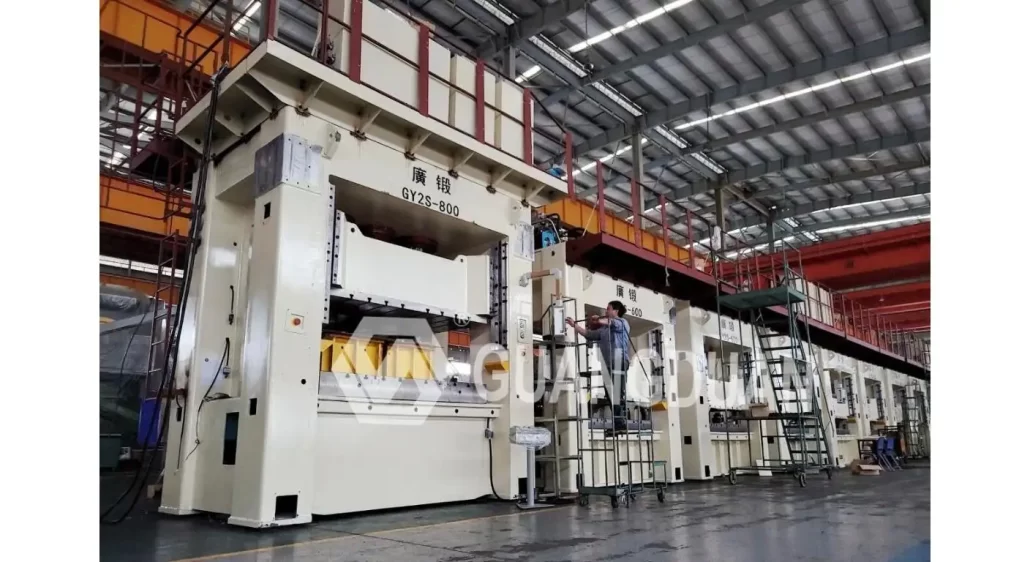
Use Process Limits and Automatic Responses.
It is helpful to capture data, but it is also important that the machine takes action if the process falls out of an approved range. Force, position, pressure, cycle time and/or temperature limits may be set.
The appropriate answer will vary, depending on the risk. The system can generate a warning or tag a part for inspection, or abort the next cycle or halt the machine.
The limits should be large, but not so large that they don’t notice significant changes and don’t cause unnecessary interruptions. They should not be arbitrarily chosen, but instead based on valid production data.
Plan Fast and Controlled Changeovers
Programmability is particularly useful in high-mix production. There are many manual adjustments involved in loading a recipe, in addition to the die change, clamping, feeder setup and safety check.
Automatic slide adjustment, quick die clamps, moving bolsters and die identification can minimize setups. The HMI has a changeover checklist that guides the operator through confirmations.
The first part following a changeover should also be checked. No recipe can overcome an improperly installed die, wrong material or damaged die.
Use Automation to connect the Press to the Internet.
The press program should be co-ordinated with feeders, robots, transfer systems, lubrication equipment and inspection stations. Production can be halted or tooling can be ruined when there is a timing mismatch between these systems.
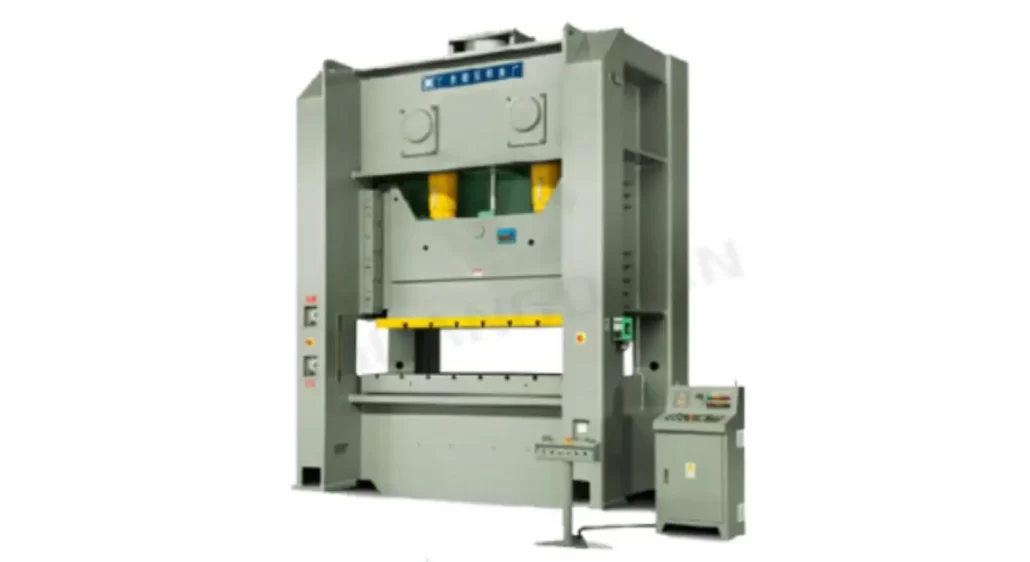
Discuss the communication protocol, signal list and who is responsible for the master control system. The integrator must specify the response of the line to a feeder fault or part or robot alarm.
Programmable Presses for Metal Forming Applications showcase how programmable presses can be used with material handling, sensor monitoring, and automated production equipment at Guangduan.
| Integration Item | Information to Define | Acceptance Check |
| Recipe management | Part and tool identification | Load correct recipe |
| User access | Operator and engineer permissions | Attempt restricted edit |
| Feeder/robot | Signals and timing | Simulated fault response |
| Process limits | Warning and stop thresholds | Out-of-range test |
| Production data | Fields, format and storage time | Export sample file |
| Backup | Recipes and controller settings | Restore test |
Identify Production Data Requirements.
Make a data list before ordering and determine the purpose of data collection. Examples of records are recipe number, production quantity, peak force, stroke position, alarms, downtime, and rejected cycles.
The system might have to tie a batch, coil or individual part to the forming data for quality traceability. Cycle counts and temperature trends may be more informative for maintenance applications.
Verify storage period, export format, network interface and compatibility on the factory’s MES or ERP. The responsibilities of the cyber security and remote-access permissions should also be determined.
Verify Programming during Factory testing.
The programmable functions should be tested using a factory acceptance testing that will challenge, rather than just one standard cycle. Test alarm values and user access, load recipes, etc.
The machine should demonstrate its ability to follow commanded force, speed and position under a representative load. Check that recipes are not lost due to a power failure and are able to be restored from backup.
Press machine projects that are completed can give reference points to discuss automation, control functions and acceptance procedures with the manufacturer.
Conclusion
The capability of a programmable metal forming machine is the repeatable recipes, confirmed machine response and controlled production variations. A touch and PLC are not enough to make a programmable process.
Buyers should consider drive capabilities, sensor feedback, recipe security and automation interfaces and data requirements as a whole. A control-oriented specification aids the machine to facilitate rapid change over, uniform part production and continual process improvement.
FAQs
Q1. What are the parameters that a programmable forming machine can control?
Typical parameters include slide position, the force exerted, speed, dwell time and cushion pressure. The functions to be used are dependent on the press drive and sensors installed.
Q2. Is PLC a programmed press?
Not necessarily. A PLC can only be used for simple machine sequencing. Buyers should ensure that forming parameters and motion stages can be stored and changed via recipes.
Q3. What is the benefit of recipe control in terms of reducing setup time?
The approved recipe contains the process settings for a given part and tool. This still needs to be verified and physically installed.
Q4. Is it possible to have automatic detection of forming defects by the press?
Monitors abnormal process conditions by means of force, position or pressure limits. Further inspection may be necessary to verify part dimensions and surface quality.
Q5. Is it necessary to test programmable functions prior to delivery?
Yes. Recipes, user permissions, alarms, sensor accuracy, backups and export of data should be factory tested under representative operating conditions.
CONTACT US


Guangdong Metal Forming Machine Works Co., Ltd.
We are always providing our customers with reliable products and considerate services.
If you would like to keep touch with us directly, please go to contact us
-

Home
-

Tel
-

Email
-

Contact